
Wallet Friction Tactics: Slow Down Spending on Purpose

Wallet friction tactics add small hurdles between you and a purchase. Learn what works for impulse buys, subscriptions, groceries, debt and saving, in a 30-day plan.
Wallet Friction Tactics: Slow Down Spending on Purpose
Wallet friction tactics are small, deliberate hurdles between you and a purchase: a removed saved card, a 24-hour wait, a cancelled auto-renewal, a shopping list. They work because most overspending is not a decision. It is a reflex that nothing interrupted. Make spending a little harder, make saving automatic, and you stop relying on willpower. Below are the tactics that fit each problem (impulse buys, subscriptions, groceries, debt, emergency savings) and how to combine them into one 30-day plan.
TL;DR
- Friction means adding a pause or a step before money leaves your account, so the spending decision becomes a conscious one.
- Spending feels easier the less it hurts: average noncash purchases in a Federal Reserve Bank of Boston survey were several times larger than cash purchases.
- Add friction to spending (saved cards, one-click checkout, renewals) and remove friction from saving (automatic transfers).
- Start with three moves this week: delete stored card details, audit recurring charges, and write a grocery list from what you already own.
- Run the tactics together for 30 days so each one reinforces the others.
Table of Contents
- What wallet friction actually is
- Why a small hurdle changes what you spend
- Tactics for impulse and emotional spending
- Tactics for subscription creep
- Tactics for grocery spending
- Tactics when you are paying down debt
- Tactics for an emergency fund
- Putting it together: a 30-day friction plan
- Our perspective
- Start your 30-day reset
- FAQ
- Sources
What wallet friction actually is
Friction is any extra effort, delay or reminder between wanting something and paying for it. Retailers spend heavily removing it: saved cards, one-tap checkout, buy-now buttons, free trials that quietly convert to paid plans. Wallet friction tactics are the reverse. You put the effort back, on purpose, at the moments where you tend to slip.
The idea is not to feel deprived. A tactic that depends on you being strong at 11 p.m. with a cart full of items will fail. A tactic that means the card is not saved, so you would have to get up and find it, often passes without any effort at all.
Why a small hurdle changes what you spend
Paying is supposed to feel like something. When it does not, you spend more. In the 2016 Diary of Consumer Payment Choice, the average cash transaction was $21.60, compared with $112.40 for the average noncash transaction. Part of that gap is simply that people use cash for small things. But it matches what many people notice: tapping a phone or typing in a saved card number registers far less than handing over bills.
Saving has the opposite problem. The St. Louis Fed explains that saving takes more strategy and effort than spending, and that many people spend first and save only what is left. Postponing saving is easier than steering away from the temptations that block it.
So the design goal is simple: more friction on the way out for things you did not plan, less friction on the way in for the money you want to keep.

Tactics for impulse and emotional spending
Impulse purchases cluster around predictable triggers: boredom, stress, late-night scrolling, a sale email. Friction works best when it targets the trigger, not the item.
Remove the saved card
Delete stored card numbers from shopping sites, apps and browsers. Typing sixteen digits takes thirty seconds, and in those thirty seconds many purchases die. Do the same with phone wallet defaults inside shopping apps if you can.
Create a waiting rule
Put anything non-essential on a list and wait 24 hours. For larger items, wait a week. If you still want it, buy it without guilt. The goal is not to ban pleasure but to separate the urge from the purchase. Our guide to spending rules has rules you can adopt as written.
Make the trigger harder to reach
Log out of shopping apps. Move them off your home screen. Unsubscribe from promotional email, which is one of the most reliable sources of unplanned buying; here is how to clear the marketing inbox. If your spending peaks while scrolling in bed, read how to stop doomscroll shopping.
Name the feeling first
Before buying, say out loud what you are feeling: tired, anxious, left out, bored. It sounds trivial. It adds exactly the pause that emotional spending needs, because the purchase was meant to fix the feeling, and naming it shows you the purchase will not.
Use cash for your leaky categories
If coffee, takeout or small online orders drain you, assign a weekly cash amount to that category. When the envelope is empty, the category is closed. The physical limit is the friction. If you prefer to stay digital, here is how envelope budgeting works with digital banking.
Tactics for subscription creep
Subscriptions are friction in reverse: easy to start, awkward to end, and invisible once they renew. Economists Liran Einav and colleagues find that subscription inertia reflects inattention or switching costs, and that requiring active renewal every six months could cut the excess revenue companies earn from inattention by 45%. You do not need a law to get that benefit. You can create your own renewal check.
- Pull three months of statements. Highlight every recurring charge, including annual ones and small ones under $10.
- Sort into keep, pause, cancel. Keep what you used in the last 30 days and would miss. Cancel the rest.
- Add a recurring calendar reminder every six months titled "renew on purpose." Walk through the list again.
- Use a separate card or account for subscriptions with a fixed monthly amount, so a new charge fails instead of slipping through.
- Put trial end dates in your calendar the minute you sign up, one day before the charge.
The workbook's subscription audit walks through this list day by day, so the cleanup becomes a scheduled task, not a someday project. For a longer list of what to look at first, see expenses to cut and our spending categories list.
Tactics for grocery spending
Grocery overspending is mostly an entry-point problem: you walk into the store without a plan and the store supplies one. The American Heart Association's Grocery Guide recommends planning meals around a shopping list, checking the pantry and fridge first, and comparing prices, since store-brand products may be more affordable.
Turn that into friction like this:
- Inventory before you list. Spend five minutes in the pantry and fridge. Write what must be used up this week.
- Plan five dinners, not seven. Leave room for leftovers and one flexible night.
- Shop the list, then stop. Anything not on it waits until the next trip, which is the same 24-hour rule applied to the cart.
- Choose pickup or a fixed-time trip. A short, scheduled trip leaves less time for wandering. Avoid shopping hungry.
- Cap the trip. Decide on a dollar amount before you leave and track a running total.
The workbook includes meal planning guides and a companion tracker for this. If you shop with children, our post on grocery shopping with kids during a no-spend month covers the hardest part: the checkout aisle.
A friction fix for kids' in-game spending
The Consumer Financial Protection Bureau's August 2024 advisory tells parents not to store debit or credit card details on children's gaming accounts, and to use gift cards with a fixed dollar amount instead. That is friction in its cleanest form: the spending limit is built in, so a surprise charge cannot happen.
Tactics when you are paying down debt
If debt is the main stress, friction has two jobs: slow the new spending that feeds the balance, and make the repayment automatic enough that you never skip it.
The FDIC advises budgeting income and expenses, scheduling essential payments soon after your first paycheck, and asking lenders, utility providers and card issuers to align billing dates with that paycheck. If you cannot make payments as scheduled, ask creditors about extended plans. These can lower monthly bills but could cost more in interest, so ask for the total cost before agreeing.
Practical friction moves for debt:
- Pay on payday. Schedule essentials and debt payments for the day after income lands, so the money is gone before it can leak.
- Freeze the card, not the account. Remove it from your wallet and from every saved checkout. You keep the account and the credit history, and you lose the ease.
- Pay more than the minimum when you can. Minimums stretch a balance out for years; here is why the minimum payment is a trap.
- Set a weekly money check. Ten minutes, same time each week, balances in front of you.
If you are behind on bills or considering a hardship plan, talk with the lender or a nonprofit credit counselor about your specific situation before you change any payment.
Tactics for an emergency fund
Here the friction goes the other direction. The CFPB's report on evidence-based strategies to build emergency savings describes automatic enrollment and recurring transfers as behavioral design strategies shown to increase savings participation, because they remove the need to decide each time. Choice architecture, in the report's framing, beats inertia.
In practice:
- Open a separate savings account that is not linked to your debit card or shopping apps. A few extra steps to withdraw is intentional friction.
- Automate a transfer for payday. Start small, even $10 or $25. The amount matters less than the habit.
- Step it up on a schedule. Raise the transfer each time you cancel a subscription or finish a debt.
- Name the account. "Car repair" or "Rent buffer" is harder to raid than "Savings."
If you park the money in a certificate of deposit, a 3-month CD calculator shows what a 90-day term would earn on your balance. Weigh early-withdrawal terms with the bank first, since the point of the fund is access in an emergency.
Putting it together: a 30-day friction plan
Tactics on their own fade. Stacked into a month, they become a routine. Here is a simple schedule you can follow.
| Week | Focus | Friction moves | |---|---|---| | 1 | Remove easy access | Delete saved cards, log out of shopping apps, unsubscribe from promo email, start the 24-hour rule | | 2 | Find the leaks | Audit recurring charges, cancel or pause, set the six-month renewal reminder | | 3 | Fix the big categories | Plan groceries around a list and pantry inventory, set a trip cap, name your top three triggers | | 4 | Lock in the gains | Automate a payday transfer to savings, align bill dates, schedule the weekly money check |
Track three numbers daily or weekly: what you did not buy, what recurring charges you removed, and what you moved to savings. Seeing the total grow is the reward that keeps the plan alive.
Expect friction from other people too. Skipping a dinner out or saying no to a group gift is easier with a line ready. The workbook includes social scripts for money conversations for exactly those moments.
Our perspective
Most budgeting tools ask you to track more. We think the better question is what you can make harder, or easier, so that you track less.
Willpower is the wrong tool for a problem that happens at 11 p.m. in a checkout window. A reset that works changes the environment: fewer saved cards, fewer silent renewals, fewer unplanned trips, and a savings transfer that happens before you see the money. That is the principle behind the workbook, which turns behavioral psychology into one small challenge a day for 30 days, so the changes stack without guilt or deprivation.
Users have reported saving an average of $847 per month. What we hear most is that the first week felt strangely easy, because the first tactics are removals, not sacrifices.
Omar
Start your 30-day reset
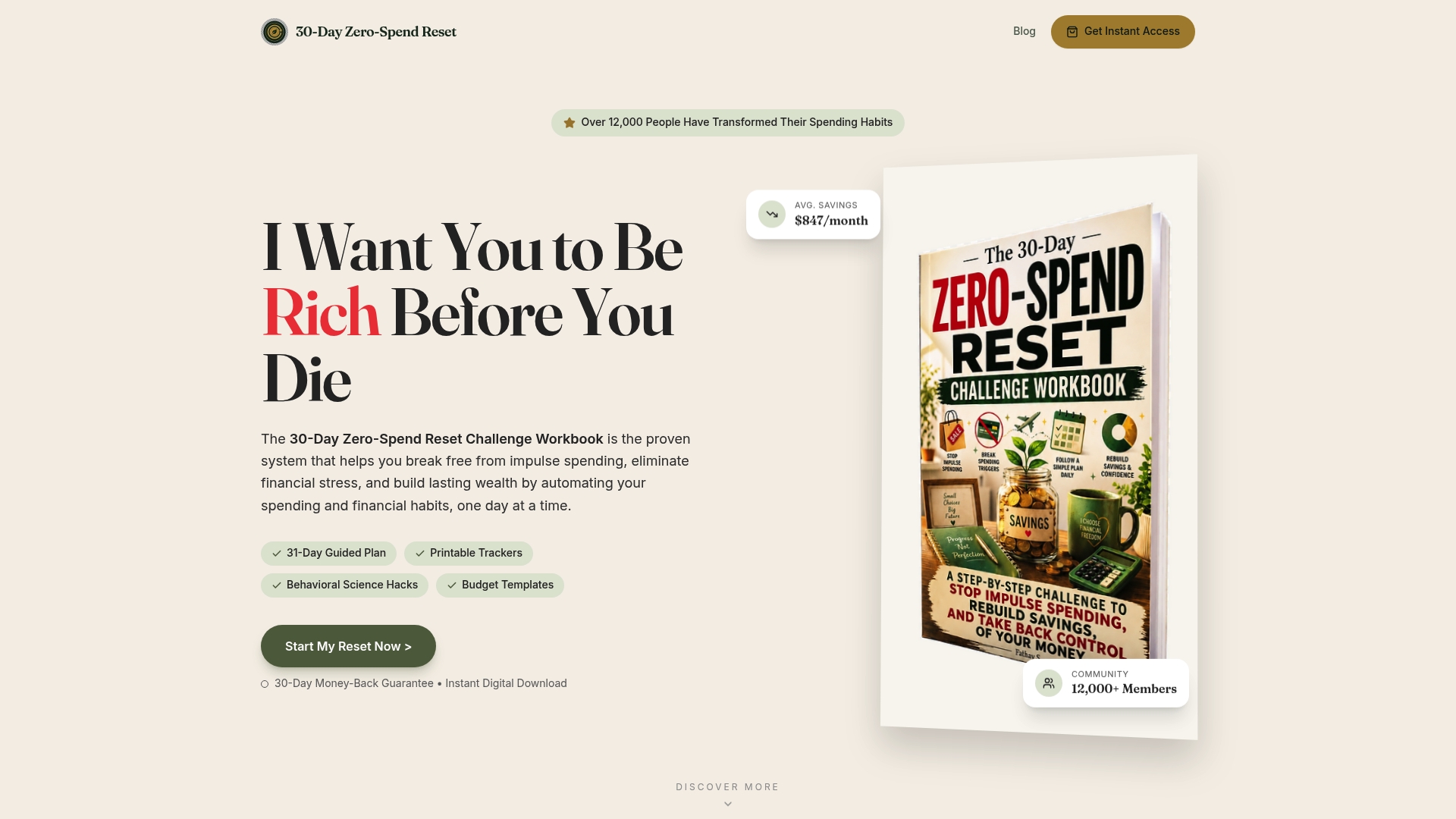
The 30-Day Zero-Spend Reset Challenge Workbook puts the plan above into daily challenges: printable trackers, budget templates, a subscription audit, meal planning guides and social scripts for money conversations, plus a private companion webapp.
If you want more tools alongside it, the Zero-Spend Accelerator Vault collects additional resources for the same reset.
FAQ
What are wallet friction tactics?
They are deliberate extra steps or pauses before you spend, such as removing saved cards, waiting 24 hours or capping a shopping trip. They make unplanned spending a conscious choice. The same logic runs in reverse for saving, where automatic transfers remove the effort.
Do wallet friction tactics work for emotional spending?
They help most when they target the trigger: logging out of apps, unsubscribing from promotional email and naming the feeling before you buy. The pause gives the urge time to pass. Pair them with a daily routine so the new habits replace the old ones, not just block them.
How do I stop subscription creep?
List every recurring charge from the last three months, cancel what you did not use, and set a reminder every six months to review again. Using a separate card with a fixed limit for subscriptions also stops new charges from sliding in unnoticed.
How can I save automatically when money is tight?
Schedule a small transfer, even $10, for the day your paycheck arrives, into an account separate from your everyday spending. Automatic transfers work because they remove the monthly decision. Raise the amount whenever you cut a recurring cost.
Sources
- The 2016 Diary of Consumer Payment Choice, Federal Reserve Bank of Boston
- Why Are We So Impatient? St. Louis Fed, April 3, 2023
- Subscription inertia and regulatory remedies, Einav et al., 2025
- Grocery Guide, American Heart Association
- Consumer Advisory on video games, CFPB, August 28, 2024
- How to Dig Out of Debt, FDIC
- Evidence Based Strategies to Build Emergency Savings, CFPB, 2020
Recommended
Ready to reset your spending?
Get the 30-Day Zero-Spend Reset Workbook and turn these ideas into a daily action plan.
Start the 30-Day ResetThis article is part of the 30-Day Zero-Spend Reset method. Explore the complete day-by-day system behind these ideas.
Read the full guideKeep reading


Join the conversation
Be the first to share your thoughts on this article.