
Save $847 in 30 Days: Cut These Expenses First With a No Spend Reset
Cut high impact costs like housing, transport, and subscriptions, then lock the savings with a 30 Day No Spend Reset and automatic transfers.
Save $847 in 30 Days: Cut These Expenses First With a No Spend Reset
Housing, transportation, insurance, subscriptions, and groceries eat most household budgets, and cutting even one of them frees real cash fast. Start by tracking every dollar for 30 days before you touch a single bill. Automated transfers to savings, paired with a structured reset like Nospendreset, turn that first month of awareness into a habit you actually keep.
TL;DR:
- Housing costs, such as rent or mortgage payments, often represent the largest expense and offer the most significant savings opportunities through refinancing or downsizing.
- Automating savings transfers and negotiating bills during renewal months help ensure that expense reductions are maintained long-term without relying solely on willpower.
- Conducting quarterly subscription audits and using cash-envelope methods or cashback apps can prevent unnoticed recurring charges from draining household budgets.
- Small daily habits like cooking at home and meal planning, combined with a structured 30-day no-spend reset, significantly reduce discretionary spending over time.
- Larger adjustments, including refinancing or adding a roommate, require upfront effort but can permanently lower monthly baseline expenses if the financial benefits outweigh the initial disruption.
Table of Contents
- Which expenses to cut first for the biggest impact
- Small, everyday habits that add up fast
- Big-ticket moves that change your monthly baseline
- How to audit subscriptions and recurring charges
- Automate savings so the cuts actually stick
- The 30-Day No-Spend Reset: breaking the habit loop
- Why habit design beats deprivation
- How the No Spend Reset Workbook makes cutting expenses concrete
- Where to go for more on cutting expenses
- Sources
Which expenses to cut first for the biggest impact
Not all cuts are equal. Canceling a $12 streaming service feels productive, but it won't move the needle the way a housing or transportation change will. If you want real progress on expenses to cut, work down this list in order.
- Housing. This is often a large portion of take-home pay, so it deserves the first look. Bringing in a roommate, negotiating rent renewal, or refinancing at a lower rate when rates drop can each save hundreds a month. If you put less than 20 percent down on your mortgage, check whether you've hit the equity threshold to drop private mortgage insurance. The CFPB's cutting-expenses worksheet walks through exactly which housing costs are negotiable and which aren't.
- Transportation. A second car sitting mostly idle costs more than gas. Between insurance, depreciation, and maintenance, selling it and leaning on transit or carpooling for a stretch can save several hundred dollars monthly. Even keeping the car, staying current on maintenance (oil changes, tire pressure, air filters) measurably improves fuel economy.
- Insurance. Rates drift upward every year even when your risk hasn't changed. Shop auto and home insurance quotes annually, and if you've built a solid emergency fund, raising your deductible from $500 to $1,000 typically lowers premiums.
- Phone, cable, and streaming. Budget carriers and prepaid plans can save households hundreds of dollars a year compared to premium postpaid plans. Rotate streaming subscriptions instead of running four at once.
- Groceries and food. Meal planning around what's on sale, shopping discount grocers, and buying pantry staples in bulk cuts your grocery bill without cutting your calories.
Pro Tip: Before canceling anything, call the provider first and ask for the "loyalty" or "retention" rate. Companies often have a lower price they don't advertise, reserved for customers who threaten to leave.
Small, everyday habits that add up fast
Big cuts matter more, but small habits compound faster than most people expect, and they cost you nothing to start.
Brewing coffee at home instead of buying it daily can save a significant amount of money each month depending on your habit. Packing lunch three days a week instead of buying it can save a considerable amount of money. Neither requires willpower once it becomes routine, just a slightly earlier alarm.
A few habits worth building into your week:
- Apply a 48-hour rule to any nonessential purchase over $50. If you still want it in two days, buy it.
- Use the cash-envelope method for groceries and discretionary spending so you physically feel the money leaving.
- Turn on cashback apps or browser extensions for planned purchases, not as an excuse to buy more.
- Combine errands into one trip and stay current on oil changes and tire rotations to stretch every gallon of gas.
None of this feels dramatic day to day. But savings on coffee, lunch, and gas efficiency can add up to substantial annual savings, money that never touched a spreadsheet or a budgeting app to disappear.
Big-ticket moves that change your monthly baseline
Some cuts take more effort upfront but reset your monthly baseline permanently instead of shaving a few dollars here and there.
- Downsizing or adding a roommate. Run the math before you commit: moving costs, lease-break fees, and the hassle of finding a compatible roommate all cut into the savings. If the breakeven point is under six months, it's usually worth the disruption.
- Refinancing your mortgage. Check your current rate against today's rates, factor in closing costs (often 2 to 5 percent of the loan), and confirm you'll stay in the home long enough to recoup that cost through lower payments.
- Removing PMI. Once you've reached 20 percent equity, you can typically request PMI removal rather than wait for it to drop automatically.
- Raising insurance deductibles. This only makes sense once you have an emergency buffer that could cover the higher deductible without going into debt. Skip this move if your savings account can't absorb the hit.
When you call to negotiate, keep it simple: state how long you've been a customer, mention a competitor's advertised rate, and ask directly, "Is there anything you can do on price?" That one sentence, repeated across your insurance, internet, and phone bills, often works better than any elaborate script.
Pro Tip: Call to negotiate bills in January or during your provider's renewal month. Retention teams have more flexibility right after contracts renew than mid-cycle.
How to audit subscriptions and recurring charges
Subscription creep is quiet. A $9.99 charge here, a $14.99 charge there, and suddenly you're paying for six things you forgot existed.
- Pull one to two months of bank and credit card statements and list every recurring charge you find, no matter how small.
- Sort each one into three buckets: must-have, negotiable, or cancel. Be honest about the difference between "I use this" and "I might use this someday."
- For the negotiable pile, call and ask for a lower rate or a pause instead of a full cancellation. Many streaming and gym memberships offer a discounted "pause" tier if you ask.
- For anything you cancel, change the password on that account immediately. Canceled subscriptions with stored payment info are a common target for account takeovers.
- Set a recurring calendar reminder every three months to repeat this audit. The CFPB's worksheet recommends this kind of regular check specifically because price increases on subscriptions tend to slip through unnoticed.
Pro Tip: Treat your subscription audit as a monthly finances sprint: one focused 60 to 90 minute session to reconcile accounts and catch anything new that snuck onto your statement.
Automate savings so the cuts actually stick
Cutting expenses only works long term if the money you free up goes somewhere specific instead of blending back into your checking account.
- Set up an automatic transfer on payday, even if it's just $50 or 5 percent of your paycheck, into a savings or high-yield account. Fidelity points to automated transfers as the most consistently effective saving method precisely because they don't rely on willpower.
- Try a round-up rule, where every purchase rounds up to the nearest dollar and the difference goes to savings. It feels invisible in the moment and adds up over a year.
- Keep your bills on autopay to avoid late fees, but schedule one monthly review to catch billing errors or quiet price hikes. Bankrate notes that pairing autopay with a periodic manual check catches problems automation alone misses.
- Automating removes decision fatigue. Every financial choice you don't have to make manually is willpower saved for the ones that matter.
The 30-Day No-Spend Reset: breaking the habit loop
Tracking and automating handle the mechanics. Breaking the habit of spending on autopilot is a different problem, and it's the one most budgeting advice skips.
A structured 30-day no-spend reset works through daily, specific challenges instead of one vague goal ("spend less"). A typical structure includes a subscription-audit day, a full meal-plan week to cut food costs, a day dedicated to scripts for talking about money with a partner or family, and daily trackers that make spending visible instead of abstract. This mirrors what behavioral research on delayed-purchase rules and cash-envelope methods has long suggested: changing the decision environment works better than relying on willpower alone.

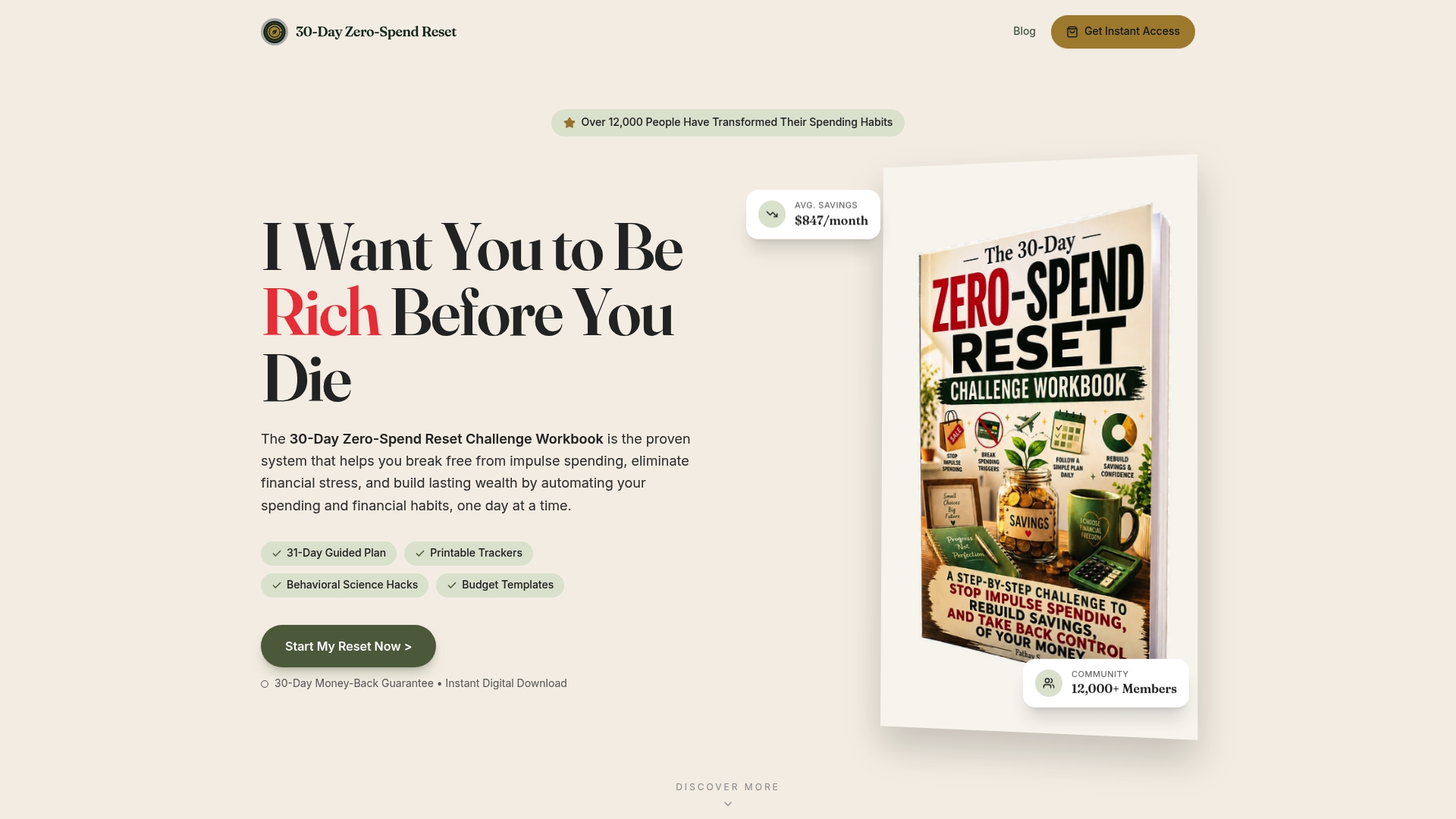
Nospendreset built its 30-Day Zero-Spend Reset Challenge Workbook around this exact approach, and users have reported saving an average of $847 a month during the challenge, according to the brand. Single households can compress the daily tasks into fewer, longer sessions; families can split roles (one person handles bills, another handles meal planning); irregular-income earners can shift the "budget" days to align with whenever income actually lands.
Why habit design beats deprivation
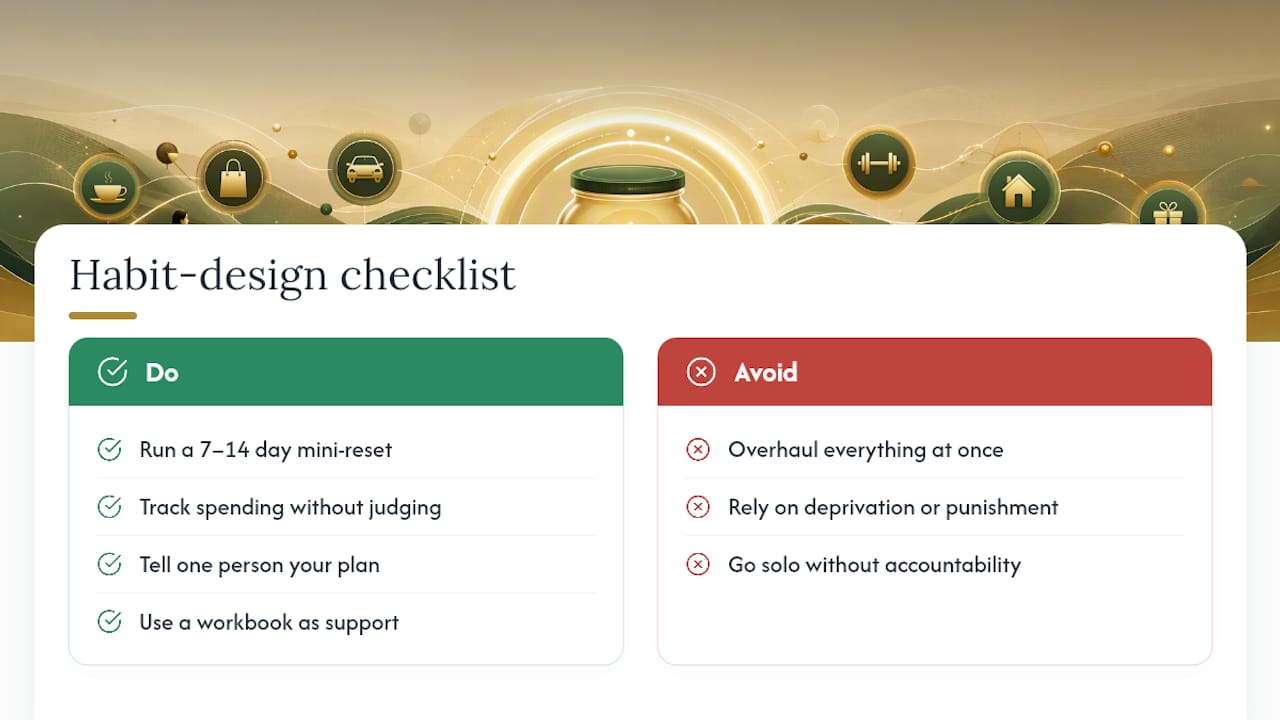
Most people fail at cutting expenses not because they lack discipline, but because they try to overhaul everything at once and burn out in a week. A smaller experiment, a 7 to 14 day mini-reset instead of a full month, works better as a starting point because it's short enough to finish and long enough to notice a real pattern in your spending.
Track what you spend during that window without judging it yet. Tell one other person what you're doing. Accountability, even informal, changes follow-through more than any app feature does. A workbook or structured plan should feel like a support system, not a punishment.
, Omar
How the No Spend Reset Workbook makes cutting expenses concrete
Reading about expenses to cut is one thing. Actually doing it for 30 straight days without white-knuckling your way through is another. That gap is exactly what the No Spend Reset Challenge Workbook is built to close: instead of a generic budget template, you get daily behavioral challenges, printable trackers, meal-planning guides, and social scripts for the awkward money conversations that usually derail a budget before it starts.
It works best for people who've tried budgeting apps before and stalled out, whether the sticking point is impulse buying, subscription creep, or plain budget fatigue from doing it all manually. If you'd rather run the challenge inside a guided tool that tracks your progress automatically, the companion webapp walks you through each day without extra setup. Either way, the next step is the same: pick your start date and commit to the first 30 days.
Where to go for more on cutting expenses
For deeper reading beyond this guide: the CFPB's cutting-expenses worksheet offers category-by-category checklists, Fidelity covers automation strategies, AARP lists no-regret savings tactics, and Bankrate breaks down energy-efficiency savings.
Sources
- 10 ways to cut expenses by 10%, Fidelity
- CFPB, Your money, your goals: Cutting expenses (worksheet)
- How to cut expenses, AARP
- How to save money, Bankrate
Recommended
Ready to reset your spending?
Get the 30-Day Zero-Spend Reset Workbook and turn these ideas into a daily action plan.
Start the 30-Day ResetThis article is part of the 30-Day Zero-Spend Reset method. Explore the complete day-by-day system behind these ideas.
Read the full guideJoin the conversation
Be the first to share your thoughts on this article.