
Save Years and Thousands: Escape the Minimum Payment Trap in 30 Days
Add $20 to $50 a month and run a 30 day no spend reset to free cash, cut years from your payoff timeline, and save thousands in interest.
Save Years and Thousands: Escape the Minimum Payment Trap in 30 Days
The minimum payment trap is a billing design that keeps you paying mostly interest while your balance barely moves, sometimes for decades. The fix is not complicated: pay more than the minimum, even by $25 a month, and set it to happen automatically. The math below shows exactly why that small change matters more than most people realize.
TL;DR:
- Paying just $25 to $50 extra each month can significantly shorten debt payoff timelines and save thousands in interest, especially with high balances.
- The minimum payment primarily covers interest and fees, causing balances to stay high for years and making progress nearly invisible.
- High credit utilization and debt-to-income ratios persist as long as minimum payments are made, damaging credit scores and borrowing capacity.
- Automating extra payments and using a structured spending reset helps quit the habit of only paying the minimum, accelerating debt elimination.
- Small savings from behavioral changes, like a 30-day zero-spend challenge, can be redirected directly to debt, reducing payoff time and interest costs.
Table of Contents
- What Is the Minimum Payment Trap, Exactly?
- The Real Cost of Paying Only the Minimum
- How Minimum Payments Quietly Damage Your Finances
- Why Smart People Still Fall Into This Trap
- Your Step-by-Step Plan to Escape the Minimum Payment Trap
- Finding the Extra Cash: A 30-Day Reset Approach
- What Actually Moves the Needle, in Practice
- Free Up Cash With a Structured 30-Day Reset
- Sources
What Is the Minimum Payment Trap, Exactly?
That payment covers interest and fees first, then whatever is left chips away at principal. On a high balance, that leftover amount can be almost nothing.
The Credit Card Accountability Responsibility and Disclosure Act of 2009 forced issuers to disclose this problem directly on your statement. Every bill now includes a minimum payment warning table showing how long payoff will take, and the total cost, if you pay only the minimum.
Issuers set the bar this low for a straightforward business reason: it keeps your account in good standing while maximizing the interest they collect over time. A few things worth knowing about how the minimum works against you:
- It's calculated on your current balance, so it shrinks as your balance shrinks, stretching payoff even further.
- Interest and fees get paid before principal, not after.
- The warning table is required by law, but reading it is optional. Most people skip it.
The Real Cost of Paying Only the Minimum
Numbers make this trap visible in a way explanations can't. Take a $4,000 balance at a typical 3% minimum. According to MSU Extension, paying only that minimum stretches repayment to several decades and adds thousands in interest, more than doubling the original balance.
Now compare that to what happens when you add a little extra each month. USAA Educational Foundation modeled a $3,000 balance at 18% APR and found that adding just $20 a month cuts payoff time by more than half, saving thousands in interest along the way.
| Monthly payment | Approximate payoff time | Interest paid | |---|---|---| | Minimum only | 20+ years | Thousands, often exceeding the original balance | | Minimum + $20 | Cut by several years | Meaningfully reduced | | Minimum + $20 | Several years | Reduced by thousands |
**A $20 monthly bump can shave over a decade off your payoff timeline and save thousands in interest, based on the USAA scenario above.
These numbers assume a fixed APR and no new charges added to the card. Two warnings: a variable APR can change the math mid-stream, and 0% promotional offers create their own trap if you don't clear the balance before the promo ends. Reporting on 0% intro APR cards shows many cardholders carry a balance past the deadline and get hit with retroactive interest.
How Minimum Payments Quietly Damage Your Finances
The interest and slow payoff are only part of the damage. Carrying a high balance for years creates ripple effects most people don't connect back to their minimum payment habit.
- Credit utilization stays high. Scoring models weight utilization heavily, and a balance that barely drops keeps that ratio elevated month after month.
- Debt-to-income ratio suffers, which can limit your ability to qualify for a mortgage, auto loan, or better credit terms later.
- You lose the opportunity cost of what that money could have earned if it went into savings or investments instead of interest charges.
- One missed minimum payment can trigger a penalty APR and may void a 0% promotional rate entirely, undoing any progress you'd made.
CNBC Select notes that minimum payments are structured to cover interest plus a small percentage of balance, which is exactly why utilization stays stubbornly high even when you're paying on time every month.
Why Smart People Still Fall Into This Trap
This isn't a math problem. It's a psychology problem wearing a math costume. The minimum payment amount is bolded and prominent on your statement, so your brain anchors to that number as "the payment," not as the floor it actually is.
There's also a small reward loop at work. Paying something, even a token amount, triggers a sense of relief that reinforces the habit, according to behavioral research on the minimum payment trap. That relief feels like progress even when your balance has barely moved.
A few other drivers stack on top of that:
- Future-self optimism: you assume next month's budget will have more room to pay extra, and it usually doesn't.
- Cash-flow prioritization: other bills feel more urgent right now, so the card gets the smallest payment that keeps it current.
- Statement design: suggested payment buttons and prefilled amounts on many payment portals default to the minimum, not a payoff-focused number.
Pro Tip: Cross out the "minimum due" box on your statement with a pen, literally, before you log in to pay. It sounds silly, but removing that visual anchor makes it easier to type in a higher number.
Your Step-by-Step Plan to Escape the Minimum Payment Trap
Getting out requires both a mechanical fix and a prioritization strategy. Here's the order that works best for most people carrying revolving debt.
- Pick a fixed extra amount or a percent target. Even $25 to $50 above the minimum moves the needle, based on the USAA math above. Automate it so it happens without a decision every month.
- Choose a payoff method. The debt avalanche (highest APR first) saves the most money mathematically. The debt snowball (smallest balance first) builds momentum through quick wins. Pick avalanche if you're motivated by numbers, snowball if you need visible progress to stay consistent.
- Evaluate consolidation carefully. A 0% balance transfer or a personal loan can lower your effective rate, but read the fine print on deferred-interest terms. Missing the payoff window can trigger retroactive interest on the entire balance.
- Build a small buffer before going all in on debt. A modest emergency fund prevents a surprise expense from landing right back on the card you're trying to pay off.
- Redirect windfalls to principal. Tax refunds, bonuses, and rebates should go straight at the balance, not into everyday spending.
- Model your own numbers. Bankrate's minimum payment calculator lets you plug in your actual balance and APR to see your real payoff timeline, and if the numbers look grim, call your issuer directly to ask about hardship programs or a negotiated rate.
| Action | Effort | Payoff impact | |---|---|---| | Add fixed extra payment | Low | High | | Switch avalanche vs snowball | Low | Medium to high | | Balance transfer or consolidation loan | Medium | High, if terms are honored | | Build small emergency buffer | Medium | Prevents relapse |
Finding the Extra Cash: A 30-Day Reset Approach
None of this works if new charges offset every extra dollar you put toward principal. That's why a structured spending pause, rather than a vague promise to "spend less," tends to hold up better in practice.
A 30-day zero-spend reset works by assigning daily behavioral tasks: auditing subscriptions, avoiding discretionary categories, tracking every dollar against a simple sheet. The point isn't restriction for its own sake. It's making the leftover cash visible so you can redirect it straight to your card balance instead of watching it evaporate into small purchases.
- Track spending daily rather than reviewing it once a month, when it's too late to adjust.
- Set a boundary for what happens after day 30, so you don't rebound into the same habits that built the balance.
- Route every dollar freed up during the reset directly to your highest-interest balance first.
Pro Tip: Treat the freed-up cash as a bill, not a bonus. The moment it feels like "extra money," it tends to disappear into something else.
What Actually Moves the Needle, in Practice
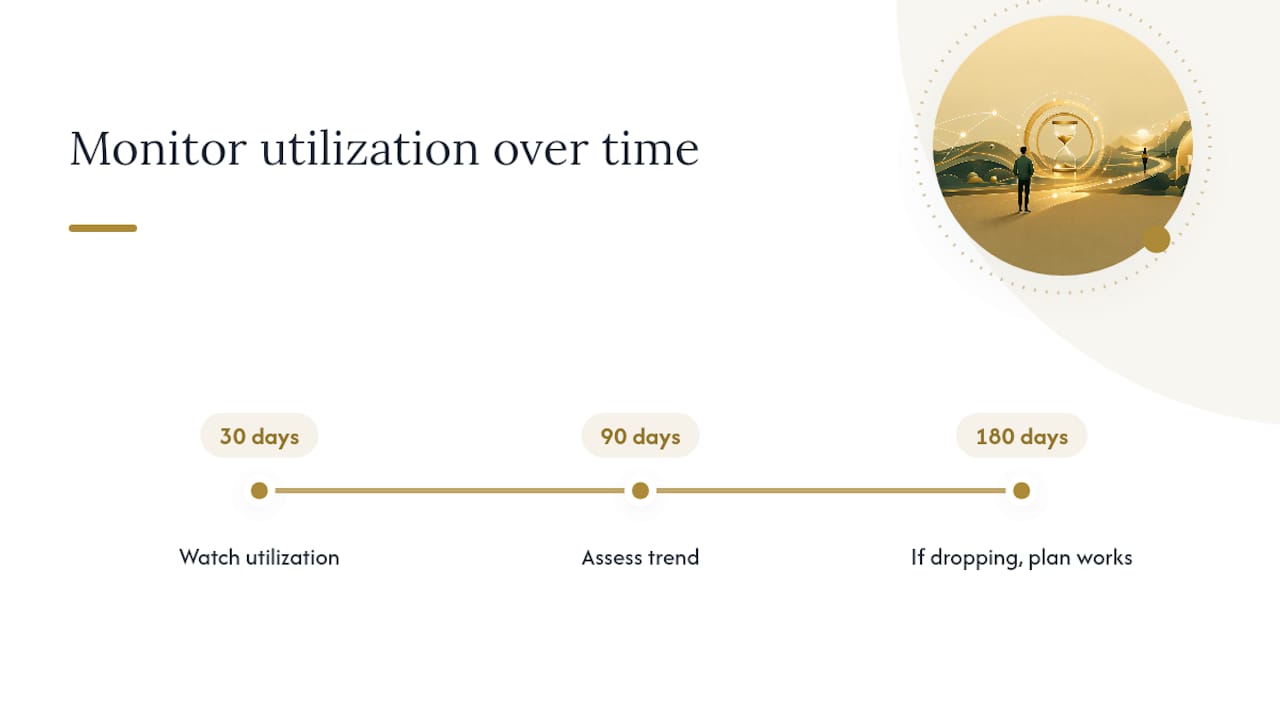
Most people who successfully dig out of credit card debt don't do it through willpower alone. They do it by removing the daily decision entirely, automating an extra payment so it happens whether or not that month feels tight. Watch your utilization ratio at 30, 90, and 180 days. If it's dropping, even slowly, the plan is working.
The behavioral piece matters as much as the math. Anchoring on the minimum is a habit, and habits get broken by changing the default, not by trying harder in the moment.
, Omar
Free Up Cash With a Structured 30-Day Reset
The math is clear: an extra $20 to $50 a month against your balance saves years and thousands in interest, but that money has to come from somewhere in your budget first. The No Spend Reset Challenge Workbook is built around finding exactly that kind of room, through daily behavioral challenges, subscription audits, printable trackers, and social scripts for the money conversations that usually derail a budget.
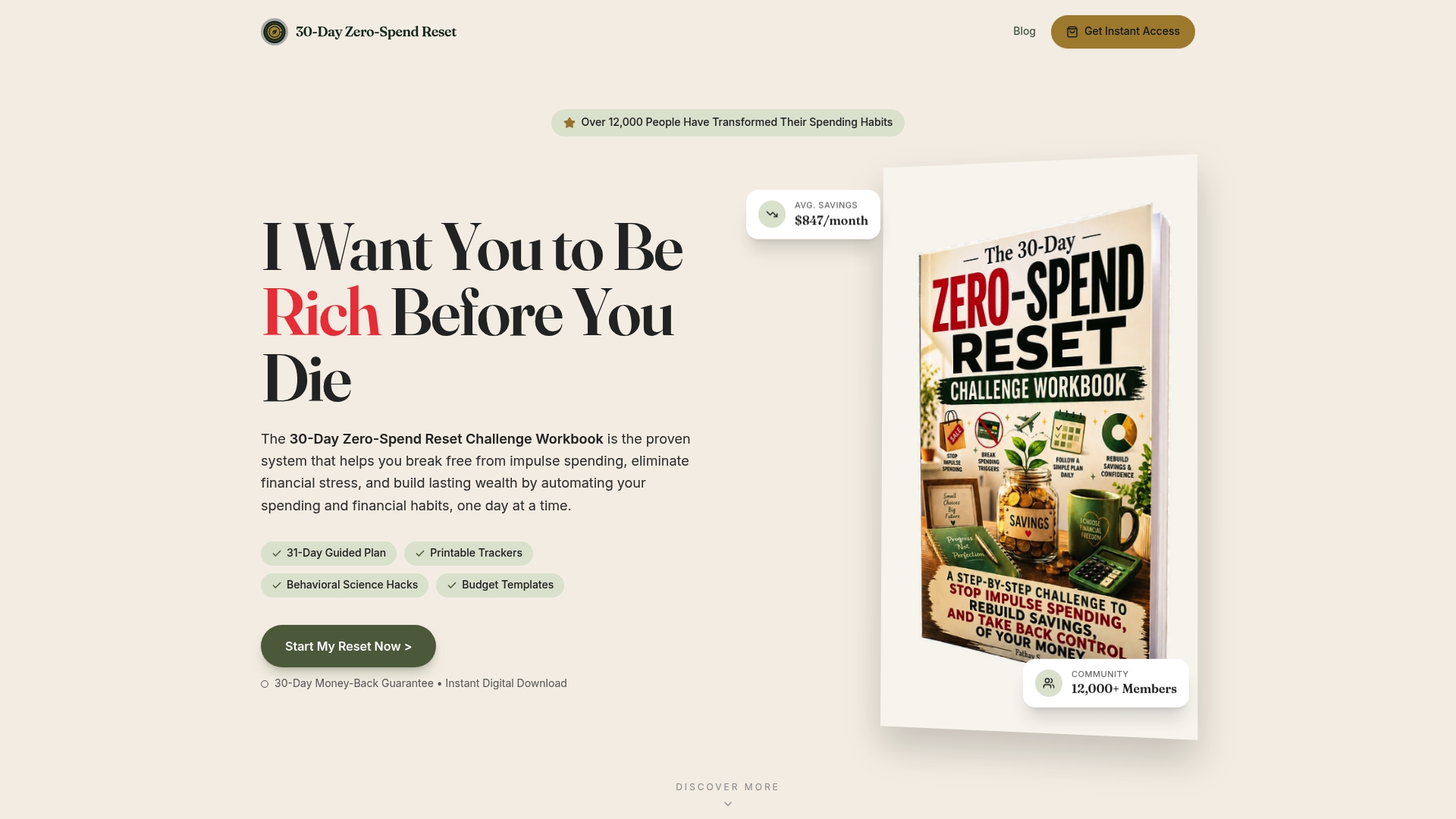
Unlike a generic budgeting app that asks you to log expenses after the fact, the workbook and its companion webapp walk you through the 30 days step by step, so the extra cash shows up before your next statement closes. Users have reported saving a significant amount of money each month using the program. Start with the zero-spend guide to see the daily structure, then apply whatever you free up directly to the balance sitting at the top of your avalanche list.
This article is general information, not a substitute for advice from a qualified financial advisor. Consult a qualified financial professional about your own circumstances before acting on anything here.
Sources
- How to get rid of credit card debt - MSU Extension
- Credit Card Accountability Responsibility and Disclosure Act of 2009, Cornell LII
- Pay more than the minimum - USAA Educational Foundation
Recommended
Ready to reset your spending?
Get the 30-Day Zero-Spend Reset Workbook and turn these ideas into a daily action plan.
Start the 30-Day ResetThis article is part of the 30-Day Zero-Spend Reset method. Explore the complete day-by-day system behind these ideas.
Read the full guide