
How to Set Up a Sinking Fund for Annual Expenses: A Step-by-Step Guide
Stop letting annual bills derail your budget. Learn how to set up a sinking fund for annual expenses to smooth out your cash flow and eliminate financial stress.
Understanding the Sinking Fund Strategy
If you have ever felt the sting of a surprise car registration bill or the panic of holiday spending in December, you are not alone. Many people struggle with irregular costs because they treat them as emergencies rather than planned events. Learning how to set up a sinking fund for annual expenses is the most effective way to transform these predictable, yet stressful, costs into manageable monthly line items. Unlike an emergency fund, which is reserved for truly unforeseen events like job loss or medical crises, a sinking fund is a dedicated pool of money for known, future expenses [1, 10]. By breaking large annual costs into small, monthly contributions, you remove the need to rely on credit cards or dip into your savings when the bill arrives [3, 6].
Step 1: Audit Your Past Spending
The first step in building your fund is identifying exactly what you need to save for. Pull up your bank and credit card statements from the last 12 months [1, 3]. Look for non-monthly charges that caused you stress or forced you to adjust your budget mid-month. Common categories include:
- Annual insurance premiums (car, home, or life).
- Vehicle maintenance and registration fees [4, 8].
- Holiday gifts and travel [2, 5].
- Professional dues or annual software subscriptions [2, 10].
- Back-to-school costs or seasonal clothing [2].
If you are struggling to track these, consider using a digital subscription audit to identify recurring charges that might be better managed through a sinking fund.
Step 2: Calculate Your Monthly Contributions
Once you have your list, estimate the total cost for each item. If the cost varies, round up to be safe. Next, determine the timeline. If you have 12 months until the bill is due, divide the total cost by 12. If you have a shorter window, divide by the number of months remaining [2, 7].
For example, if your car insurance is $1,200 and it is due in 10 months, you need to save $120 per month. If you are paid biweekly, you can divide that $120 by two to set aside $60 from every paycheck [2]. This granular approach makes the math feel much less intimidating [6].
Step 3: Choose Your Storage Method
Where you keep your money matters. You want your sinking funds to be accessible but separate from your daily checking account to avoid accidental spending [1, 4]. You have two primary options:
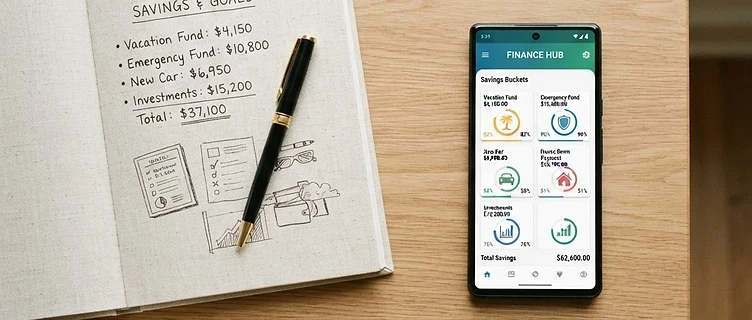
- Multiple Sub-accounts: Many modern high-yield savings accounts allow you to create "buckets" or sub-accounts with custom names like "Holiday Gifts" or "Car Repairs" [1, 2]. This provides a clear visual of your progress.
- Single Account with a Tracker: If your bank does not offer buckets, you can use one dedicated savings account and maintain a simple spreadsheet to track how much of that balance belongs to each category [2, 10].
Step 4: Automate for Success
Automation is the secret to consistent saving. Once you have calculated your monthly targets, set up an automatic transfer from your checking account to your sinking fund account to occur the day after payday [1, 3]. When the money moves automatically, you are less likely to view it as available cash for discretionary spending [4, 9]. If you find that your budget is too tight to fund everything at once, start with just three to five categories that have caused you the most trouble in the past [1, 4]. You can always add more as your financial habits improve.
Managing Your Funds Over Time
Sinking funds are not static. If you find that you over-budgeted for a category, you can roll the extra funds into the next year or redirect them toward other goals like debt repayment or your emergency fund [2]. Conversely, if you find yourself struggling to keep up with your contributions, it may be time to identify your spending triggers to see if you can free up more cash in your monthly budget. Remember that the goal is to reach the due date with the exact amount needed, allowing you to pay the bill in full without a second thought [4, 6].
If you have recently experienced a financial setback, you might need a post-overspend recovery plan before you can comfortably start your sinking funds. Consistency is more important than the speed at which you build these accounts. By treating these annual expenses as fixed monthly costs, you gain control over your financial future and eliminate the cycle of debt that often accompanies irregular bills.
Key Takeaways
- Sinking funds are for known, future expenses, while emergency funds are for the truly unexpected.
- Start by auditing your last year of bank statements to identify irregular annual costs.
- Divide the total annual cost by the number of months until the due date to find your monthly contribution.
- Automate your savings transfers to ensure the money is set aside before you have a chance to spend it.
- Keep your sinking funds in a separate account to prevent accidental spending.
- Start small by focusing on three to five categories rather than trying to fund everything at once.
If you are ready to take control of your finances and break the cycle of impulse spending, our 30-Day Zero-Spend Reset workbook provides the structure and behavioral tools you need to build lasting savings habits and master your budget.
Ready to reset your spending?
Get the 30-Day Zero-Spend Reset Workbook and turn these ideas into a daily action plan.
Start the 30-Day ResetFrequently asked questions
This article is part of the 30-Day Zero-Spend Reset method. Explore the complete day-by-day system behind these ideas.
Read the full guideKeep reading


Join the conversation
Be the first to share your thoughts on this article.