
Amazon Impulse Buying: Add Checkout Friction, Reset in 30 Days

Stop Amazon impulse buys with checkout friction, account settings, and a reset lasting 30 days, grounded in research on real time spending feedback.
Amazon Impulse Buying: Add Checkout Friction, Reset in 30 Days
Stop the purchase now: log out of the app, remove saved payment methods, and move the item to Save for Later, then wait 24 hours before deciding. This article covers Amazon-specific settings like voice-purchase controls, along with a 30-day behavior plan grounded in CFPB research on real-time spending feedback.
TL;DR:
- Keep a 14 to 30 day log of purchase urges, noting the time, mood, item, and device, then build barriers around your strongest triggers.
- Pause smaller purchases for 24 hours and delay items above roughly $50 for 30 days; check whether you own or can borrow a similar item.
- Turn off one click, remove saved cards, and lock Alexa buying with a code; voice controls still do not cover every purchase type.
- CFPB research found that a large majority of participants said seeing their remaining spendable balance in real time would help them avoid unnecessary purchases.
- Seek professional support if urges persist, feel uncontrollable, or cause financial or relationship harm; self help tactics alone are not recommended for these patterns.
Table of Contents
- Quick checklist: immediate tactics to stop an Amazon checkout right now
- A reproducible step-by-step system to break the impulse-buying loop
- Amazon-specific account, app, and device settings to reduce impulse buying
- Identify triggers and restructure your environment to prevent repeat impulse purchases
- Evidence and how a 30-day zero-spend reset operationalizes the system
- Realistic expectations for habit change and the zero-guilt approach
- How the 30-Day Zero-Spend Reset Challenge Workbook curbs Amazon impulse buys
- FAQ
- Sources
Quick checklist: immediate tactics to stop an Amazon checkout right now
The fastest way to break an impulse buy is to add friction between the urge and the tap that confirms it. Amazon's checkout is built to remove every obstacle between browsing and buying, so your job is to put a few back.
Start with these in-the-moment moves:
- Move the item to "Save for later" or your wishlist instead of the cart.
- Remove saved debit and credit cards from your Amazon account and disable 1-Click purchasing.
- Log out of the app, or uninstall it during your highest-risk hours (often late evening).
- Turn off push notifications and unsubscribe from promotional emails that create urgency.
- Share your cart with a friend or partner before buying, or simply clear it and start over tomorrow.
If you want a numbered version to follow in sequence when you feel the urge creeping in:
- Close the checkout tab and open your notes app instead.
- Write down the item, its price, and why you want it.
- Move the item to a saved list.
- Set a reminder for 24 hours from now.
- Walk away from the device for at least ten minutes.
Compulsive buying problems are marked by persistent urges and reduced control over purchases, which is different from an occasional impulse buy, but the same friction tactics help with both, according to diagnostic consensus research. Adding a single checkpoint, even a clumsy one like re-typing your card number, interrupts the automatic sequence that gets you from "I saw it" to "I bought it."
Pro Tip: Before you add anything to your cart, write your discretionary balance for the week on a sticky note where you can see it. Comparing a $40 impulse buy against a visible $62 balance makes the tradeoff concrete instead of abstract.
None of these tactics require deprivation or guilt. They work because they slow down a decision that commerce platforms are engineered to speed up, and a slower decision is a more honest one.
A reproducible step-by-step system to break the impulse-buying loop
A single moment of willpower rarely holds up against a well-designed checkout flow. What works better is a short system you repeat for a few weeks until the new habits stick.
- Run a 14 to 30 day trigger log. Every time you feel the urge to buy something on Amazon, jot down the time, your mood, the item, and the device you're using. Patterns show up fast: many people find the urge clusters around late nights, paydays, or specific apps.
- Add friction at the account level. Remove saved cards, turn off 1-Click, and require a PIN for any Alexa voice purchasing. Each extra step is a chance to reconsider.
- Adopt a pause rule. A straightforward 24-hour rule works for smaller purchases; a 30-day rule suits anything over roughly $50. Pair it with a short cart audit: do I already own something similar, could I borrow or rent this, will I still want it next week.
- Define a discretionary "fun money" balance. Decide on a number for the week or month and keep it visible, whether that's a note on your phone or a simple spending categories list. Checking a real balance before buying is the same mechanism CFPB researchers found effective.
- Replace the urge with a short ritual. A ten-minute walk, three lines in a journal, or texting a friend about the urge instead of acting on it gives your brain something else to do while the impulse fades.
- Audit subscriptions and recurring orders. Subscribe & Save items and recurring deliveries quietly prime you to keep shopping even when you're not actively browsing; canceling or consolidating them removes a steady stream of small triggers.
- Track two numbers weekly. Count avoided purchases (items you wanted but didn't buy) and money saved relative to your discretionary balance. Both numbers give you evidence that the system is working, which matters more for sticking with it than any single purchase decision.
Statistic Callout: In CFPB consumer research, a large majority of participants said tools that show real-time remaining spendable balance would likely help them avoid unnecessary purchases. Seeing the number, not just knowing it exists, changes behavior.
Pro Tip: Keep your trigger log somewhere you already check daily, like the notes app on your phone's home screen. A log you have to search for is a log you stop keeping within a week.
This sequence works because each step targets a different part of the loop: the trigger, the friction, the pause, the replacement, and the measurement. Skipping to step three without the trigger log usually fails, because you end up pausing on purchases that were never the real problem while missing the ones that are. Readers who want a simple budget method to anchor the fun-money step can adapt an existing framework rather than building one from scratch.
Amazon-specific account, app, and device settings to reduce impulse buying
Amazon's checkout speed is a feature for the business and a liability for your budget. A handful of settings changes put real obstacles back in the path.
- Disable 1-Click purchasing in Your Account under Login & Security, and remove saved payment methods from Your Payments. Without a stored card, every purchase requires you to retrieve and type in your card number, which is enough friction to stop a fair number of impulse buys before they start.
- Turn off or lock down Alexa voice purchasing. Amazon's own help documentation explains that voice purchasing can be managed under Alexa settings, specifically More, then Settings, then Account Settings, then Voice Purchasing, where you can require a confirmation code or disable it entirely. Amazon notes that recognized-voice controls and Kid Skills purchasing restrictions don't cover every purchase type, so a voice PIN alone isn't a complete safeguard.
- Review Subscribe & Save and past orders. Recurring deliveries you set up months ago quietly train you to expect regular Amazon activity. Canceling items you no longer need, or consolidating several small subscriptions into fewer deliveries, removes a steady trigger for additional browsing.
- Log out, uninstall, or switch to desktop-only browsing. The mobile app's one-tap convenience is exactly what makes it risky. Uninstalling it during high-risk hours, or moving all Amazon browsing to a desktop browser, adds enough delay to break the habit loop.
- Use Save for Later and wishlists instead of finishing checkout. Amazon's wishlist and saved-items features exist for this purpose even if that's not how they're marketed: they let you capture the want without completing the transaction.
Pro Tip: Block app notifications first, before you touch anything else.
These changes take about ten minutes total and don't require canceling your account or swearing off Amazon altogether. They simply shift the platform back toward requiring the kind of deliberate steps that used to exist before one-click checkout became standard.
Identify triggers and restructure your environment to prevent repeat impulse purchases
Settings changes slow down the checkout, but they don't address why you ended up there in the first place. That requires knowing your own triggers.
Common patterns worth watching for:
- Late-night browsing, when willpower is lowest and judgment is fuzziest.
- Payday, when a fresh balance feels like permission to spend.
- Boredom or stress, when shopping functions as a quick mood fix.
- Social media ads and influencer links that create sudden, specific wants.
A 14 to 30 day trigger log is the simplest way to see your own patterns clearly. Record four fields each time an urge hits: the time of day, your mood, the item, and the device or app you were using when you noticed the pull. After two weeks, most people can point to one or two dominant triggers rather than treating every purchase as random.
Statistic Callout: A 2024 Frontiers study found that anxiety and depression were significant predictors of online-shopping addiction among the people studied, which suggests emotional state matters as much as account settings when it comes to preventing repeat impulse buys.
Commitment devices help once you know your triggers. A scheduled "no-shopping window" during your riskiest hours, an app blocker on your phone, or a visible spend-balance widget all work the same way: they make the costly behavior slightly harder to reach in the exact moment you're most likely to reach for it. Notification hygiene matters here too. Turning off retail ads and muting social feeds during your trigger windows, covered in more detail elsewhere, reduces how often you're primed to shop in the first place.
If urges to buy are frequent, hard to resist, and tied to regulating difficult emotions rather than genuine need, and if they're causing real financial or relationship strain, that pattern looks different from ordinary impulse spending. Diagnostic consensus research describes compulsive buying-shopping problems as involving persistent urges, diminished control, and continued buying despite negative consequences, and recommends professional support when those features are present rather than relying on self-help tactics alone.
Evidence and how a 30-day zero-spend reset operationalizes the system
The tactics above aren't guesses. CFPB consumer research tested real-time spending feedback prototypes and found that seeing a live, visible balance prompted people to reconsider purchases they would otherwise have made automatically. Separately, peer-reviewed work in the International Journal of Consumer Studies linked anxiety, depression, and low self-regulation to a higher risk of online-shopping problems and indebtedness, reinforcing the idea that emotional triggers deserve as much attention as checkout friction.
A structured reset turns these findings into daily practice rather than one-time advice. A 30-day zero-spend reset program can map directly onto the steps above:
- Daily behavioral challenges that build the trigger log and pause-rule habits gradually instead of all at once.
- Printable trackers that make a discretionary balance visible the same way the CFPB's prototypes did.
- A built-in subscription audit to catch Subscribe & Save and recurring orders before they prime more buying.
- Social scripts for talking about money with a partner or family member without the conversation turning into a guilt trip.
Behavioral change sticks when the environment does part of the work, not when willpower is expected to do all of it.
For readers who want to test the approach before committing to a full month, a shorter low spend month or a zero-spend guide covers the same core principles at a smaller scale.
Realistic expectations for habit change and the zero-guilt approach
Friction beats willpower, in my experience watching how these systems actually hold up. Removing a saved card does more in one afternoon than a week of telling yourself to "just be more disciplined," because it changes what happens automatically instead of relying on you to notice the urge and resist it every single time.

Relapse is part of the process, not proof that it failed. If you buy something impulsively in week two, the useful move is to check your trigger log, see what led there, and adjust one setting or habit rather than abandoning the whole plan.
Pick one thing from the checklist above and do it today. The account change that takes ten minutes now will matter more than any amount of good intentions later.
, Omar
How the 30-Day Zero-Spend Reset Challenge Workbook curbs Amazon impulse buys
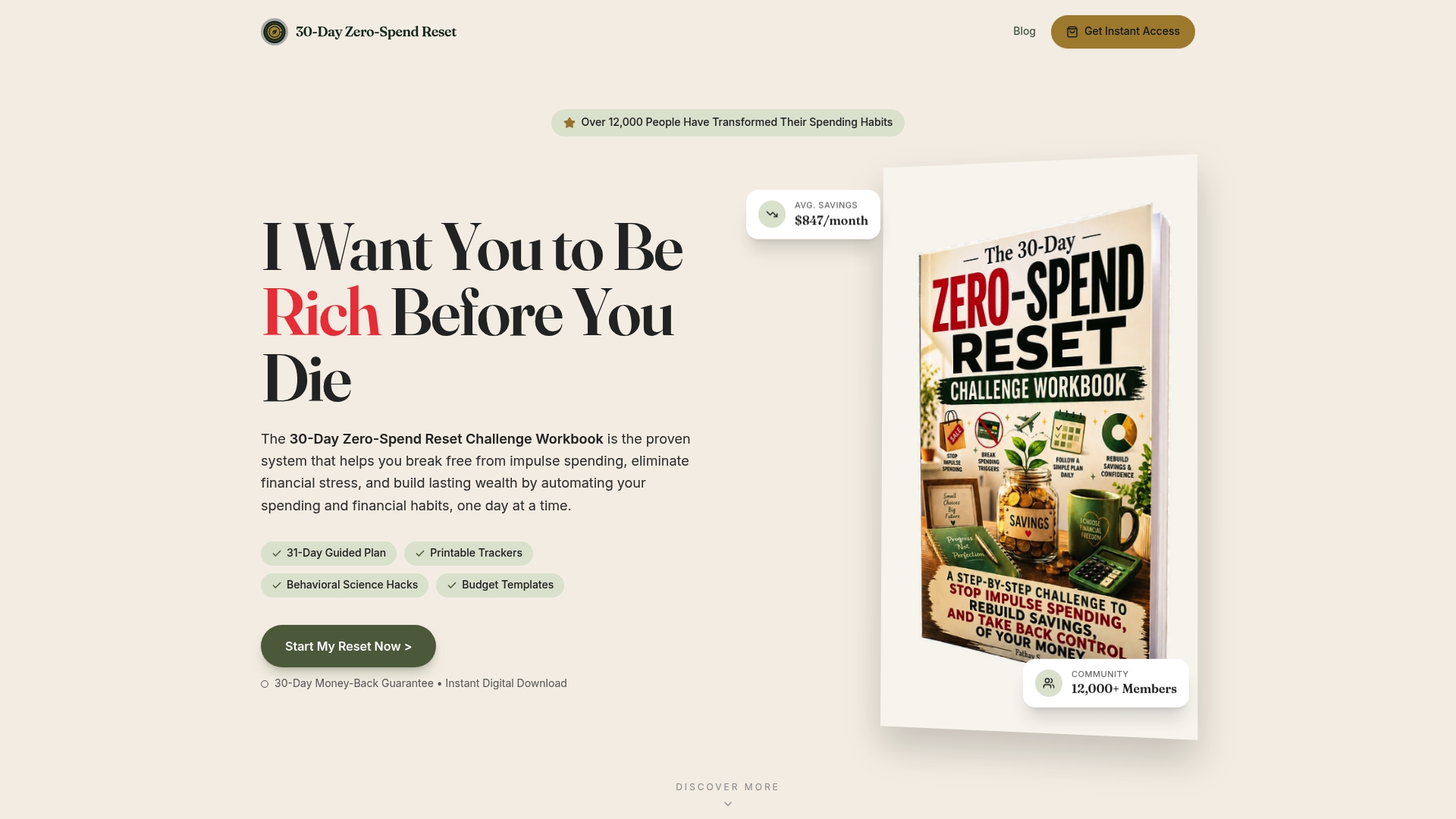
Account settings and trigger logs get you partway there, but a structured program keeps the momentum going past week one. Our 30-Day Zero-Spend Reset Challenge Workbook turns everything in this article into a daily system instead of a list you mean to get around to.
Inside, you'll find:
- Daily behavioral challenges that build pause habits and discretionary-balance awareness step by step.
- Printable trackers for spending, triggers, and progress.
- A subscription and recurring-order audit built into the process.
- Meal planning guides that cut one of the biggest hidden spending categories.
- Social scripts for money conversations that don't turn into arguments.
It's built for anyone who's tried a budgeting app, stuck with it for a week, and quietly gone back to old habits. If that sounds familiar, the 30-Day Zero-Spend Reset Challenge Workbook walks you through the same behavior-design principles covered above, in order, with nothing left for you to figure out on your own.
This article is general information, not a substitute for advice from a qualified financial advisor. Consult a qualified financial professional about your own circumstances before acting on anything here.
FAQ
How do you stop being impulsive with money?
Add friction between the urge and the purchase: remove saved cards, use a 24-hour pause rule, and keep your discretionary balance visible before you buy. CFPB research found that seeing a real-time remaining balance helped most participants reconsider unnecessary purchases.
How do I quit Amazon shopping?
Start by removing saved payment methods, disabling 1-Click, and uninstalling the app during your highest-risk hours. Combine that friction with a structured plan, such as a 30-day reset, so the change outlasts the first motivated week.
Why have some people stopped shopping on Amazon?
Many cite concerns about overspending triggered by one-click convenience, voice-purchase accidents, and constant promotional notifications that erode deliberate decision-making. Journalistic reporting on shopping psychology notes that e-commerce design features like countdowns and one-click offers are built to reduce the natural pause before buying.
Is impulsive shopping related to ADHD?
Impulsive shopping isn't exclusive to ADHD, though difficulty with self-regulation is a shared feature across several conditions. Diagnostic consensus work describes compulsive buying-shopping problems by persistent urges and diminished control, and recommends professional evaluation when patterns are frequent, distressing, or financially damaging, regardless of the underlying cause.
Sources
- Consumer insights on managing spending (CFPB)
- Amazon help: Voice purchasing and purchase controls
- Online shopping addiction and self-regulation study (Wiley)
- Role of self-control, financial attitude, depression, anxiety, and stress in predicting consumers’ online shopping addiction (Frontiers)
- Compulsive buying-shopping disorder diagnostic criteria (APA record)
Recommended
Ready to reset your spending?
Get the 30-Day Zero-Spend Reset Workbook and turn these ideas into a daily action plan.
Start the 30-Day ResetThis article is part of the 30-Day Zero-Spend Reset method. Explore the complete day-by-day system behind these ideas.
Read the full guideKeep reading



Join the conversation
Be the first to share your thoughts on this article.