
Spending Triggers: Pause the Urge, Reset With Compassion in 30 Days

Spot the emotions behind impulse spending, pause before checkout with simple tactics, and follow a compassionate 30 day path to build lasting habits.
Spending Triggers: Pause the Urge, Reset With Compassion in 30 Days
Spending triggers are identifiable emotional or situational cues that make otherwise unnecessary purchases feel urgent, and you can reduce their pull with tracking, friction, and alternative ways to regulate how you feel. A stressful day or a well-timed ad can push you toward checkout before you've thought it through. The good news is once you can name a trigger, you can interrupt it.
TL;DR:
- Track purchases for two to four weeks, noting the emotion and context before each one, then focus on the one or two most frequent triggers.
- Buy now, pay later options soften the pause before checkout, and CFPB research links their use to lower liquidity and greater revolving debt risk.
- Remove saved cards and checkout shortcuts, then wait 24 hours before ordinary purchases and longer for costly items, giving the urge time to fade.
- CFPB testing found that shoppers shown their remaining budget at checkout spent about 9.6% less, suggesting checkout balance feedback can interrupt automatic buying.
- A small emergency buffer and a modest fun allowance can make unexpected costs and planned treats easier to absorb without abandoning the budget.
Table of Contents
- Common Triggers That Lead to Impulse Spending
- How to Identify Your Personal Spending Triggers
- Tactics to Stop an Impulse Purchase in the Moment
- Building Habits That Outlast the Trigger
- A 30-Day Path for Putting These Tactics Into Practice
- A Compassionate Way to Think About Your Own Triggers
- Ready for a Structured Reset? Here's What That Looks Like
- FAQ
- Sources
Common Triggers That Lead to Impulse Spending
Most unplanned purchases trace back to a small set of familiar cues. Stress and overwhelm push people toward quick relief, often called retail therapy. Boredom creates a search for stimulation that a new purchase briefly satisfies. Loneliness and low self-worth can turn shopping into a stand-in for connection or validation, while celebration and reward turn good news into an excuse to spend. Social comparison and FOMO, especially from scrolling other people's purchases, add pressure to keep up.
Convenience makes all of these triggers easier to act on. Saved payment cards, personalized ads, and buy now, pay later (BNPL) options remove the small pauses that used to slow down a purchase.
- Stress or overwhelm: shopping as quick emotional relief
- Boredom: browsing turns into buying for stimulation
- Loneliness or low self-worth: purchases standing in for connection
- Celebration or reward: good news becomes a spending excuse
- Social comparison or FOMO: keeping pace with what others buy
CFPB research links BNPL use to lower liquidity and a higher risk of revolving debt, since splitting a price into smaller installments reduces the discomfort that normally makes you think twice before buying.
How to Identify Your Personal Spending Triggers
You can't manage a trigger you haven't named. A short tracking period gives you the data to spot your own patterns instead of guessing.
- Keep a spending journal for two to four weeks, noting the emotion, context, and event right before each purchase, plus how you felt afterward.
- Look for timing and context patterns: a certain time of day, a specific app, a scroll through social media, or an argument that preceded the purchase.
- Track behavioral signals like how fast you move from browsing to checkout, how often you use BNPL, and which spending categories spike.
- Sort your entries by emotion and situation to see which trigger shows up most often.
Our spending categories guide can help you organize this tracking so category spikes are easier to spot.
Pro Tip: After two weeks, review your journal and pick the one or two triggers that show up most, then focus your energy there before tackling everything else.

Tactics to Stop an Impulse Purchase in the Moment
When a trigger hits, friction and a short delay buy you the time your rational brain needs to catch up. Start by removing the shortcuts that make buying too easy: delete saved cards, remove one-click checkout, unsubscribe from promotional emails, and block shopping ads where you can. Our post on doomscroll shopping covers how to rebuild that friction on your phone specifically.
Pair friction with a delay rule. A flat 24-hour wait, or a longer wait for purchases above a set dollar amount, gives the urge time to fade before you commit.
- Add friction: remove saved payment info, delete shopping apps, unsubscribe from sale emails
- Enforce a delay: 24 hours for most items, longer for bigger purchases
- Substitute the urge: a short walk, a call to a friend, ten minutes of slow breathing, or a quick chore
- Check your real numbers before buying: look at your spendable balance or a budgeting app notification first
Real-time spending feedback works. In CFPB testing, participants who saw their remaining budget at the point of purchase spent about 9.6% less than those who didn't, simply because the pause to check a number interrupted the automatic reach for a card.
Building Habits That Outlast the Trigger
Interrupting one purchase is useful. Changing the pattern that produces the urge in the first place is what actually sticks. Start by building a small buffer in your budget for atypical expenses, plus a modest recurring "fun" allowance so spending doesn't have to feel like all-or-nothing deprivation.
Labeling and alerts help too. A CFPB study on debt labeling found that separating ordinary spending from exceptional spending, and sending alerts when something unusual happens, increased repayment amounts under certain conditions. You can copy this without special software: tag transactions by hand or use separate cards for ordinary versus exceptional spending.
- Set a small buffer for unexpected costs so one surprise doesn't derail your budget
- Build in a modest, guilt-free fun allowance instead of banning spending outright
- Label ordinary versus exceptional expenses, or set alerts for unusual purchases
- Automate transfers to savings so the desired behavior happens without a decision each time
Budgeting apps that show your remaining spendable balance in real time give you the same kind of feedback the CFPB tested, turning a one-time insight into a daily habit.
A 30-Day Path for Putting These Tactics Into Practice
A single rule rarely survives a bad week. Daily micro-challenges, short trackers, and scripted responses tend to hold up better because they lower the effort each decision takes, which is also why structured programs outperform one-off willpower fixes.
A daily-challenge format can put the tactics above into practice in order: a tracking phase to find your top triggers, friction and delay tasks to interrupt them, and habit-building tasks to replace them.
- Daily micro-challenges that build on each other instead of asking for one big change
- A spending tracker and subscription audit to surface hidden recurring costs
- Social scripts for money conversations, useful when social pressure is the trigger
- Meal planning tools to reduce one of the most common impulse categories: food delivery
Our zero-spend guide walks through a sample version of this sequence if you want to see how the daily tasks are structured before committing to a full 30 days.
A Compassionate Way to Think About Your Own Triggers
Spending triggers are not a character flaw. Stress-shopping at 11 PM or buying something after a hard conversation is a common, human response to discomfort, not evidence that you're bad with money.
What tends to help is picking one tactic, not ten, and testing it for a week. Track what happens, adjust, and move to the next trigger only once the first one feels manageable.
, Omar
Ready for a Structured Reset? Here's What That Looks Like
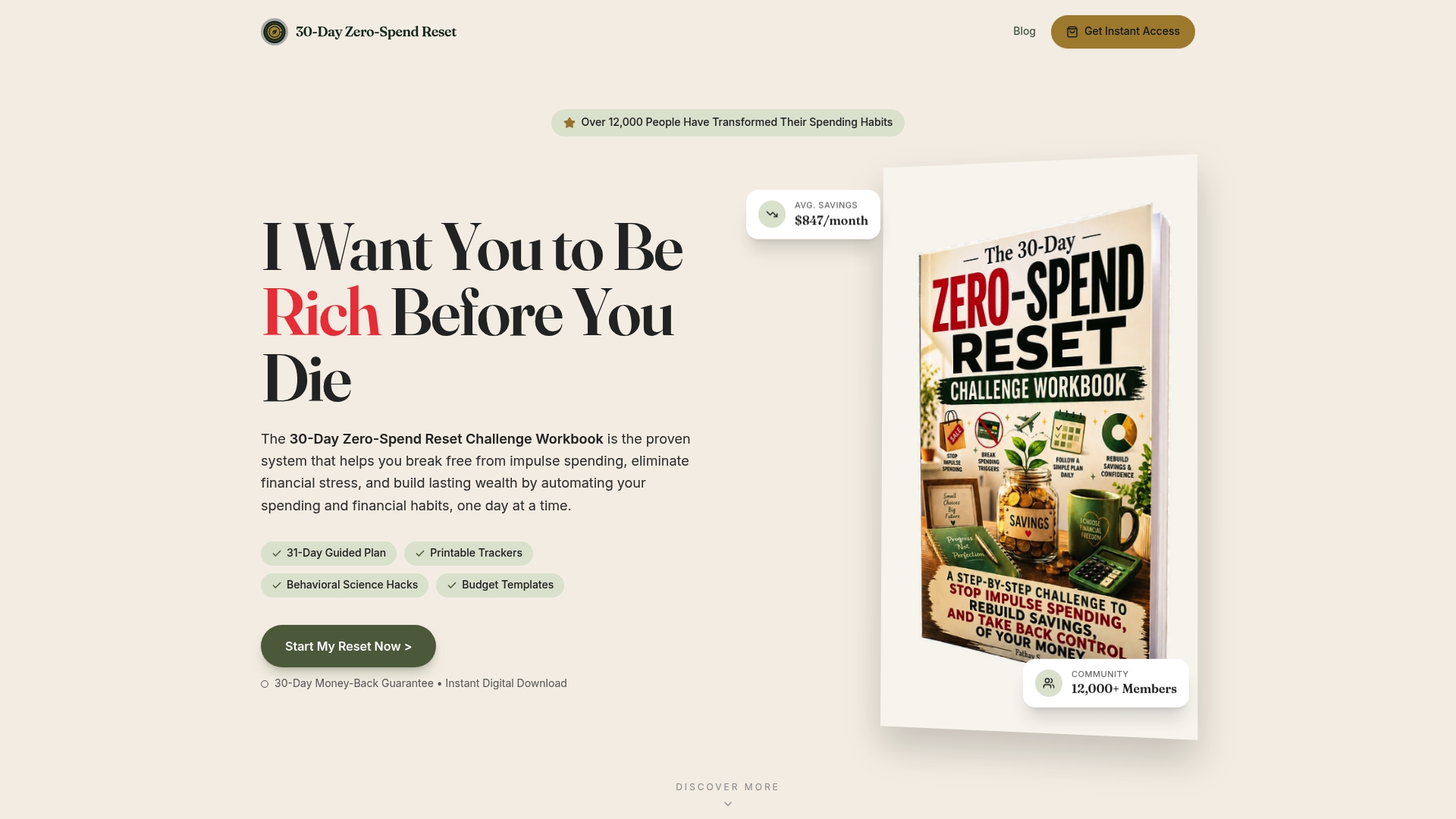
If tracking your triggers has shown you a pattern you want to break, the 30-Day Zero-Spend Reset Challenge Workbook turns the tactics above into a daily system: trackers, a subscription audit, meal plans, and social scripts, all built around behavioral psychology instead of raw willpower.
For deeper implementation, the Zero-Spend Accelerator Vault adds companion templates and tools. If a shared budget with family or roommates is part of your spending picture, PoolCash can help coordinate group expenses so shared gifts or plans stop becoming a personal trigger.
| What you get | How it helps | |---|---| | Daily behavioral challenges | Breaks trigger-interruption into manageable steps | | Spending and subscription trackers | Surfaces hidden recurring costs and patterns | | Social scripts | Handles social-pressure spending triggers | | Meal planning guides | Reduces impulse food and delivery spending |
Users have reported significant financial improvements using the program. Start your reset at Nospendreset.
This article is general information, not a substitute for advice from a qualified financial advisor. Consult a qualified financial professional about your own circumstances before acting on anything here.
FAQ
What is financial anxiety?
Financial anxiety is ongoing worry or fear about money, often tied to debt, insufficient savings, or unpredictable expenses. APA reporting notes that financial stability and mental health are closely connected, and spending itself can become a way of managing that anxiety in the short term.
What is overspending a symptom of?
Overspending is often a symptom of using purchases to regulate difficult emotions rather than a lack of discipline. Research on emotion dysregulation ties impulsive spending to internal cues like stress, boredom, and anxiety, and external cues like ads or sales.
What are the four types of spending behavior?
There is no single universal framework, but spending is commonly grouped into planned spending, impulse spending, emotional spending, and compulsive spending. Compulsive buying in particular shows higher rates of co-occurring depression and anxiety along with faster, less deliberate checkout behavior.
Why does spending money give me anxiety?
Spending can trigger anxiety when it's tied to guilt, debt, or fear of running short later, especially after an impulsive purchase. Behavioral guidance from APA experts suggests making purchase decisions in a calm, "cold" state and setting specific times to shop, which reduces the anxious, reactive buying that often follows a stressful trigger.
Sources
- APA: research on emotion dysregulation and impulsive spending
- CFPB, Consumer use of buy now, pay later (2023)
- Frontiers in Psychiatry, compulsive buying research (2025)
Recommended
Ready to reset your spending?
Get the 30-Day Zero-Spend Reset Workbook and turn these ideas into a daily action plan.
Start the 30-Day ResetThis article is part of the 30-Day Zero-Spend Reset method. Explore the complete day-by-day system behind these ideas.
Read the full guideKeep reading




Join the conversation
Be the first to share your thoughts on this article.