
5 Step Financial Detox: 30 Day Behavior Reset Backed by CFPB and FDIC

A 5 step 30 day financial detox using behavior change and real time visibility. Backed by CFPB and FDIC research, with a workbook and webapp.
5 Step Financial Detox: 30 Day Behavior Reset Backed by CFPB and FDIC
A financial detox means stepping back from automatic, unexamined spending and rebuilding conscious habits around your money, and the first move is simple: pull up your last 30 days of transactions and flag every purchase that wasn't a bill or a necessity. This process targets discretionary leakage, not your rent or your medical bills, and it's meant to feel like a reset rather than a punishment.
TL;DR:
- Choose a 7 day reset for quick clarity before a known overspend, or use 30 days to test automation and cover a full billing cycle.
- Audit three months of statements for forgotten recurring charges, but keep rent, utilities, insurance, and necessary medical costs outside the discretionary spending cap.
- For nonessential purchases above your chosen limit, wait 48 hours; delete saved card details, unsubscribe from marketing emails, and block high risk shopping sites.
- A lab trial found that feedback tied to receipts cut outlays roughly 9.6% versus no feedback, supporting balance alerts and weekly transaction tagging.
- Automate a transfer for the day after payday, but avoid locking away emergency savings if you may need quick access to cash.
Table of Contents
- What a financial detox actually targets
- The 5-step financial detox plan
- The research behind these behavior-change tactics
- Why a behavior-first detox actually sticks
- Follow a structured 30-day plan instead of guessing
- FAQ
- Sources
What a financial detox actually targets
A financial detox differs from a traditional budget because it starts with behavior and environment, not with a spreadsheet of categories and limits. Strict rules tend to fail quickly when the underlying triggers, like boredom scrolling or stress spending, stay in place. The detox works on those triggers first, then adds structure.
The scope matters. You're auditing discretionary leakage: subscriptions you forgot about, food delivery, impulse buys, upgrades you didn't need. Essentials like rent, utilities, insurance, and necessary medical costs stay untouched.
You have two timeline options:
- A 7-day quick reset works if you need fast clarity before a specific goal, like a paycheck gap or a known overspend.
- A 30-day reset works better for building habits that stick, since it gives you time to test automation and see a full billing cycle.
The 5-step financial detox plan
This plan moves from visibility to sustainability over roughly 30 days. Each step builds on the last, so skipping ahead tends to undercut the results.
- Audit your spending. Pull three months of statements, list every recurring charge, and circle anything you'd forgotten you were paying for. Subscription creep is the easiest money to recover, since canceling a few forgotten services often frees up real monthly cash.
- Set boundaries and a target. Pick a discretionary spending cap for the month and define an emergency cushion goal, such as two to four weeks of essential costs, based on findings that people who preserve a liquid buffer handle unexpected debt and savings tradeoffs better, according to a CFPB online experiment.
- Control your environment. Delete saved card numbers from shopping sites, unsubscribe from marketing emails, and use website blockers during high-risk hours. Add a 48-hour rule: any non-essential purchase over a set amount waits two days before you buy it.
- Automate your protections. Set a "pay yourself first" transfer for the day after payday, turn on round-up savings if your bank offers it, and schedule bill payments so nothing slips and triggers a late fee.
- Sustain the habit. Do a 2-minute daily check-in on your balance, write simple if-then plans ("if I want to order delivery, then I check my meal plan first"), and hold a weekly checkpoint to review the past seven days.
A loose 30-day calendar helps: spend day one on the transaction audit and subscription list, days two through seven setting up environment controls and automation, and the remaining weeks on daily tracking with weekly checkpoints, closing with an end-of-month review where you move any freed-up money into a named savings goal. For a ready-made version of these boundaries, our spending rules list walks through cooling-off scripts you can copy directly.
- When canceling a subscription, a short script works: "I'm canceling my plan effective this billing cycle, please confirm no further charges."
- When telling a vendor you're pausing service, state the date clearly and ask for written confirmation.
Pro Tip: Cancel subscriptions through your bank's virtual card controls when a company makes cancellation difficult online.
The research behind these behavior-change tactics
The core idea, that visibility changes behavior more reliably than restriction, has direct support. The CFPB's work on spending visibility found that showing people a real-time "safe to spend" figure helped them curb impulse purchases and stick to their budgets better than static monthly limits.
A lab trial testing receipt-level spending feedback found it reduced spending by roughly 9.6% compared with no feedback at all. That gap is the practical case for balance alerts and transaction tagging rather than willpower alone.
On the savings side, the FDIC's guidance on emergency funds recommends automatic transfers into a separate account, starting small if needed, since consistent small deposits build a cushion without requiring constant decisions.
A 2026 trial on reducing impulse buying found that goal-setting paired with expense tracking and progress feedback outperformed simple habit substitution for improving account balances, which supports pairing if-then rules with visible tracking rather than relying on either alone.
A short tool checklist to act on this:
- Turn on balance alerts and low-balance notifications in your banking app.
- Tag transactions by category weekly, not just at month-end.
- Use card controls to freeze a card temporarily instead of canceling it outright.
Commitment devices like locking savings away help some people, but they can backfire if you need quick access to funds during a real emergency, so weigh that tradeoff against your own liquidity needs.
Why a behavior-first detox actually sticks

Most money advice assumes people fail from a lack of discipline. What I've seen is closer to the opposite: people fail because the plan asks them to fight their environment every single day. A detox that changes the environment first, removing saved cards, automating transfers, building in a cooling-off period, needs far less willpower to maintain.
The common failure mode is all-or-nothing thinking, where one slip feels like total failure and the whole reset gets abandoned. A good plan protects your emergency cushion throughout and treats a bad day as data, not a verdict.
, Omar
Follow a structured 30-day plan instead of guessing
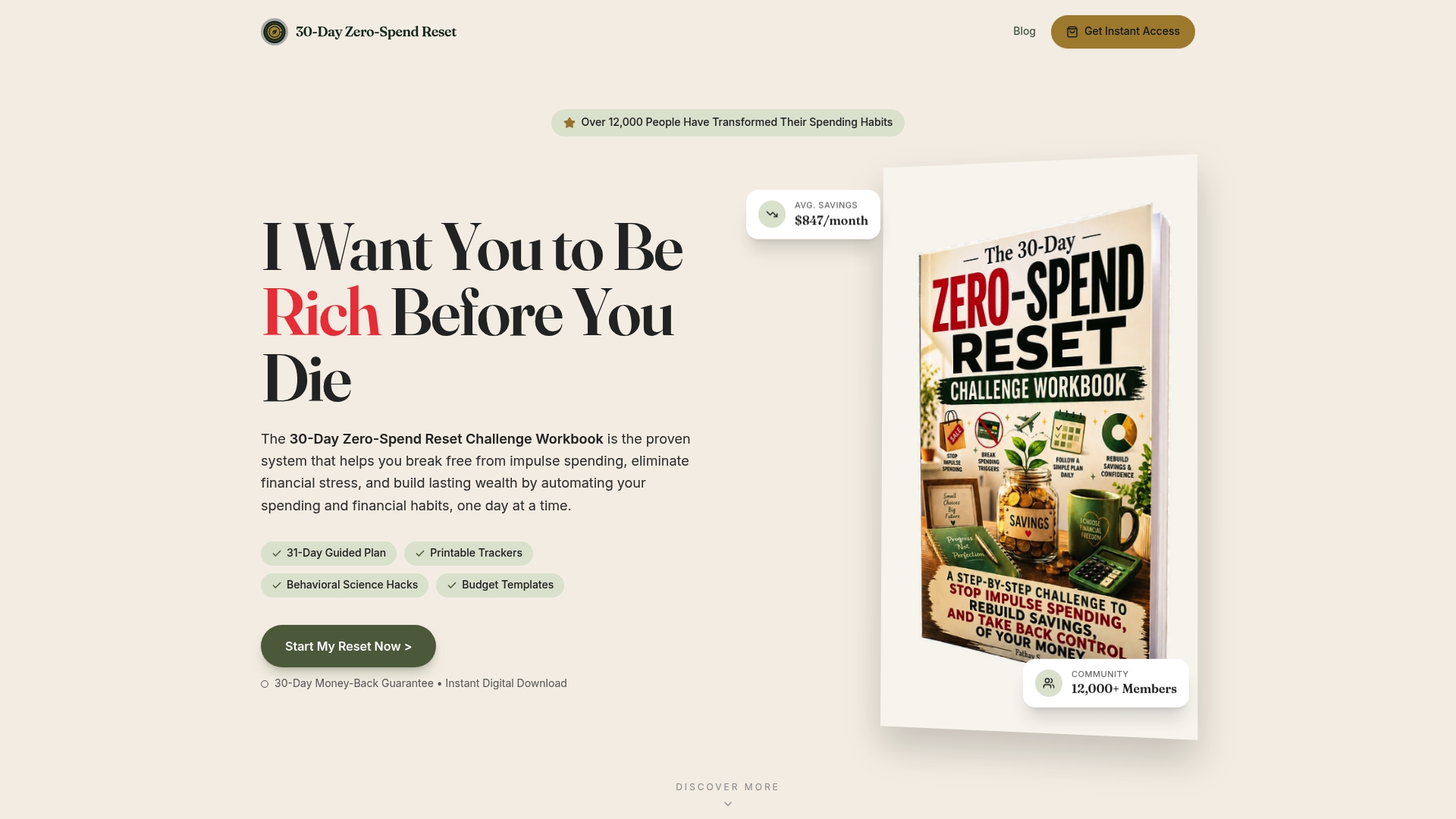
Running this plan from memory is hard, which is why we built the 30-Day Zero-Spend Reset Challenge Workbook around the same five steps: daily challenges that walk you through the audit, subscription cancellation scripts, printable trackers, and meal plans that reduce the decision fatigue behind food delivery spending.
- Daily behavioral challenges that build the habits in order, without requiring extreme restriction.
- A companion webapp for real-time tracking and progress feedback.
- Subscription audit scripts and budget templates ready to use on day one.
If you're resetting spending with a partner, roommates, or family, a shared workspace like PoolCash can help you track joint expenses and contributions without the usual friction. For your own 30-day reset, start with the workbook and move at your own pace from there.
FAQ
What is the 7 7 7 rule for money?
Definitions of the "7 7 7 rule" vary across personal finance sources, and there's no single authoritative version. A common approach uses it as a cooling-off guideline: wait seven minutes, seven hours, or seven days before a purchase depending on its size, which overlaps with the 48-hour rule used in structured detox plans.
How do I stop struggling financially?
Start with visibility: a full transaction audit shows exactly where money leaks, which is the first step in most structured resets. From there, automating savings transfers and canceling unused subscriptions free up cash without requiring ongoing willpower.
How do I do a money cleanse?
A money cleanse typically follows a short, intense version of a financial detox: audit your last 30 days of spending, cancel unused subscriptions, set a discretionary cap, and automate a savings transfer. Many people run this over 7 days for a quick reset or 30 days for lasting habit change.
What is money dysmorphia?
Money dysmorphia describes a distorted perception of your own financial situation, where you feel broke despite having stable finances or feel financially secure despite real warning signs. Addressing it usually starts with the same step as a financial detox: looking directly at real numbers instead of relying on anxiety or assumptions.
Sources
- Managing your spending: Achieve your goals (CFPB blog)
- Saving for the unexpected and your future (FDIC)
- Reducing impulse buying: A review and research agenda (2026 trial summary)
Recommended
Ready to reset your spending?
Get the 30-Day Zero-Spend Reset Workbook and turn these ideas into a daily action plan.
Start the 30-Day ResetThis article is part of the 30-Day Zero-Spend Reset method. Explore the complete day-by-day system behind these ideas.
Read the full guideKeep reading




Join the conversation
Be the first to share your thoughts on this article.