
Cut $14 a Week Food Waste and Lower Your Grocery Bill in Two Weeks

Cut avoidable food waste and lower your grocery bill fast. Use a two week pantry challenge, meal planning, and simple tracking to see measurable savings.
Cut $14 a Week Food Waste and Lower Your Grocery Bill in Two Weeks
Cook from what is already in your kitchen, plan one week of meals before you shop, and set a simple weekly grocery cap: those three moves cut a typical shopper's spending fastest. Avoidable food waste alone costs the average person $728 a year, about $14 a week, making it the biggest leak most households can close. Pair that fix with a short two-week pantry challenge and a few practical shopping habits, and the savings start showing up on this week's receipt.
TL;DR:
- Shopping the kitchen, planning meals in advance, and setting a weekly grocery cap can significantly reduce household spending.
- Conducting a two-week pantry challenge reveals actual food waste and helps adjust buying based on what is used and discarded.
- Building shopping lists around specific meals and comparing unit prices prevents overbuying and reduces spoilage, saving money over time.
- Choosing stores based on price per unit and limiting bulk purchases to long-lasting items can lead to consistent savings.
- Reducing food waste, prepping leftovers, and tracking spending are critical habits that lower grocery costs and avoid unnecessary expenses.
Table of Contents
- Quick wins: 7 immediate actions to lower this week's grocery bill
- The 2-week pantry challenge: step-by-step
- Meal planning and shopping lists that stop waste and save money
- Smart shopping strategies: store choice, unit pricing, private label, and bulk buying
- Meal prep, storage, and leftovers: stop wasting food that costs you money
- Budgeting and tracking: a simple system to measure grocery bill reductions
- Evidence and behavioral tactics: why short challenges and checklists work
- Author Omar's short perspective on realistic outcomes
- How the 30-Day Zero-Spend Reset Challenge Workbook can help
- FAQ
- Sources
Quick wins: 7 immediate actions to lower this week's grocery bill
Before your next shopping trip, shop your own kitchen first. Check the fridge, freezer, and pantry for items nearing their use-by date and build your list around using those up, not around what looks appealing on the shelf.
- Write an essentials-only list based on meals you actually plan to cook, not a general stock-up.
- Swap name brands for store or private label on staples like pasta, rice, canned goods, and spices.
- Buy fewer pre-cut, pre-cooked, or single-serve items, since you pay extra for the prep work.
- Scan your loyalty app for digital coupons before you shop, and check that sale tags still match the price at checkout.
- Cook one extra portion at dinner and box it for two lunches instead of buying something separately.
- Check the unit price, not the sticker price, on anything sold in more than one size.
- Skip the end-of-aisle displays unless the item was already on your list.
Pro Tip: Take a photo of your pantry and fridge before you shop. It takes ten seconds and stops the most common waste of money: buying something you already own.
Expired or mismatched sale tags happen often enough that it pays to check your receipt before you leave the store, since Consumer Reports has documented pricing errors on sale items that cost shoppers money they never meant to spend.
The 2-week pantry challenge: step-by-step
A short, structured challenge forces fast savings and shows you exactly where your money leaks out. Set ground rules first: pantry-first means you build every meal around what you own, and you only buy fresh perishables like milk, eggs, and produce as true gaps appear.
- Inventory your freezer, pantry, and fridge, and group items by what needs to be used soonest.
- Plan week one's meals entirely around that inventory, filling gaps with a short perishables-only list.
- Track two numbers daily: money spent and food thrown out.
- In week two, repeat the inventory and adjust your buying based on what you wasted in week one.
- Compare your two-week total spend against your usual grocery bill.
Keep it flexible and keep morale up:
- Allow one "flex meal" per week using something outside the pantry if motivation dips.
- Celebrate small wins, like finishing a bag of frozen vegetables that had been sitting for months.
Meal planning and shopping lists that stop waste and save money
A shopping list built around specific meals, not categories, is the single habit that prevents the most waste. Pick five or six dinners for the week, write down exactly what each one needs, and rotate a core set of ten to fifteen recipes so planning gets faster every week instead of harder.
- Build a "meals-in-mind" list: write the meal first, then the ingredients it needs, not the other way around.
- Break bulk produce and meat into smaller portions the day you buy them so they do not spoil before you get to them.
- Plan two or three meals around whatever is on sale that week, but only when it fits a meal you already intended to cook.
- Keep a running list of pantry staples so you restock before you run out instead of over-ordering out of habit.
This approach mirrors the "meals-in-mind" method used in the EPA's Food: Too Good to Waste toolkit, which pairs list-building with simple waste tracking.
Smart shopping strategies: store choice, unit pricing, private label, and bulk buying

Where you shop often matters more than what coupon you clip. Consumer Reports has found price differences of more than 33% between the highest and lowest priced retailers in the same region, which means switching your primary store can beat occasional sale-chasing.
A warehouse club membership only pays off if you reliably use large quantities of what you buy there before it spoils.
- Compare the price per ounce, pound, or unit, not the shelf price, especially across different package sizes.
- Include any coupon or loyalty discount in your math before deciding which option is cheaper.
- Trial one private-label swap at a time for two to three weeks before switching your whole list over.
- Only buy bulk on items with a long shelf life or that you can freeze in portions.
Pro Tip: Keep a calculator or unit-pricing app open while you shop. Shelf tags are not always accurate or even present for every size.
Meal prep, storage, and leftovers: stop wasting food that costs you money
Spoilage is the quiet tax on every grocery trip. A few minutes of prep right after you get home can add days or weeks to how long food stays usable.
- Wash, chop, and portion produce as soon as you unpack it so it's ready to cook instead of forgotten in a drawer.
- Store leafy greens and herbs wrapped in a slightly damp towel, and keep dairy in the coldest part of the fridge, not the door.
- Batch-cook grains, beans, and proteins on one day, then freeze portions for quick meals later in the week.
- Label and date anything you freeze so older items get used before newer ones.
- Set up an "eat first" shelf or bin in the fridge for anything close to its expiration date.
Reducing household food waste is one of the most direct ways to lower a grocery bill, since the EPA estimates the cost at $728 per person annually, or $2,913 for a household of four, roughly 11% of what that household spends on food.
Budgeting and tracking: a simple system to measure grocery bill reductions
A number you can see is a number you can manage. Start by averaging your last three months of grocery receipts to set a realistic baseline, then pick a weekly target that is modestly lower, not a drastic cut that invites burnout.
- Set your baseline from recent receipts and choose a weekly or monthly target.
- Track spending with either a simple receipt log or a quick budgeting app entry after each trip.
- Note where savings came from: a cheaper store, less waste, or a brand swap, so you know what is actually working.
- Adjust your target every few weeks and redirect what you save toward a specific goal.
Evidence and behavioral tactics: why short challenges and checklists work
Short, measured challenges work because they make an invisible cost visible. The EPA's food-waste cost analysis puts a dollar figure on waste that most households never track, and seeing that number is often what triggers lasting change.
- Measurement alone changes behavior: writing down what you spend or waste makes you notice patterns you'd otherwise miss.
- Small, time-boxed wins (a two-week challenge, not a lifelong overhaul) build momentum without requiring willpower.
- A structured, day-by-day program extends this same logic beyond groceries into broader spending habits.
Household food waste in the United States runs high enough that the EPA frames it as a major, recoverable cost, with per-person losses near $14 a week that add up fast over a year.
Author Omar's short perspective on realistic outcomes
Pick two or three tactics, not twelve, and track them for four to six weeks before judging the results. Lasting savings come from a few habits repeated, not a perfect system followed once. Small wins compound; guilt does not help.
, Omar
How the 30-Day Zero-Spend Reset Challenge Workbook can help
Grocery tactics work best as part of a wider reset, and that's exactly what we built the 30-Day Zero-Spend Reset Challenge Workbook to do. Instead of generic budgeting advice, we give you daily behavioral challenges, meal planning templates, and printable trackers designed to replace impulse spending with a system you actually stick to.
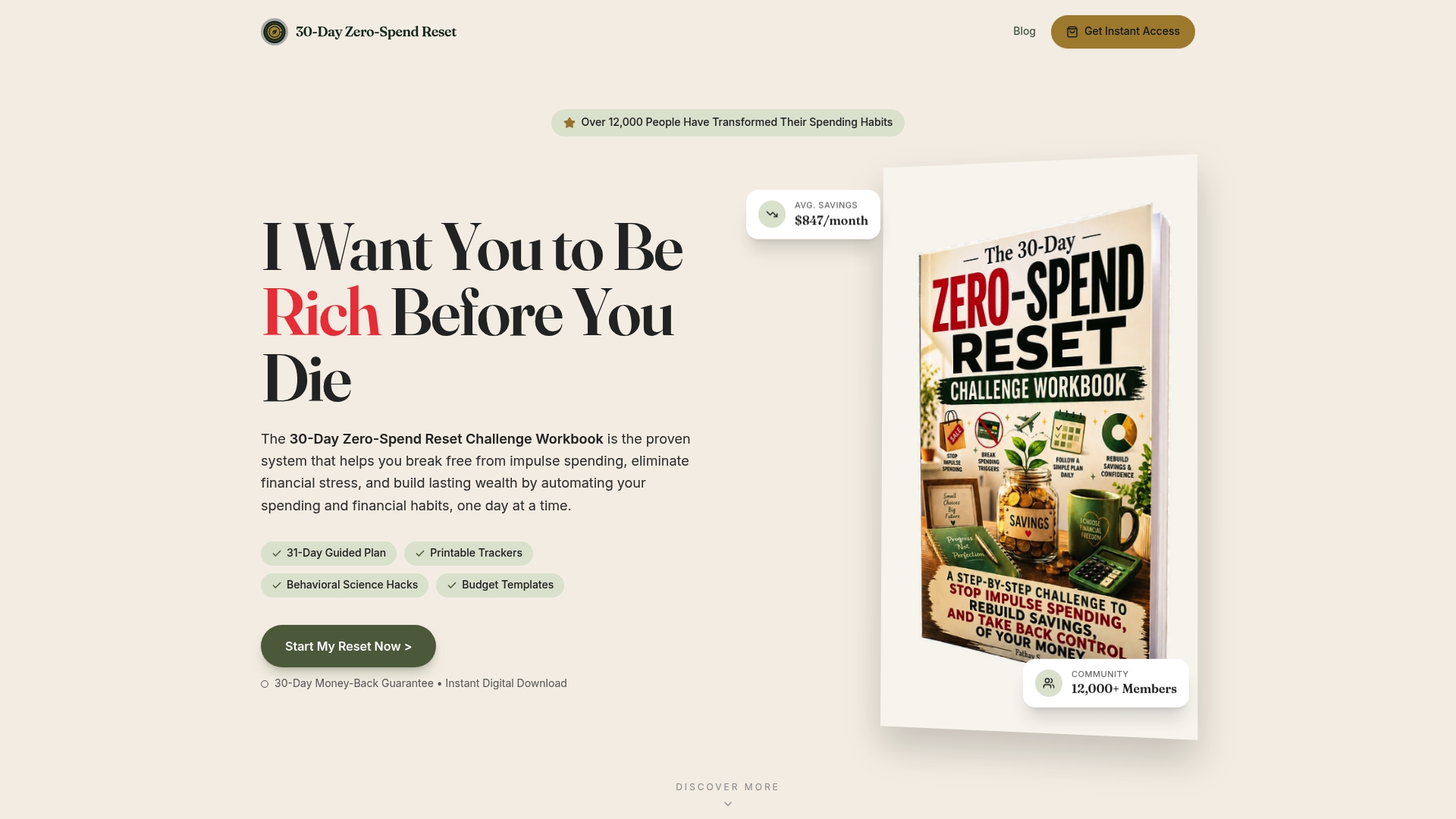
We built this for people who want guided structure and accountability instead of generic budgeting tools they abandon quickly. If you want more depth, our Zero-Spend Accelerator Vault adds companion tools for tackling spending habits beyond the grocery aisle. For a lighter starting point, our Zero Spend Guide offers free sample templates that pair naturally with the meal planning and tracking habits covered above. Start with the workbook and build your own 30-day reset from there.
FAQ
How can grocery prices be lowered?
The fastest way is to shop with a meal-specific list, compare unit prices instead of shelf prices, and reduce food waste, which the EPA estimates costs the average person about $14 a week. Switching to a consistently lower-priced store or private-label staples also delivers steadier savings than chasing individual sales.
What is the 3-3-3 rule for groceries?
Definitions of this rule vary across sources, and no single authoritative version is widely documented. A common interpretation involves planning three meals using three core ingredients repeated across three days to cut waste and simplify shopping, though you should treat it as a loose guideline rather than a fixed standard.
How much has the average grocery bill gone up?
Recent USDA Economic Research Service data show food-at-home prices continuing to rise, with price pressure projected to persist. The exact increase depends on the food category, since items like meat and fresh produce have risen faster than the overall average.
Is $200 a month a lot for groceries?
Whether a modest food budget is enough depends heavily on household size, location, and diet, since USDA data show food prices vary by category and region. For most single-person households, careful meal planning and reduced waste can make a lean budget workable.
Sources
Ready to reset your spending?
Get the 30-Day Zero-Spend Reset Workbook and turn these ideas into a daily action plan.
Start the 30-Day ResetThis article is part of the 30-Day Zero-Spend Reset method. Explore the complete day-by-day system behind these ideas.
Read the full guideKeep reading


Join the conversation
Be the first to share your thoughts on this article.