
How to Prepare for Unexpected Expenses: A 30-Day Plan
Build a cushion for car repairs, medical bills and lost income. A step-by-step plan to free up cash, start an emergency fund and avoid new debt.
How to Prepare for Unexpected Expenses: A 30-Day Plan
The most reliable way to prepare for an unexpected expense is to find the money before it is needed: audit what you already spend, redirect the leaks into a separate cash cushion, and automate the transfer. Most people do not lack a plan for emergencies. They lack free cash because subscriptions, impulse buys and groceries quietly absorb it. Our 30-Day Zero-Spend Reset Challenge Workbook is built around exactly that problem: thirty days of structured challenges that surface the spending you can redirect into savings.
TL;DR
- Unexpected costs (car repairs, medical bills, a drop in income) are normal. Saving ahead lets you pay them without skipping other bills or borrowing.
- Start with a $500 goal, then $1,000, then build toward larger reserves, kept in a safe account that is not tempting to spend.
- Find the money by tracking spending, auditing subscriptions, and trimming impulse and grocery spending.
- Separate predictable but irregular bills (insurance, taxes, holidays) from true surprises, and save for each on its own.
- If savings fall short, talk to creditors early and compare borrowing costs before you pick a loan.
Table of Contents
- Why a cushion matters more than a perfect budget
- What borrowing really costs
- Step 1: Set a starting target
- Step 2: Find the money by tracking what you spend
- Step 3: Audit subscriptions and recurring charges
- Step 4: Rein in impulse buys and grocery costs
- Step 5: Put the savings somewhere safe and automatic
- Step 6: Separate surprises from predictable irregular bills
- When the bill arrives and savings are not enough
- Perspective: why a reset beats a bigger budget
- A structured way to start
- FAQ
- Sources
Why a cushion matters more than a perfect budget
The Consumer Financial Protection Bureau (CFPB), the federal agency that oversees consumer finance, says everyone faces unexpected expenses: a car repair, a trip to help a sick relative, or bills after cut hours or a job loss. With savings set aside, you can cover them without skipping other bills. Skipped bills can bring late fees or utility shutoffs that cost more to reverse, and borrowing adds fees and interest.
The CFPB also notes that people who struggle to recover from a financial shock tend to have less savings to protect them. They lean on credit cards or loans that become harder to pay off, or pull from retirement funds. Even a small emergency fund is a protective first step.
The common categories to prepare for are car repairs, home repairs, health costs from illness or injury, and loss of income. You do not need to predict which one will hit. You need cash that is ready.
What borrowing really costs
The cost of having no cushion is concrete. In a CFPB example, a $350 car repair costs:
| Way of paying | Total cost | |---|---| | Emergency savings | $350 | | Credit card at 15.99% APR, repaid over 16 months | $390 | | Payday loan ($15 per $100 for 14 days, 391% APR) | $402.50 |
The gap looks small on one repair. It is not small when the debt rolls over. The CFPB describes a debt trap as repeatedly taking new loans to pay the first one. Those loans are typically under $500, due quickly (14 days is the median payday loan term), and repaid by a debit from your bank account, which can trigger non-sufficient-funds fees.
If you are already carrying debt, this is why the cushion comes first or alongside repayment: without it, the next surprise goes straight onto a card.
Step 1: Set a starting target
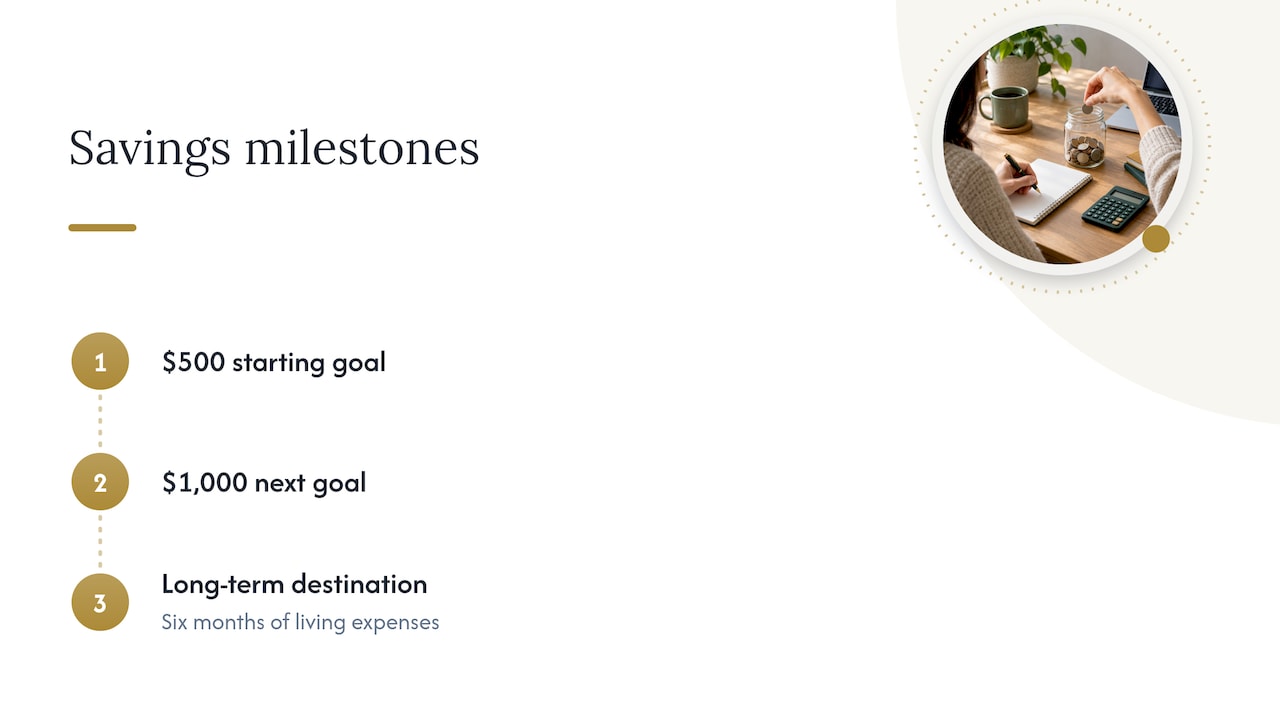
The CFPB's toolkit suggests starting with a $500 goal, enough for a new tire, a plane ticket to care for a sick family member, or minor medical costs. Once you reach it, raise the goal to $1,000, which may cover a rent payment after a job loss, an insurance deductible for a major car repair, or many household repairs.
After that, the right size depends on your life. The CFPB suggests thinking about the most common surprises you have had and what they cost. The FDIC says financial experts generally recommend at least six months of living expenses in a federally insured product such as a savings account or CD. Treat that as the long-term destination, not the first milestone.
Step 2: Find the money by tracking what you spend
This is where most plans stall. Saying "save $200 a month" does nothing until you know where $200 can come from. The CFPB advises tracking everything you spend for a week, two weeks or a month, sorting it by category, and spotting what you can eliminate or cut back. Redirect that money to emergency savings, goals or debt.
A practical version:
- Record all income sources.
- Log spending by category, one week at a time.
- Build a bill calendar with every due date.
- Create a working budget and update it when your job or habits change. These are the CFPB's four budgeting steps.
A weekly check-in helps more than a monthly one. The FDIC's Money Smart program points out that weekly money check-ins catch overspending in variable categories like groceries and eating out before it derails the month.
Step 3: Audit subscriptions and recurring charges
Subscriptions are the easiest cut because you do not have to change a habit, only a setting. The FDIC advises reviewing streaming services, magazines, cable and memberships and checking your statements for recurring charges you no longer value or could renegotiate. It also advises reviewing even small recurring expenses to cut, downgrade or find better deals.
Go through three months of card and bank statements and mark each recurring charge as keep, downgrade or cancel. Look for gym or discount-club memberships, credit-monitoring services, and phone or internet plans. The CFPB's cutting-expenses tool also suggests checking whether you qualify for a Lifeline phone rate and asking providers about lower-cost TV and internet plans.
Insurance is another recurring bill worth a look. The same CFPB tool lists raising a car insurance deductible and bundling home and car coverage as ways to lower costs. If you rent, a renters insurance policy review can show whether your coverage matches what you actually need.
Step 4: Rein in impulse buys and grocery costs
For parents and anyone who shops when stressed, food and small purchases are where money disappears fastest. The FDIC's Money Smart guide recommends shopping lists to avoid impulse buying, along with store brands and buying in bulk to cut food costs without overbuying. It frames expense cutting in three moves: conserve (pay less or use less), adjust (renegotiate over a longer term) and do without.
The CFPB's cutting-expenses tool adds practical swaps: bringing lunch to work, buying clothing second-hand, switching to lower-fee bank accounts, and checking eligibility for energy assistance and weatherization programs. Renewing your license and registration on time also avoids late fees.
Willpower is the weak point of all of this. A list helps in the store, but emotional spending happens when you are tired, anxious or bored. That is why a structured, day-by-day approach works better than a vague promise to spend less.
Step 5: Put the savings somewhere safe and automatic
The CFPB says to keep your fund where it is safe, accessible and not tempting to spend: a bank or credit union account is one of the safest places. Cash at home can be stolen, lost or destroyed.
Then remove the decision. The same guide suggests recurring bank transfers (watch your balance so you avoid overdraft fees), or splitting your direct deposit between checking and savings through your employer. The FDIC notes that $20 saved every biweekly pay period adds up to $520 plus interest in a year. Tax refunds are another chance: the FDIC calls them a good moment to start a savings account or add to an emergency fund.
If you hold some savings in crypto, it helps to understand where an emergency fund in crypto fits and where it does not, since an emergency reserve has to be available at a known value when the bill arrives.
Step 6: Separate surprises from predictable irregular bills
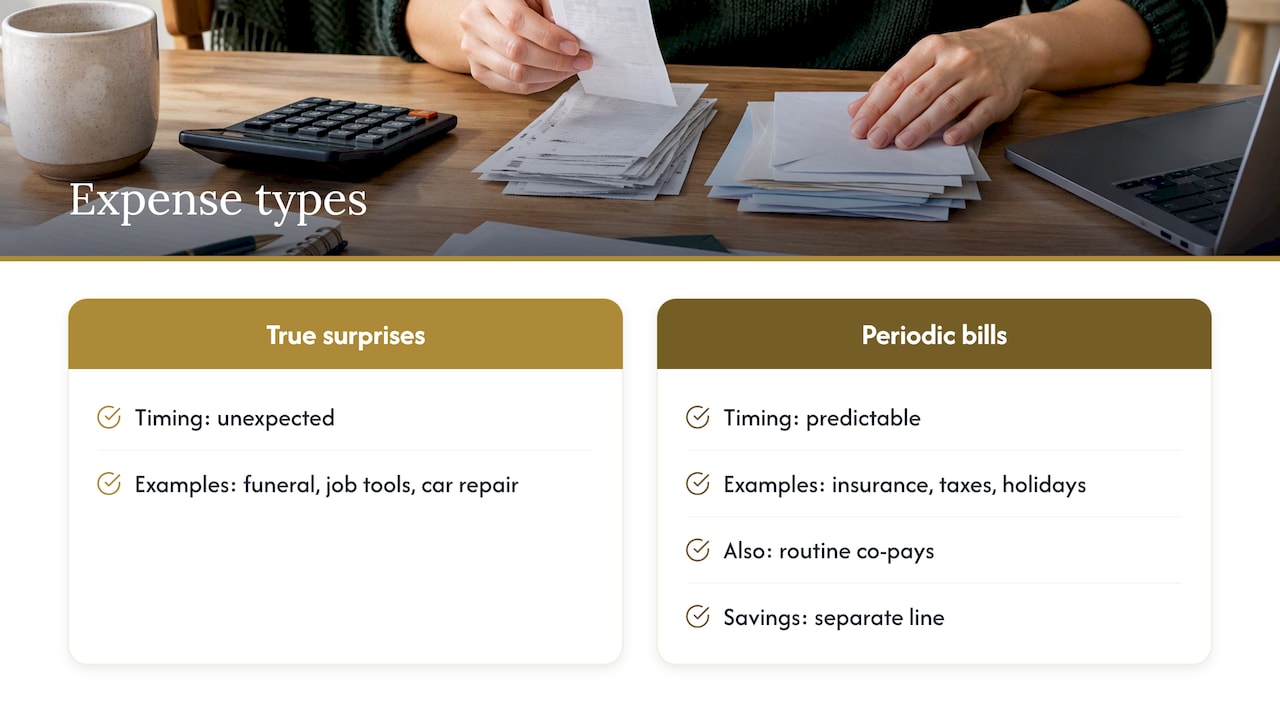
Not every big bill is a surprise. The CFPB distinguishes true unexpected expenses, such as a funeral out of state, job tools or a car repair, from periodic ones that are predictable but hard to pay at once: car and life insurance, renters insurance, income and property taxes, holiday spending and routine co-pays.
Give those periodic bills their own savings line. The CFPB says to keep goal savings separate from the emergency fund. A simple method: add up the year's irregular bills, divide by 12 (or by the number of pay periods), and move that amount each time you are paid. Otherwise those bills raid the cushion and you are back to zero before a real emergency arrives.
If your income or bill dates do not line up, smooth the timing. The CFPB's cash flow checklist suggests negotiating new due dates, splitting a $700 rent payment into two $350 payments, and asking about utility level-payment plans.
When the bill arrives and savings are not enough
Using the fund is the point of it. The CFPB says to set guidelines for what counts as an emergency, not be afraid to use the fund, and rebuild it afterward. Its savings booklet treats spending the rainy-day fund on a real surprise as a success, not a failure, with a plan to replenish it.
If the fund does not cover the bill:
- Contact the creditor or provider first. The FDIC says creditors may give extra time or move a due date to match your income.
- Ask family, friends, community organizations or public agencies for help.
- If you cannot pay everything, prioritize by what happens if you do not pay each bill. Housing, utilities and transportation to work usually come before cards.
- If you must borrow, the CFPB's legal-aid toolkit lists lower-cost options such as short-term loan alternatives from a credit union or bank, a loan from family, a credit card (which may prove cheaper in the long run), or negotiating more time. It also suggests asking whether the purchase is a need, an obligation or a want.
Be careful with consolidation. The CFPB warns it may lower monthly payments but take longer and cost more overall, and consolidating into a mortgage puts your home at risk if you miss payments. A useful check is your debt-to-income ratio: total monthly debt payments divided by monthly gross income. If a new payment leaves too little for living costs and emergencies, you may be taking on too much.
If you are struggling with debt, a nonprofit credit counselor or your lender's hardship team is the right person to talk to about repayment terms.
Perspective: why a reset beats a bigger budget
Most people who struggle with surprise bills do not have a knowledge problem. They know they should save. What stops them is that every month looks full already, and the leaks (subscriptions that crept up, takeout on bad days, impulse buys when stress is high) feel too small to matter.
That is why we built our workbook around thirty days of daily behavioral challenges rather than another spreadsheet. Our approach draws on behavioral psychology so you are not relying on willpower or guilt. Each day targets one pattern: an impulse trigger, a subscription audit, a grocery habit. By the end you have seen what your spending looks like when the leaks are plugged, and you have a number you can send to your emergency fund every payday.
Our readers tell us they have saved an average of $847 per month. Your result will depend on your income and habits, but the method is the same: find the money first, then protect it.
Omar
A structured way to start
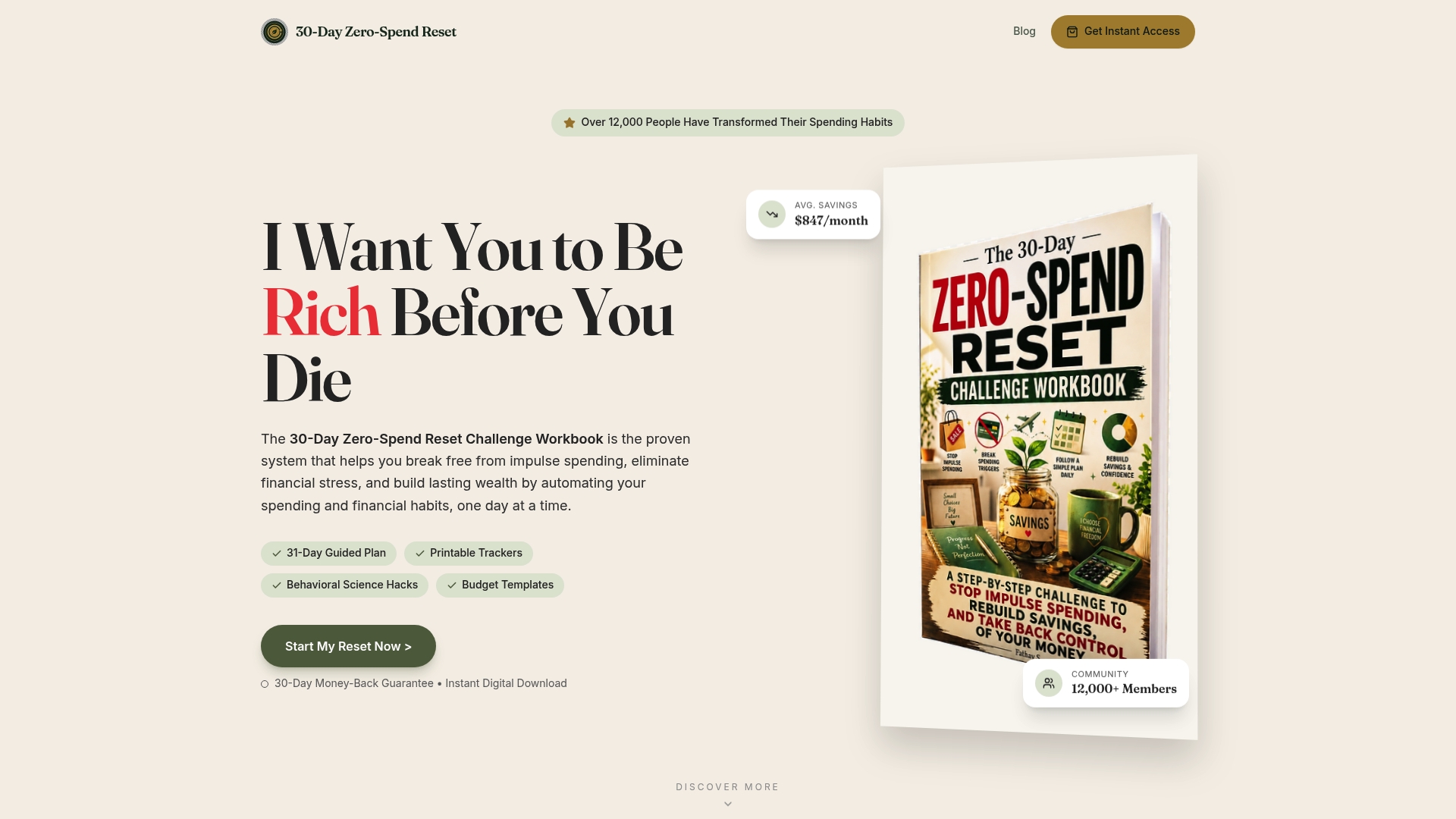
If you want the steps above laid out day by day, the 30-Day Zero-Spend Reset Challenge Workbook gives you daily challenges, printable trackers, budget templates, meal planning guides and a subscription audit in one place. It also includes social scripts for money conversations, useful when you need to renegotiate a bill or say no to a spending request, and a private companion webapp for working through it digitally.
If you want more tools to keep the habit going after the thirty days, the Zero-Spend Accelerator Vault adds extra resources for sustainable savings.
FAQ
How much should I have saved for unexpected expenses?
Start with $500, then $1,000, as the CFPB suggests. After that, size the fund to your own most common surprises. The FDIC says experts generally recommend at least six months of living expenses in a federally insured account.
Where should I keep my emergency fund?
Choose a place that is safe, easy to reach and not tempting to spend. The CFPB names a bank or credit union account as one of the safest options. Keeping it separate from your everyday checking account makes accidental spending less likely.
What counts as an unexpected expense?
Car and home repairs, health costs from illness or injury, and income loss are the standard examples. Predictable but irregular bills, like insurance premiums, taxes and holiday spending, are different. Save for those separately so they do not drain your emergency fund.
What if I have debt and no savings at the same time?
Build a small starter cushion while you repay, so the next surprise does not land on a card. Contact creditors early about due dates, and pay the debts with the highest interest rates first, as the FDIC advises. Redirect everything you free up by trimming subscriptions and impulse spending.
Sources
- CFPB, Your Money, Your Goals financial empowerment toolkit (June 2020)
- CFPB, An essential guide to building an emergency fund
- FDIC, Saving for the Unexpected and Your Future (January 2025)
- CFPB, Your Money, Your Goals toolkit for workers
- CFPB, Budgeting: how to create a budget and stick with it
- FDIC, Money Smart for Adults Module 4
- CFPB, Cutting expenses tool
- CFPB, Improving cash flow checklist
- CFPB, Building your savings savings booklet
- CFPB, toolkit for community volunteers (modules 3-5)
- CFPB, toolkit for community volunteers (debt trap)
- CFPB, toolkit for legal aid organizations
- Renters insurance policy review
- Emergency fund in crypto
Ready to reset your spending?
Get the 30-Day Zero-Spend Reset Workbook and turn these ideas into a daily action plan.
Start the 30-Day ResetThis article is part of the 30-Day Zero-Spend Reset method. Explore the complete day-by-day system behind these ideas.
Read the full guideKeep reading


Join the conversation
Be the first to share your thoughts on this article.