
How to Avoid Overdraft Fees: A Practical Guide
Most overdraft fees are preventable. Learn how to opt out, set alerts, time your bills and fix the spending pattern that keeps pushing your balance below zero.
How to Avoid Overdraft Fees: A Practical Guide
Most overdraft fees come from two things: a bank setting that lets purchases go through when you can't cover them, and a spending pattern that drains the account before payday. You can fix the setting in one phone call. The pattern takes a few weeks of deliberate work, and that is what our 30-Day Zero-Spend Reset Challenge Workbook is built for.
TL;DR
- An overdraft happens when the bank pays a transaction you can't cover, and you then owe the amount plus a fee. Many banks charge $30 or more per transaction.
- For ATM and one-time debit card purchases, a bank can only charge overdraft fees if you opted in. You can revoke that at any time.
- Low-balance alerts, a linked savings account and bill dates moved to just after payday prevent most of the rest.
- Repeat overdrafts usually signal a spending leak. Closing it protects the account and builds a cushion.
Table of Contents
- What an overdraft fee is and when you can be charged
- Step 1: Turn off debit card overdraft coverage
- Step 2: Watch your balance with alerts
- Step 3: Move bill due dates next to payday
- Step 4: Link a savings account as a backstop
- Step 5: Fix the spending pattern behind the overdrafts
- Step 6: Review statements monthly
- Why avoiding overdrafts protects your account
- Already overdrawn? What to do next
- Start a 30-day reset
- FAQ
- Sources
What an overdraft fee is and when you can be charged
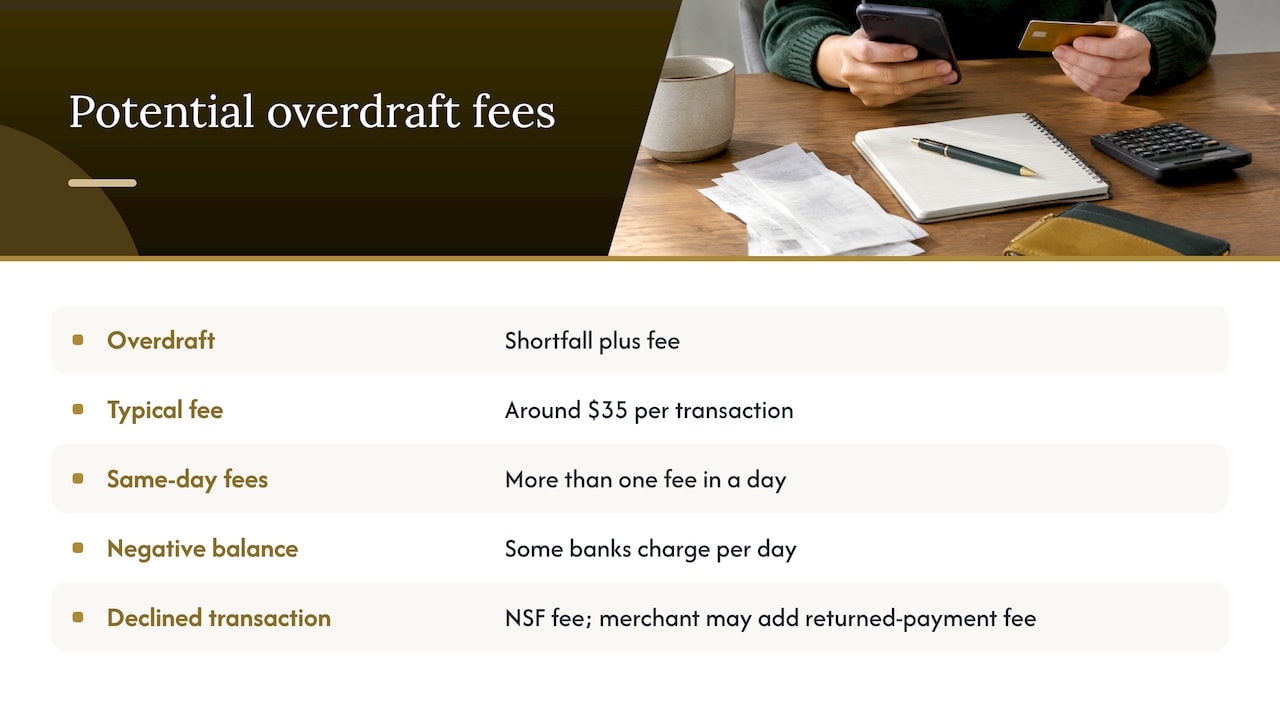
An overdraft occurs when you don't have enough money for a transaction and the bank pays it anyway. You owe the shortfall plus the fee, according to the CFPB. The same page notes that banks can charge more than one fee in a day, and many add another fee if you don't repay the shortfall within a few days.
Federal law sets no maximum for these fees. The bank decides, but it must disclose them when you open the account and give advance notice of increases, according to the OCC. The FDIC says fees may run around $35 per transaction, and some banks add a fee for each day the account stays negative.
If the bank declines the transaction instead, you may face a non-sufficient funds (NSF) fee, and a merchant can add a returned-payment fee. That is why checks and bill payments matter in the steps below.
Step 1: Turn off debit card overdraft coverage
This is the fastest fix. Under Regulation E, a bank can't charge overdraft fees on ATM and one-time debit card transactions unless you affirmatively opted in. You can revoke consent at any time, and the bank must act as soon as reasonably practicable. On a joint account, either holder's revocation covers the whole account.
What changes when you opt out:
- A debit purchase you can't cover is declined, instead of costing you a fee on top of the purchase.
- The bank must give you the same account terms and features as customers who opted in.
- Checks and recurring bill payments can still trigger fees. Opting out of debit coverage doesn't remove them.
Consumer Action, a consumer advocacy group, makes the point that a declined lunch purchase has no serious consequences, while a fee on it is expensive. Call or check your app's account settings and ask what you are currently enrolled in.
Step 2: Watch your balance with alerts
The CFPB's checking account guidance recommends checking your balance before ATM withdrawals or large payments and signing up for transaction and low-balance alerts. Set the low-balance threshold above your largest regular bill, not at zero. An alert at $20 arrives too late if rent is $1,200 and about to clear.
Also remember that deposits aren't always available the day you make them. Ask your bank about holds, and about the order in which it processes payments, since that can turn one overdraft into several.
If you want one place to see balances and track the bigger picture, a guide on how to track your net worth shows a simple routine you can pair with alerts.
Step 3: Move bill due dates next to payday
Bills that hit the account before your paycheck lands are the classic overdraft trigger. The CFPB's fee-avoidance tool suggests moving due dates or delaying purchases until you have the money. Chase's education page adds a practical pattern: reschedule automatic payments to a day or two after payday, when your balance is typically highest.
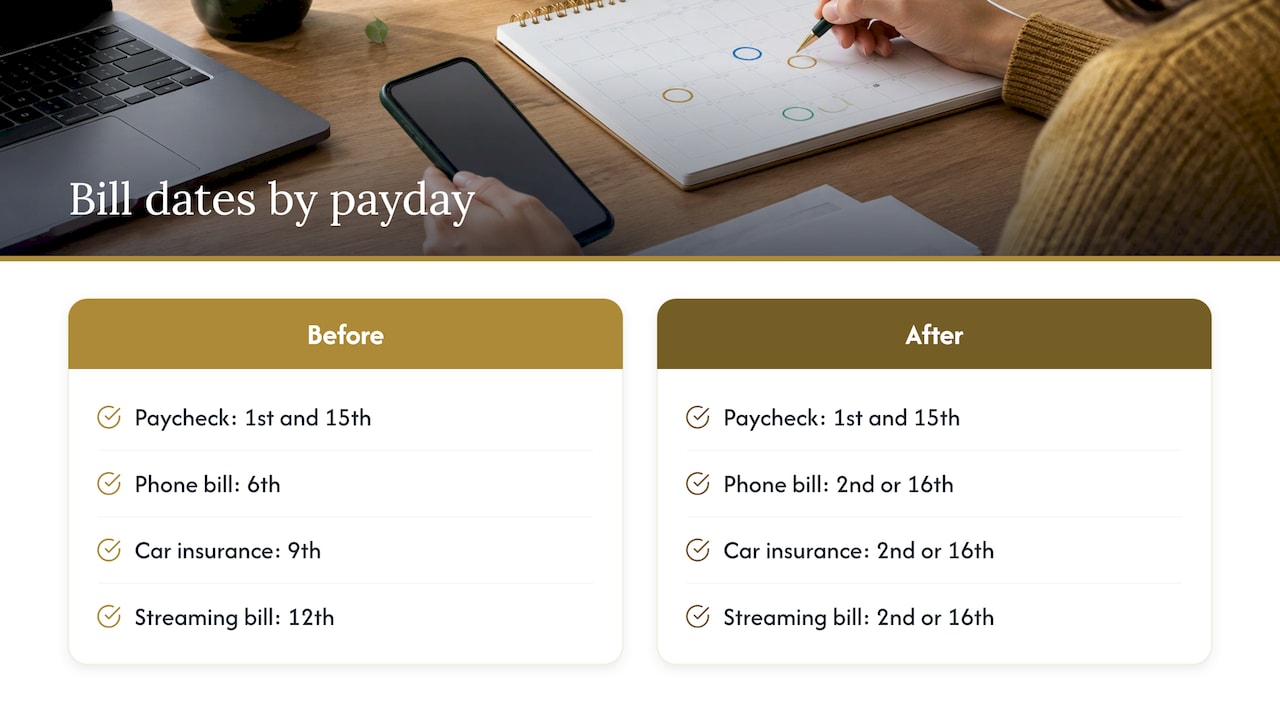
A simple worked example: your paycheck arrives on the 1st and 15th, but your phone, car insurance and streaming bills pull on the 6th, 9th and 12th, when the balance is lowest. Move all three to the 2nd or the 16th and the same money covers them with room to spare.
Step 4: Link a savings account as a backstop
The CFPB says linking checking to savings can cover an overdraft, usually for a lower fee than an overdraft fee. Consumer Action puts a typical transfer fee at around $10. A linked credit card or line of credit may carry a fee and interest, though it could be cheaper for a brief shortfall.
Check two things with your bank: the transfer fee, and whether automatic transfers count toward savings withdrawal limits, which Chase notes could trigger a fee. Treat the link as a safety net, not a plan. Each transfer drains the savings you are trying to build.
Step 5: Fix the spending pattern behind the overdrafts
Alerts and settings stop the fee. They don't explain why the balance hits zero before payday. For most people the cause is one of three leaks:
- Impulse and emotional purchases made on a debit card at the end of a pay cycle.
- Subscription creep, small charges that quietly add up and pull on awkward dates.
- Grocery and delivery spending that runs over in the last week.
This is the gap our workbook addresses. The 30-Day Zero-Spend Reset Challenge Workbook gives you daily behavioral challenges, a subscription audit, printable trackers, budget templates, meal planning guides and scripts for money conversations. The audit alone can show which recurring charges to cancel or move. The meal planning guides target the end-of-cycle grocery squeeze. Daily challenges are designed to retrain the habit so it doesn't rely on willpower or guilt.
The goal is a cushion: money left over at the end of the cycle, so no single day's timing can trip an overdraft.
Step 6: Review statements monthly
The CFPB tool also recommends reviewing statements each month. Look for repeated fee dates, charges you don't recognize and bills that cluster before payday. A bank isn't required to notify you when a check bounces, so your own register is the safeguard.
Why avoiding overdrafts protects your account
The stakes go beyond the fee. The CFPB warns that if you have trouble covering payments, the bank might close your account and report you to a checking account reporting company. New York's financial regulator reported that after such closures, about 25% of banks automatically reject a consumer with a negative report, and another 50% require a branch manager's decision. Keeping the account in good standing keeps your access to ordinary banking.
Already overdrawn? What to do next
The FDIC warns that the overdrawn amount and fees come out of your next deposits, including payroll and government benefits. That can push you below zero again. Work through this order:
- Deposit or transfer enough to bring the balance positive as quickly as you can, ideally before fees stack up daily.
- Check what is scheduled to pull in the next few days and move what you can.
- Ask the bank to reverse the fee. Many will reverse a first-time fee on request, but they don't have to. A long-standing relationship can help.
- If you believe a fee was charged in error or without your opt-in, contact the bank, then file a complaint with the CFPB. The CFPB lists overdraft and fee problems as a checking account complaint issue. Consumer Action lists the line as 855-411-2372.
- If savings can't cover the shortfall, the FDIC says to ask about a linked line of credit or an affordable small-dollar loan.
The CFPB has said enforcers should assume you haven't opted in unless the bank can prove it. If you were charged on a debit purchase and don't remember agreeing, ask the bank for its record.
If debt is part of the picture, the same logic applies: the fewer dollars leaking out, the more you can send to balances and to an emergency fund of your own.
Our view
We built the workbook on a simple belief: overdraft fees are a symptom. The bank setting is easy to change, but the reason the account runs dry is a habit, and habits respond to structure, not to guilt.
That is why the program runs as 30 short daily challenges grounded in behavioral psychology, with a subscription audit, trackers and meal plans alongside them. We want you to finish the month with money still in the account, and with a clear picture of where it goes.
Omar
Start a 30-day reset
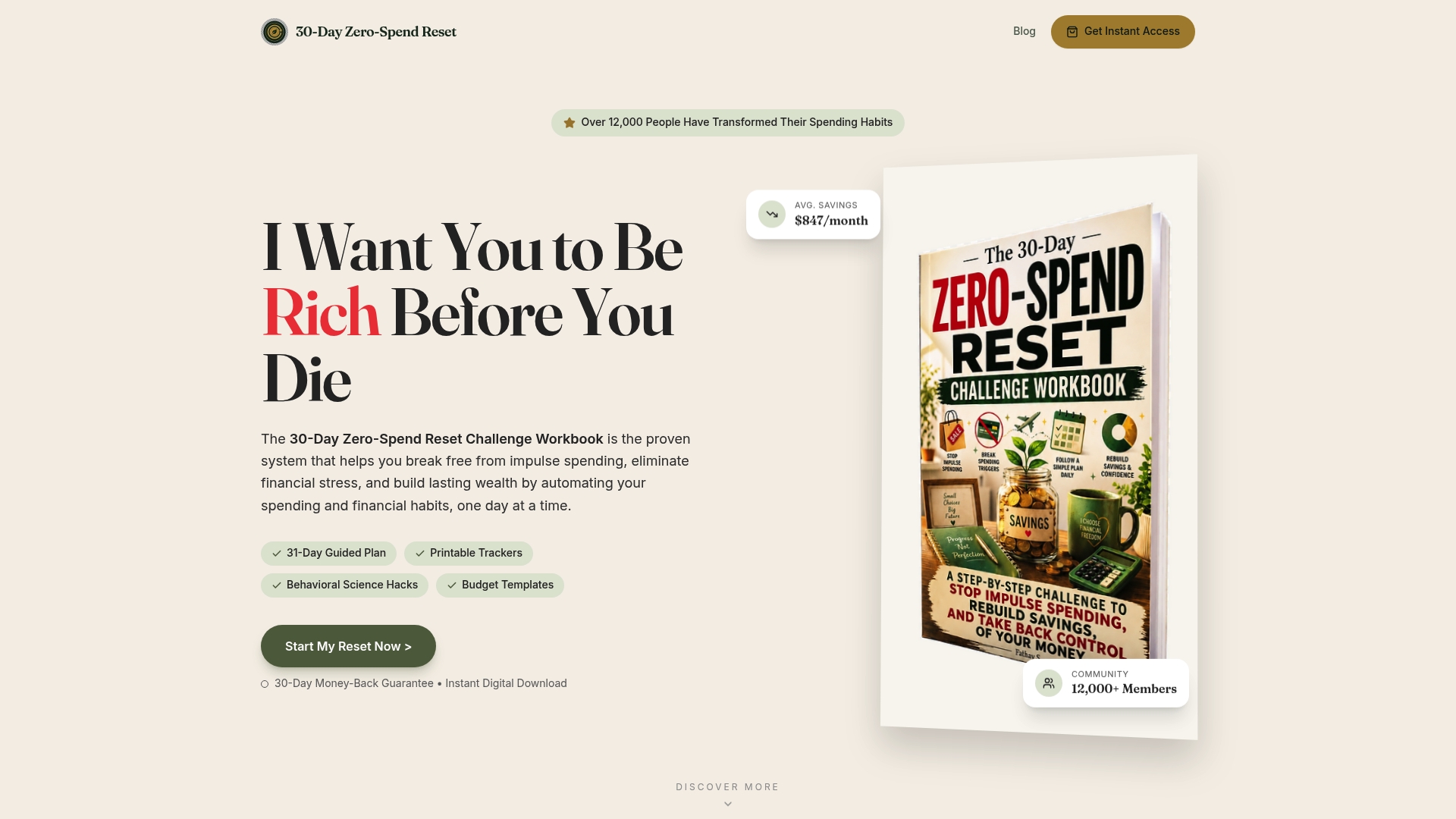
If the same overdraft keeps returning, a daily system will help more than another warning text. The 30-Day Zero-Spend Reset Challenge Workbook and its private companion webapp walk you through the audit, the trackers and the daily challenges. Our users report saving an average of $847 per month. The Zero-Spend Accelerator Vault adds further resources.
FAQ
Is there a way to avoid overdraft fees entirely?
Yes, for most people. Opt out of debit card overdraft coverage, set low-balance alerts, and schedule bills after payday. Checks and recurring payments can still incur fees, so keep a cushion in the account.
Can a bank charge me if I never opted in?
Not for ATM and one-time debit card transactions. Those require your affirmative opt-in. Checks and ACH payments, such as bill pay, can still bring overdraft or NSF fees regardless.
What if I can't pay the overdraft fee?
The amount is taken from your next deposits, so act quickly. Ask the bank to reverse or waive the fee, and ask about payment options. If the account is closed with a negative balance, it can be reported to a screening agency, which makes opening a new account harder.
Does linking savings cost anything?
Often a transfer fee applies, typically lower than an overdraft fee. Ask your bank for the exact amount and whether transfers count toward savings withdrawal limits.
Sources
- Know your overdraft options, CFPB
- Overdraft and Account Fees, FDIC
- Electronic Fund Transfer Act, FDIC compliance manual
- The Right Overdraft Protection Plan, Consumer Action
- Managing your checking account, CFPB
- Avoiding checking account fees tool, CFPB
- How to Avoid Overdraft Fees, Chase
- NYSDFS consumer fee practices report
- Preventing and Managing Overdraft Fees, FDIC
- CFPB complaint form issue options
- CFPB action on phantom opt-ins, September 2024
Recommended
Ready to reset your spending?
Get the 30-Day Zero-Spend Reset Workbook and turn these ideas into a daily action plan.
Start the 30-Day ResetThis article is part of the 30-Day Zero-Spend Reset method. Explore the complete day-by-day system behind these ideas.
Read the full guideKeep reading


Join the conversation
Be the first to share your thoughts on this article.