
Money Scripts for Couples: What to Say and Why

Learn the four money scripts that shape how partners spend and save, plus word-for-word phrases to talk about debt, spending and goals without a fight.
Money Scripts for Couples: What to Say and Why
"Money scripts" means two things, and a couple needs both. The first is the set of core beliefs about money each partner carries, usually learned in childhood. The second is the actual wording you use when you bring up spending, debt or savings. Learn your beliefs first, then use the right words. Most money fights stop being about the purchase and start being about understanding each other.
This guide covers both meanings. You'll find the four money belief patterns researchers describe, where yours likely came from, and scripts you can read aloud for the hard conversations: spending gaps, debt, subscriptions and emergency savings.
TL;DR
- Money scripts are the deeply held beliefs about money that drive your behavior. Partners often have different ones and may not know it.
- Start with curiosity about where each belief came from, then move to numbers, goals and a written agreement.
- Use I-statements ("I feel... when... because...") and a scheduled, unhurried time instead of an ambush at the checkout screen.
- Give each partner a no-questions-asked allowance, agree on a waiting rule for big purchases, and hold a short monthly check-in.
- If debt or conflict is beyond what the two of you can untangle, bring in a qualified financial counselor.
Table of Contents
- What money scripts are and why couples clash over them
- Step one: find your own script before you talk
- Scripts for starting the conversation without blame
- Scripts for the big topics
- Handling impulse and emotional spending as a pair
- Make it a habit: the monthly check-in
- Our perspective
- Put the scripts into practice with a 30-day reset
- When to bring in a professional
- FAQ
- Sources
What money scripts are and why couples clash over them
A money script is a belief about money that you absorbed early and rarely question. Researchers who built a widely used inventory of these beliefs identified four patterns: money avoidance, money worship, money status and money vigilance. The same research notes that identifying divergent scripts can help couples resolve their conflicts.
Here is how each pattern tends to sound in a real household. These are plain-language descriptions, not diagnoses.
| Script | What it sounds like | How it can show up in spending | |---|---|---| | Money avoidance | "Money is stressful. I'd rather not look." | Unopened statements, unclear balances, letting a partner handle everything | | Money worship | "I'll finally feel okay when I have more." | Chasing the next purchase or raise, believing the right amount fixes everything | | Money status | "What we own shows what we're worth." | Spending to keep up, gifts or upgrades that signal success | | Money vigilance | "Save everything. Never trust a good month." | Anxiety about any non-essential spending, secrecy about savings |
None of these is wrong in itself. A vigilant partner keeps the emergency fund growing. A partner with a status script may be generous. The trouble starts when two scripts collide and each person assumes the other is irrational.
Where your scripts come from
The American Psychological Association says that money beliefs are commonly inherited from parents and other family members, may operate outside conscious awareness, and can differ a great deal between partners.
The Gottman Institute adds detail. Childhood, teenage and adult experiences, such as family gambling, a parent controlling the household money, or periods of scarcity and social comparison, can form a personal "money map" that shapes adult behavior. The same article points out that money disputes often carry meanings about security, success, identity, dreams and fears. The overdue bill or the new jacket is rarely the real subject.
That's why a calm question like "What did money feel like in your house growing up?" often does more than a spreadsheet.
Step one: find your own script before you talk
Before the conversation, each of you should spend ten minutes alone with these prompts. Write the answers down.
- What did my parents say, or not say, about money?
- When money was tight growing up, what happened in the house?
- What do I secretly believe a "responsible adult" does with money?
- What purchase makes me feel calm, and which makes me feel guilty?
- When I think about our bank balance, what do I feel first: dread, excitement, pride, numbness?
Then compare the answers over coffee, not over a bill. You are not looking for a winner. You are building a shared vocabulary so that "you're so careless" becomes "I think my vigilance is showing up again."
Scripts for starting the conversation without blame
How you open matters more than what you ask. The Gottman Institute recommends a soft, curious opening that says how an issue feels and what you need, with I-statements and no personal attacks. A research-based toolkit from the Healthy Relationships Initiative advises scheduling an unhurried conversation, listening actively, reflecting back what you heard and approaching differences with curiosity and respect.
Setting the time
- "I feel concerned about our spending right now. Can we talk this weekend?" (a prompt the Gottman Institute suggests)
- "I'd like to look at our money together, just to see where we are. No decisions tonight. Does Sunday afternoon work?"
- "I want us to be on the same team with this. When would be a good time?"
The three-part I-message
The University of Georgia's Money Talks guide recommends swapping accusations for a three-part I-message: "I feel... when... because..." Its example is irritation about unrecorded checks and the risk of a bounced check. Here are modern versions:
- Instead of "You're always buying stuff," try: "I feel anxious when I see several delivery charges in a week, because I'm worried we won't cover the car payment."
- Instead of "You never tell me anything," try: "I feel shut out when I don't know our balances, because I want to feel like a real partner in our plan."
- Instead of "You're so cheap," try: "I feel disappointed when we skip the trip, because time together matters a lot to me. Can we find a number that works for both of us?"
Shift from "me versus you" to "us versus the problem"
The 2026 HRI toolkit encourages couples to treat the relationship as a team and validate that two different money views can both be understandable. Useful lines:
- "It makes sense that you feel that way, given how you grew up. Help me understand it."
- "We both want to feel safe. We just get there differently."
- "Let's figure out what we do about the problem, not who caused it."
Rules for the conversation itself
The University of Georgia guide suggests naming one problem, leaving personalities and old complaints out, brainstorming without immediate criticism, writing the agreement down and scheduling regular money meetings. If one of you starts to feel flooded, pause and set a time to return. A paused talk beats a won argument.
Scripts for the big topics
Once the tone is set, you need questions that lead somewhere. A University of Georgia worksheet for couples suggests asking who manages the money, whether accounts will be joint or separate, which larger purchases and savings targets matter, and what habits must change to reach a written goal. Below are scripts built around those areas.
Full transparency
The Gottman Institute recommends a financial-transparency meeting covering income, debt balances and minimums, account balances, credit scores and monthly expenses, approached as information gathering rather than judgment.
- "I'm not trying to judge anything. I just want us both to see the full picture. Can I go first?"
- "Here's everything I owe, including the part I'm not proud of."
- "What would make it easier for you to share your numbers?"
Going first and being matter-of-fact lowers the temperature for a partner with a money avoidance script.
Debt
The HRI toolkit recommends gathering every balance, interest rate, minimum payment and repayment term, recognizing that partners may see debt differently, prioritizing higher-interest or higher-consequence debts, and choosing a payment amount you can sustain.
- "Let's put every debt on one page: balance, rate, minimum. Then we can decide the order together."
- "This debt feels heavy to you and normal to me. Tell me what it means to you."
- "What monthly amount can we pay without feeling like we're punishing ourselves?"
If you're repaying debt, an honest, shared list is the first win. It turns a vague dread into a number you can act on.
Everyday spending and subscriptions
The Penny Hoarder suggests reviewing two or three months of statements to list recurring shared expenses such as housing, utilities, insurance, groceries, streaming, subscriptions, car payments and phones.
- "Let's go through the last three months and circle anything we both forgot we were paying for."
- "Which of these subscriptions do we each actually use? Let's keep the ones that earn their place."
- "Can we pick a food budget that feels realistic, not aspirational?"
Savings and shared goals
The Penny Hoarder also recommends agreeing on named short-, medium- and long-term savings goals. The University of Georgia worksheet goes further: identify shared wants and needs, choose a priority, brainstorm several routes, set a target date and hold recurring progress reviews, because written goals are more likely to be followed.
- "If money weren't tight, what would we both want our life to look like in five years?"
- "What is the first thing we'd want an emergency fund to protect us from?"
- "Let's put a date and an amount on it, and write it down."
Handling impulse and emotional spending as a pair
When one partner spends on impulse and the other watches every dollar, the vigilance script and the status or worship script are often in the room together. The goal is a structure both of you can live with, not a verdict on who is right.
The HRI toolkit recommends translating abstract disagreements into concrete budgets, debt balances, timelines and scenarios, then brainstorming creative win-win options that protect both partners' needs for security and enjoyment. A consumer finance guide on living with an impulsive spender suggests separate fun-money allowances, a jointly agreed 24-hour wait on purchases over a chosen threshold, and a shared wishlist.

The Penny Hoarder and the Gottman Institute both favor a personal-spending allowance for each partner with no questions asked within that limit. It protects autonomy while keeping shared obligations visible.
Scripts that make these rules feel fair:
- "For anything over $100, let's both sleep on it for 24 hours. That applies to me too."
- "Your fun money is yours. I won't comment on how you spend it, and I'd like the same."
- "Let's start a shared wishlist. If it's still there in a week, we talk about fitting it in."
- "When I notice I'm spending because I'm stressed, can I tell you? I don't need you to fix it, just to know."
The last line matters. Emotional spending often comes from stress, boredom or a need to feel capable, and a partner who hears about it early becomes an ally instead of a critic.
Make it a habit: the monthly check-in
One big talk won't hold. The Gottman Institute recommends a recurring 30-minute monthly check-in to review the budget against actual spending, celebrate progress, address frustrations without blame, adjust what isn't working and revisit shared goals.
A simple agenda:
- Two minutes of appreciation. Name one money decision your partner handled well.
- Numbers. Planned versus actual, using the categories you agreed on.
- Wins. Debt paid down, savings added, a subscription cancelled.
- Friction. Use an I-message for one issue only.
- Adjust and schedule. Change one thing, write it down, book the next meeting.
Keep it in a comfortable place with a drink. Money meetings that end with a small treat get repeated.
Our perspective
We built the 30-Day Zero-Spend Reset Challenge Workbook on a simple idea: lasting change comes from behavior, not from guilt or willpower. The same is true for couples.
Most partners don't fail because they lack a budget. They fail because each has a different internal story about money, and no shared way to talk about it. A spreadsheet can't settle a disagreement that is really about security, status or fear.
That's why our program pairs daily behavioral challenges with social scripts for money conversations, subscription audits and trackers. A short daily action is easy to share with a partner, and a shared set of words makes the hard topics less personal. When two people do the same 30-day reset side by side, the questions become practical: what are we paying for, what do we actually value, and what do we want our emergency fund to do for us?
We designed it to make a financial reset feel manageable, not punishing. We believe that is the kind of structure couples need.
Omar
Put the scripts into practice with a 30-day reset
Reading scripts is one thing. Using them while the grocery bill, the streaming renewals and the credit card statement keep arriving is another. Our 30-Day Zero-Spend Reset Challenge Workbook gives you and your partner a daily structure: behavioral challenges, printable trackers, budget templates, social scripts for money conversations, meal planning guides and a subscription audit, plus a companion webapp. It is designed to help you curb impulse spending and build a savings habit without relying on willpower.
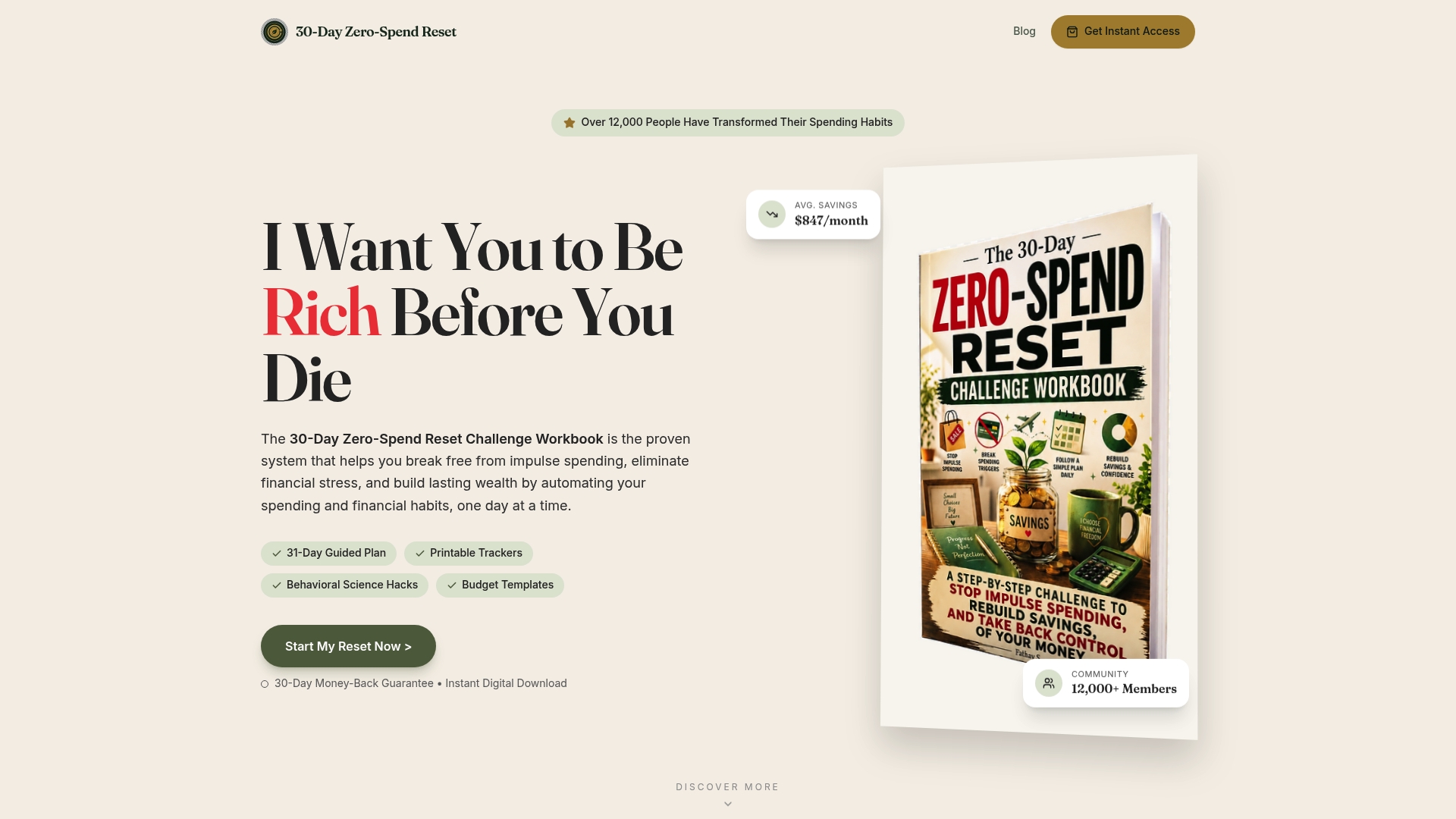
If you want to see how it works, start with the 30-Day Zero-Spend Reset Challenge Workbook. If you want extra tools to go with it, the Zero-Spend Accelerator Vault is where those resources live.
When to bring in a professional
Scripts help with communication. They don't replace expert advice on complex money problems. A 2014 article in the Journal of Financial Therapy argues for referral and collaboration among marriage and family therapists, financial planners and financial counselors when a couple's needs go beyond what a therapist is competent to handle, and says relationship professionals should not improvise technical financial advice.
In practice, consider outside help when:
- Debt is growing faster than you can pay it, or you're facing collections or a possible default. See a nonprofit credit counselor or a certified financial counselor.
- You can't have a money conversation without it escalating, even with I-messages. A couples therapist can help with the communication pattern.
- One partner has hidden accounts or debts and trust is damaged. A therapist with financial training can work on the trust, while a counselor handles the numbers.
- You're deciding on something large and complicated, such as a home purchase, a business or a retirement plan. A financial planner is the right professional.
Asking for help is part of the plan, not a sign it failed.
FAQ
What are money scripts in plain terms?
Money scripts are the beliefs about money you picked up early, often from family, and now act on without thinking. Researchers group them into money avoidance, worship, status and vigilance. Most people lean toward one or two, and couples often have different ones.
How do I bring up money without starting a fight?
Choose a calm time, say it will be a talk and not a decision meeting, and open with an I-message such as "I feel... when... because..." Focus on one issue and keep old complaints out. If either of you gets overwhelmed, pause and set a time to come back.
What if my partner refuses to talk about money?
A partner who avoids money may be acting on a money avoidance script, not on indifference. Go first with your own numbers, keep the first meeting short, and frame it as gathering information, not judging. A brief monthly check-in with a clear end time is often easier to agree to than an open-ended talk.
Should couples combine all their money?
There's no single right answer. The University of Georgia worksheet treats whether accounts are joint or separate as a question for the two of you to decide. Many couples pool money for shared bills and goals and keep an agreed personal allowance each. Write down whichever arrangement you choose and review it regularly.
How often should we have a money talk?
A short monthly check-in of about 30 minutes works well for most couples, and the Gottman Institute recommends this rhythm. Add a longer session when something big changes, such as a new job, a move or a new baby.
Sources
- Money Beliefs and Financial Behaviors: Development of the Klontz Money Script Inventory
- Happy couples: How to avoid money arguments (American Psychological Association)
- Arguments About Money Aren't About Money (Gottman Institute)
- 8 Ways to Have Lower Conflict Conversations about Money (Gottman Institute)
- Combining Finances and Responsibilities: A Complete Guide for Couples (Gottman Institute)
- HRI Couples & Money Toolkit
- Money Talks (University of Georgia CAES)
- Budgeting for Couples: How to Manage Money Together (The Penny Hoarder)
- 9 Sneaky Ways To Save Money When Your Spouse Is An Impulsive Buyer
Recommended
Ready to reset your spending?
Get the 30-Day Zero-Spend Reset Workbook and turn these ideas into a daily action plan.
Start the 30-Day ResetThis article is part of the 30-Day Zero-Spend Reset method. Explore the complete day-by-day system behind these ideas.
Read the full guideKeep reading


Join the conversation
Be the first to share your thoughts on this article.