
How to Decline a Bachelorette Trip Without Guilt

Need to say no to a bachelorette trip? Get word-for-word scripts, a plan for pressure from the group, and ways to still celebrate the bride.
How to Decline a Bachelorette Trip Without Guilt
You can decline a bachelorette trip kindly, briefly and early. Tell the bride directly as soon as you know, thank her for including you, say you can't make it, and wish her a wonderful weekend. You don't owe a long explanation, and you can still show up for her in other ways. Below you'll find scripts for text, call and group chat, a way to handle pressure, and ideas for celebrating her without boarding the plane.
TL;DR
- Decide quickly and tell the bride yourself, as early as you can. Delay is what makes a no feel worse.
- Keep it short: thanks, a clear no, and a warm wish. Over-explaining invites negotiation.
- If money is the reason, honest is fine. If you think that will hurt her, a simple scheduling conflict is also an accepted choice.
- Offer something real instead: dinner, a smaller outing, a note, a gift, or part of the weekend.
- If the group pushes, repeat your answer once, calmly, and stop debating it.
Table of Contents
- You are allowed to say no
- Why the cost of these trips deserves a serious look
- The basic formula for a polite no
- Scripts you can copy and adapt
- Do you need to give a reason?
- How to protect the friendship while saying no
- Ways to celebrate the bride without going
- If the group pushes back
- Declining without draining your savings in other ways
- Our perspective
- Build the habit before the next invitation
- What to do after you send the message
- FAQ
- Sources
You are allowed to say no
A bachelorette invitation arrives wrapped in friendship, so declining it feels like a verdict on the friendship. It isn't. An etiquette expert quoted by CNBC makes the point plainly: you are under no obligation to attend an event that will hurt your budget, and you don't need an excuse to decline.
The pressure you feel is usually about the group, not the bride. Weddings stack up in clusters, group chats move fast, and nobody wants to be the one who drops out. But a trip you attend resentful, exhausted or in debt rarely gives the bride the friend she hoped for.
Before you reply, take ten minutes with the real question: why is this a no? The answer shapes what you say.
| Your real reason | What to say | Best follow-up | |---|---|---| | Cost | Honest, brief, no apology spiral | Offer a dinner or a smaller celebration | | Schedule or work | A clear conflict, no details needed | Offer to join for part of it, or celebrate later | | Energy, stress or introversion | "This kind of weekend isn't a fit for me right now" | Suggest a one-on-one plan | | Too many bachelorettes this year | "I can't make this one" | A gift and a personal note | | Group dynamics | Keep it neutral and kind | Celebrate with the bride separately |
Why the cost of these trips deserves a serious look
If your hesitation is financial, you are not being dramatic. According to The Knot's 2023 study, the average bach party cost $1,400, about $500 more than in 2019, and 37% of attendees at bachelor and bachelorette parties spent over $1,000.

That figure usually doesn't include the other wedding costs: a shower gift, a wedding gift, a dress, travel, maybe a hotel room. A bridesmaid or close friend can face several thousand dollars in one year.
The cost-sharing part is also supposed to be handled fairly. Debrett's etiquette guidance says the organizer should share a breakdown of costs, including the bride's share, with guests before the event and have it agreed upon. If nobody has sent you numbers yet, you are entitled to ask for them before you commit.
Zola's advice on the subject is blunt and kind: your finances come first, and no one should go into debt for a party.
The basic formula for a polite no
Most good declines have four short parts.
- Thank her. You're glad she thought of you.
- Say no clearly. Avoid "I'll try" or "maybe" if you already know the answer.
- Give as much reason as you want, and no more. One sentence at most.
- Wish her well, or offer something concrete. Keep the tone warm.
Timing matters as much as wording. Brides.com advises that to decline politely you should keep the response brief, let the bride know as early as possible, and tell her directly. Telling her directly means a call or a private text, not a silent skip from the group thread or a message passed through the maid of honor.
And resist the urge to put on a show. Erin Klabunde of Amendo notes that many people, especially women, feel compelled to over-explain their financial boundaries with "Broadway-worthy" performances, when a simple, polite refusal is enough. The same piece suggests keeping the refusal simple and positive, with no big production.
Scripts you can copy and adapt
Change the wording until it sounds like you. These are starting points, not formulas.
When you can't afford it
Honesty works well here. Zola's guidance is to explain your situation and share your reasons without making excuses, and to thank the bride for including you.
"Thank you so much for inviting me. I love you and I'm so happy for you. The trip doesn't fit my budget right now, so I won't be able to come. I'd love to take you to dinner before the wedding, though. Have the best time!"
Brides.com agrees that if finances are the reason, you can be honest about that, and the person of honor will understand.
When you'd rather not say it's about money
Sometimes you know the bride would feel responsible for the price. Brides.com notes that in that case you can tell a white lie and blame work commitments. If you go that route, keep it simple and true enough that you won't have to remember details later.
"I'm so honored you included me. I can't make that weekend work, and I'm sad to miss it. Let's plan something just us before the wedding."
When it's simply not your kind of weekend
You don't need a diagnosis. A pared-down version is fine.
"Thanks for thinking of me! I'm going to sit this one out, but I hope it's an amazing weekend. Can't wait to hear everything."
One commenter in a long-running etiquette thread describes simply declining with regret and wishing the host a happy event, with no explanation. That approach is perfectly respectable.
When you've already said yes to several this year
"I've hit my limit on travel this year, so I need to skip this one. I'm cheering you on from here, and I'd love to celebrate with you in person before the wedding."
When you're declining in the group chat
Tell the bride or organizer privately first. Then, if the group needs an answer, keep the chat message to one line:
"Sorry, I can't make it, but have the best time, ladies!"
When you want to leave part of the event
If you're attending but want an exit plan, try a gentle line you can use on the night: "I might call it a night early, but have fun!" Setting that expectation at the start means no one is surprised later.
Do you need to give a reason?
No. You choose how much to share. The two honest options are a brief, true reason or no reason at all. Zola's advice leans toward the first: there is no reason to lie or take a roundabout approach. The white-lie route exists for situations where honesty would make the bride feel guilty.
A good rule: say what you'd be comfortable repeating to her next year. If your explanation would unravel in a conversation, shorten it.
How to protect the friendship while saying no
The fear underneath most of these messages is losing the friend. Friendship expert Miriam Kirmayer told the New York Times that setting boundaries isn't a way to disconnect, it helps preserve relationships by stopping resentment from building. Going to something you resent and then withdrawing is far riskier than a clear, early no.
Professional bridesmaid Jen Glantz suggests a clear, specific and kind script that balances financial honesty with a real wish to celebrate. Specificity is the key. "Let's do dinner the Thursday before the wedding" does more than "We should hang out soon."
Zola adds that you should be honest and reach out as soon as you know you can't attend. Waiting until the deposit is due makes it harder on everyone, including the organizer who has to redo the math.
Ways to celebrate the bride without going
A no lands softer when it comes with a yes to something else. Choose only what you can truly afford in money and time.
- Take her out. Brides.com suggests inviting the bride to dinner or cocktails, sending a personal note or thoughtful gift, or a small gesture like sending bubbles or covering a round of drinks.
- Plan something smaller. Ask whether you can organize a spa day, an activity or a nice dinner to show continued support.
- Join for part of it. If the full weekend is the problem, you could propose Saturday night and Sunday brunch. Shorter attendance often cuts the lodging bill.
- Write a note. A handwritten card with a specific memory costs almost nothing and gets kept.
- Send something for the weekend. A small group-chat contribution, a playlist, or a toast recorded on video can make you present without being there.
Match your gesture to your budget. A $12 card and a promise of a real dinner beats a gift that strains your account.
If the group pushes back
Some groups hear "no" as the opening of a negotiation. You can hold your position without turning cold.
Repeat once, then stop. "I understand, and my answer is still no, but I hope it's amazing." Repeating yourself calmly gets you out of a debate you can't win with logic.
Propose a middle ground, if you want one. According to one wedding-planning guide, you can negotiate a shorter weekend or skip an expensive activity, such as a helicopter day. Offer it only if it truly works for you.
Don't be recruited into guilt. Advice on friendship boundaries is clear that if the group keeps pushing, you can say you already answered and mean it, and that guilt-tripping or recruiting others to pressure you is manipulation that deserves a firmer response.
Take the bride's reaction as information, not a verdict. If a bride hears an honest talk about money and responds badly, that tells you something about the friendship. More often, though, she'll be gracious. Brides.com's etiquette reporting points out that if she wants an experience with her closest friends, she can approve an event they can all afford, and a cohesive celebration avoids splitting the group into "Haves" and "Have Nots."

Declining without draining your savings in other ways
Saying no to the trip is one move. The harder part is the pattern: yes to the dinner, yes to the shower, yes to the group gift, yes to the weekend, until the year's budget is gone. A few habits help.
- Set a wedding-season ceiling. Before invitations pile up, decide the total you can spend this year on other people's celebrations. Every invite then gets compared to a number, not to a feeling.
- Ask for costs before you answer. A line-by-line estimate (lodging, food, activities, the bride's share) lets you decide on facts.
- Pick your yeses. If you can only do one or two events, choose the friends closest to you and decline the rest kindly.
- Give yourself a 24-hour rule. Reply warmly right away to say you've received it, then decide the next day. Panic yeses are the expensive ones.
- Don't charge it. If you'd need a credit card to afford it, that settles the question. Paying interest on a weekend away turns one fun trip into months of regret.
Our perspective
Most of the people who come to us don't have a problem with willpower. They have a problem with moments: the group chat, the deposit deadline, the "you have to be there" message. Those moments are when impulse spending and guilt spending happen, and a bachelorette invitation is a perfect example.
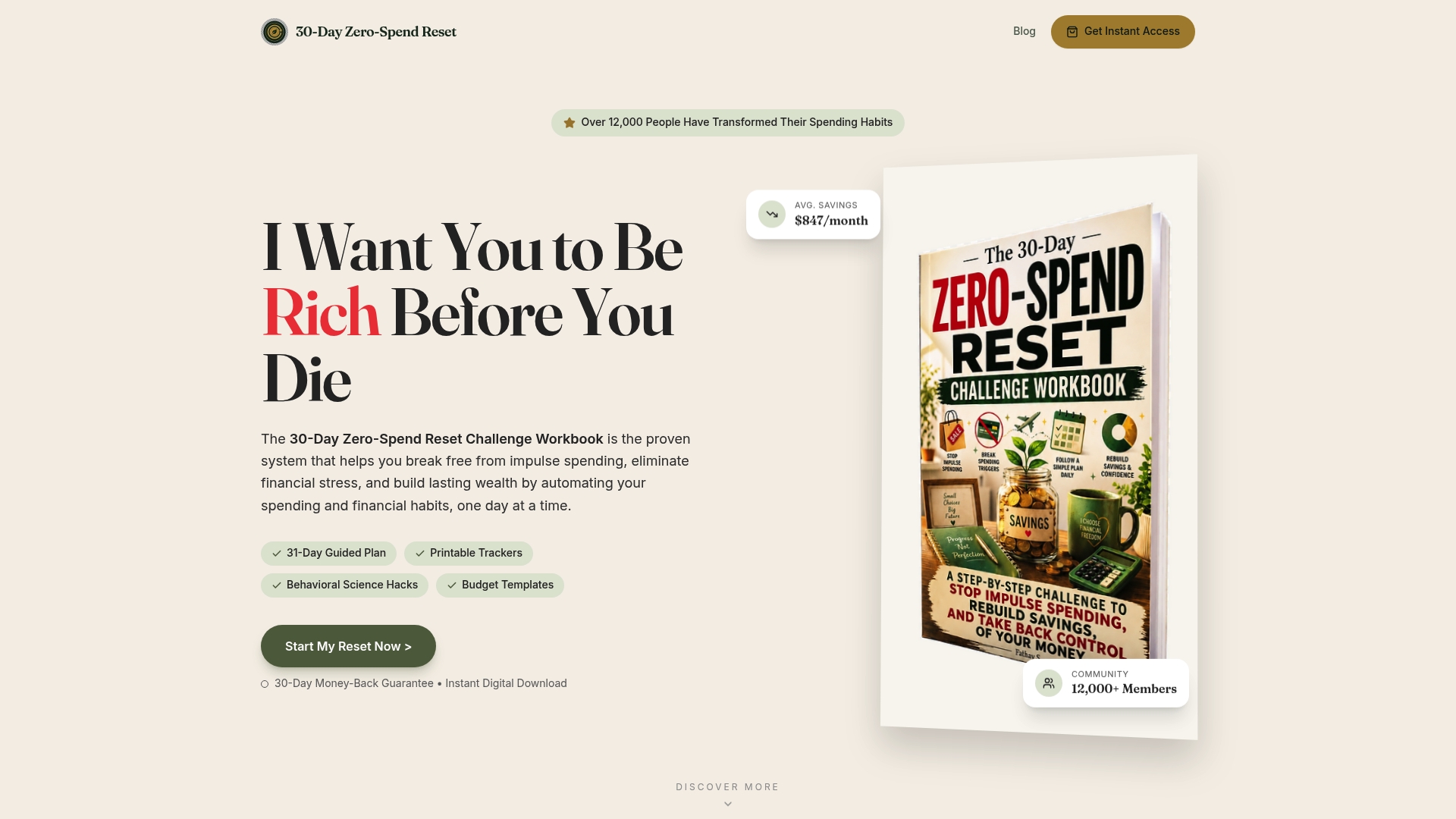
We built the 30-Day Zero-Spend Reset Challenge Workbook around a simple idea: the decision gets easier when it's made in advance. When you already know your numbers, a no isn't a confrontation. It's a sentence you've practiced. That's why the workbook includes social scripts for money conversations, daily behavioral challenges, and trackers that show you where your money goes, so you walk into the next invitation clear instead of cornered.
We also think saying no is part of saying yes to something else: an emergency fund, a debt payoff plan, a quieter month. Spending to avoid disappointing someone is still emotional spending, and it adds up. The aim isn't deprivation or guilt. It's choosing what you pay for, on purpose.
Declining a trip you can't afford isn't selfish. It's one of the most practical money habits you can build, and the friends worth keeping tend to respect it.
Omar
Build the habit before the next invitation
If this isn't the first invitation that has strained your budget, a one-off script won't fix the pattern. Our 30-Day Zero-Spend Reset Challenge Workbook is a 30-day plan with daily challenges, printable trackers, budget templates, subscription audits and social scripts for money conversations, built to help you cut impulse and emotional spending without guilt. Pair it with the companion webapp and the extra tools in the Zero-Spend Accelerator Vault if you want more support.
You can also read the Zero Spend Guide for a look at how the reset approach works before you decide.
What to do after you send the message
The awkward part is the hour after you hit send. A few reminders:
- Don't reopen the decision. If you feel guilt, read your own message again. It was kind and clear.
- Don't over-compensate. A giant gift to make up for a no defeats the purpose, since you declined to protect your budget.
- Follow through on your offer. If you promised dinner, put a date on the calendar. The follow-up is what proves the friendship is intact.
- Stay engaged. React to photos, ask about the highlights, and let her tell you the stories when she's back. Being generous with attention costs nothing.
- Keep your reasons private. You don't need to defend yourself to the other guests. If someone asks, "I couldn't make it, but it looks like a blast!" is enough.
If you're also a bridesmaid, the stakes feel higher, but the approach is the same: talk to the bride early, be honest about your limits, and offer help that fits them, such as addressing envelopes or hosting a small event locally. Many brides would rather have a present, relaxed friend at the wedding than a stressed one on the trip.
FAQ
Is it rude to decline a bachelorette trip?
No. Declining is fine when you do it early, kindly and directly. Thank the bride for the invitation, say you can't come, and wish her a great time. A short answer is more respectful of both of you than a long defensive one.
What do I say if I can't afford it?
Say so plainly and warmly: you appreciate the invitation, the trip doesn't fit your budget, and you'd love to celebrate another way. The bride is likely to understand, and no one should go into debt for a party. If you think the truth would make her feel bad, a scheduling conflict is a common alternative.
Can I go to only part of the weekend?
Yes, if the organizer agrees. You could suggest joining for Saturday night and Sunday brunch, or skipping one expensive activity. Ask for the cost breakdown first so you know whether the shorter plan actually saves you money.
What if the group keeps pressuring me?
Repeat your answer once, calmly, and don't argue the details. Offer one alternative if you want to, such as a dinner with the bride. If people keep guilt-tripping or recruiting others to push you, a firmer "I already answered, and my answer is no" is reasonable.
Will declining hurt my friendship with the bride?
Usually not, especially if you tell her early and offer another way to celebrate. Honest boundaries tend to protect friendships by preventing resentment. Following through on a plan, like dinner or a handwritten note, shows her you still care.
Sources
- Brides: How to Balance Attending Multiple Bachelorette Parties Per Year
- Brides: How to Navigate Difficult Bachelorette Party Dilemmas
- Zola: I Can't Afford the Bachelorette Trip. What Do I Do?
- CNBC: Etiquette expert on declining expensive plans
- Amendo: How to Politely Decline Something You Can't Afford
- The Knot: Average Bachelorette and Bachelor Party Cost
- Debrett's: The etiquette of hen parties
- New York Times: How to Say No During Wedding Season
- Bridesmaid for Hire: Do I have to attend the bachelorette party?
- Wedgenerator: Bachelorette Party Too Expensive? 3 Scripts
- Boundary Playbook: Saying No to Friends
Ready to reset your spending?
Get the 30-Day Zero-Spend Reset Workbook and turn these ideas into a daily action plan.
Start the 30-Day ResetThis article is part of the 30-Day Zero-Spend Reset method. Explore the complete day-by-day system behind these ideas.
Read the full guideKeep reading


Join the conversation
Be the first to share your thoughts on this article.