
Back-to-School Spending in 2026: What Families Pay and How to Cap It

What U.S. families spend on back-to-school in 2026, where the money goes, and a simple 30-day plan to set a limit, avoid impulse buys and stay out of debt.
Back-to-School Spending in 2026: What Families Pay and How to Cap It
Most 2026 surveys put back-to-school spending for a K-12 family between roughly $560 and $920, and about $1,438 for a college student. The survey you read matters less than the pattern behind it: the biggest overruns come from unplanned purchases, not from the school list. The families who stay on budget decide a number first, shop to a list, and give impulse buys a waiting period. This guide shows what the numbers look like, where the money goes, and how to set a cap you can keep, including when the season has already strained your cards.
TL;DR
- The National Retail Federation (NRF) found K-12 families expected to spend an average of $863.86 in 2026, and college families $1,437.79. Other surveys give lower or higher figures because they count different things.
- Electronics, clothing and shoes take the largest share. School supplies are usually the smallest part of the bill.
- Promotions drive unplanned buying: 54% of shoppers in one survey said discounts often lead them to purchases they did not plan.
- A fixed limit, a written list and a 24-hour wait on anything off the list protect your budget better than hunting for sales alone.
- If the season left you with card balances or a thin cushion, a 30-day spending reset is the fastest way to rebuild breathing room.
Table of Contents
- What families actually spend on back-to-school in 2026
- Where the money goes
- Why spending runs over the plan
- How to set a back-to-school limit you can keep
- Sharing school costs between households
- When back-to-school spending adds to debt
- A 30-day reset after the season
- Start your reset with the workbook
- FAQ
- Sources
What families actually spend on back-to-school in 2026
No single number is "the" back-to-school average. Each survey asks a different group and counts different items, so the figures range widely. Here is what the main 2026 studies reported.
| Source | What it measured | Average | |---|---|---| | NRF, July 14, 2026 | K-12 family, expected | $863.86 (up from $858.07 in 2025) | | NRF, July 14, 2026 | College, expected | $1,437.79 (up from $1,325.85 in 2025) | | PwC, May 2026 | Parents, per household | $922 | | KPMG, 2026 | Per child | $324 (up from $294 in 2025) | | Deloitte, 2026 | Per child | $557, flat year over year | | NerdWallet and Harris Poll, June 2026 | Back-to-school shoppers | $611, which is $130 less than the prior year |
The gap between $324 per child and $922 per household is mostly about the unit. A household with three children will land far above a per-child figure. The gap between surveys that ask all shoppers and surveys that ask only parents of school-age kids explains much of the rest.
The useful takeaway is not which survey is right. It is that your own number depends on how many students you buy for, their grade level and what they already own. Use these figures as a sanity check, not a target. A household that spends $400 deliberately is in a better position than one that "averages" $860 by accident.
The mood behind the numbers is also worth knowing. In the NerdWallet survey, 25% planned to cut spending because of higher living costs. In ICSC's July 2026 survey, 54% worried about affording everything needed and 93% said higher prices affected or would affect their purchases. If the season felt tight for you, you were in a large group.
Where the money goes
Knowing the biggest categories tells you where a cap does the most good.
For K-12 families, NRF's July 2026 category averages were:
- Electronics: $293.11
- Clothing and accessories: $250.29
- Shoes: $174.01
- School supplies: $146.45
For college students, NRF reported electronics at $341.95, dorm or apartment furnishings at $194.00, clothing and accessories at $182.39, food at $153.91 and personal care at $133.34.
PwC found that families spent more than twice as much on apparel and shoes as on school supplies. That is a useful reminder: the school list is the small part. The big-ticket and discretionary items are where budgets break.
The ongoing costs matter too. PwC's survey found parents expect an additional $635 per month per household in recurring expenses once school starts, including $260 on school fees and $235 on meals and snacks. Those costs hit after the shopping receipts are forgotten, which is why a back-to-school budget that stops at September is incomplete.
Technology is the line most likely to blow a plan. In KPMG's survey, laptops were the most commonly planned school technology purchase at 45%, followed by tablets at 31%. A single device can equal the rest of the list combined.
Why spending runs over the plan
The pattern in the data is not that families are careless. It is that the environment is built to pull purchases forward.
Promotions create purchases. Deloitte found 68% planned to shop summer promotional events, while 54% said discounts and promotions often lead to unplanned purchases. A "30% off" tag feels like saving, but the saving only exists if you needed the item.
The season is long. ICSC found 84% planned to start shopping earlier than usual, yet August still accounted for the largest share of seasonal spending at 44%. A longer season means more exposure to ads, more trips and more small purchases that never show up in a single total.
Carts are easier to fill. PwC found 73% of parents planned to use AI while shopping and 61% would let children add products to digital carts. When a child can add to the cart, the list stops being yours.
Where you shop changes the total. In Deloitte's data, 49% planned to spend most of their budget in physical stores, averaging $521, while 27% planned to spend mostly online, averaging $614. Online shoppers planned to spend more, and the easy checkout is a likely reason.

None of this is about willpower. It is about friction. Spending is easy and stopping is hard unless you build a rule ahead of time.
How to set a back-to-school limit you can keep
This is the routine, in order. It works for the August rush, and it works for the winter-break and spring replacements that follow.
1. Start with money, not wishes
Look at what you can pay in cash from this month's income without touching a credit card. That number is your ceiling. Survey averages are not. If your ceiling is $300 and the survey says $860, your plan is $300.
This is also where a worksheet beats a mental estimate. Our workbook includes budget templates and printable trackers so the limit sits on paper, not in your head.
2. Inventory before you buy
Go through backpacks, closets and drawers. Last year's binders, calculators, lunch boxes and shoes that still fit come off the list. Most families skip this step, and it is the cheapest savings you will find.

3. Build a list from the school's own requirements
Use the official supply list from the school or district, not a retailer's "back-to-school essentials" page. NerdWallet's guidance recommends sticking to the school list, and that is the single habit that ties everything else together.
4. Rank by need
Sort the list into three groups: required now, needed within a month, and nice to have. Buy only the first group at the start. Many items in the third group are forgotten within two weeks, which is how you know you did not need them.
5. Stack legitimate savings
NerdWallet's survey found 62% planned to seek sales (up from 52% in 2025), 21% planned to seek free school supplies, 19% planned to buy at least some clothing secondhand and 26% planned to use a state tax-free shopping day. These work best when they are applied to items already on your list. Check your state's revenue department site for how its sales tax holiday works, since states set their own rules.
6. Add a 24-hour wait for anything off the list
Put the item in a note, not the cart. If it still matters tomorrow, decide then. This one rule cuts most of the promotion-driven buying Deloitte describes. In our workbook, the daily challenges are built around exactly this kind of pause, so the rule becomes a habit instead of a one-time promise.
7. Set the conversation before the store
Children, especially teenagers, often push the budget. Decide the rule together before you walk in: what is covered, what they can add from their own money, and what waits. The workbook's social scripts for money conversations give you words for this, so it is not an argument in the aisle.
8. Track every dollar for the whole season
Write each purchase down on the day it happens. People who track notice drift early, when it is still fixable. A printable tracker taped to the fridge works better than an app you forget to open.
Sharing school costs between households
When parents live apart, school costs are a frequent source of friction, mostly because nobody wrote down who agreed to pay what. A simple shared record of each expense and each split removes arguments later. If you co-parent, a template for splitting child expenses between co-parents shows how to log who paid and who owes what, so the list of school costs stays fair and visible to both sides.
When back-to-school spending adds to debt
Surveys show the pressure is real. If you put the season on a credit card, you are not alone, but the balance now deserves a plan before the holiday spending starts. A few steps help.
- List every balance. Write down each card or loan, its balance and its minimum payment. Seeing the full total is uncomfortable and necessary.
- Stop adding. A balance cannot shrink while new charges land on it. This is the purpose of a spending pause: not deprivation, but stopping the leak so repayment is real.
- Find the money inside your current spending. Subscriptions you forgot, delivery fees, takeout on busy nights and impulse buys typically hide enough to make a first extra payment. Our subscription audits and meal planning guides are built for this.
- Pay extra toward one balance at a time, while keeping minimums on the others.
- Keep a starter cushion. Even a small emergency fund means the next surprise, such as a new pair of shoes or a school fee, does not go on a card.
If your debt feels unmanageable, a nonprofit credit counselor or the lender's hardship program can help you with terms. That is a conversation to have with them directly, alongside any spending changes you make at home.
A 30-day reset after the season
The weeks after a big spending season are the best time to reset, because the pain is fresh and the motivation is real. A 30-day zero-spend reset means you pay for essentials such as housing, utilities, groceries and transportation, and you stop everything else for a month. The point is not punishment. It is to find out which purchases you miss and which you never think about again.
A good reset has four parts:
- A subscription audit. Cancel or pause what you do not use. Recurring charges are the easiest savings because they require no daily discipline once cancelled.
- A grocery plan. Plan meals around what is already in the pantry and freezer. Parents often find food is the largest flexible line in the household budget.
- A trigger log. Note what you felt when you wanted to buy: bored, stressed, tired, rewarded. Emotional spending has patterns, and you can only change a pattern you can see.
- A destination for the savings. Decide on day one where the money goes: a card balance or an emergency fund. Money without a destination gets spent.
This is the structure of our workbook. It is a 30-day system with a daily behavioral challenge, trackers, budget templates, a subscription audit, meal planning guides and tools for retraining habits, designed so you are not relying on willpower alone.
What we think about back-to-school spending
The number on the receipt is rarely the problem. The problem is the dozen decisions behind it, made in a store or on a phone, under time pressure, with a child asking for one more thing. Willpower is a weak tool against that, and guilt is worse: it makes people avoid looking at their accounts at all.
That is why we built the workbook around behavior instead of budget math. A daily challenge gives you one small thing to do today. A tracker shows you what happened. A script gives you words when someone asks you to spend. The aim is a financial mindset you can keep, not a month of white-knuckling.
Back-to-school is just one season where this shows up. The same pattern appears with subscriptions, groceries, holidays and stress. Once you can see your triggers and have a routine for them, the next season costs less and feels calmer. Users have reported saving an average of $847 per month with the program.
Omar
Start your reset with the workbook
If the season left your budget stretched, the 30-Day Zero-Spend Reset Challenge Workbook gives you a structured daily plan to stop impulse buying, audit your subscriptions and rebuild your savings without guilt or deprivation. It includes printable trackers, budget templates, meal planning guides and a private companion webapp.
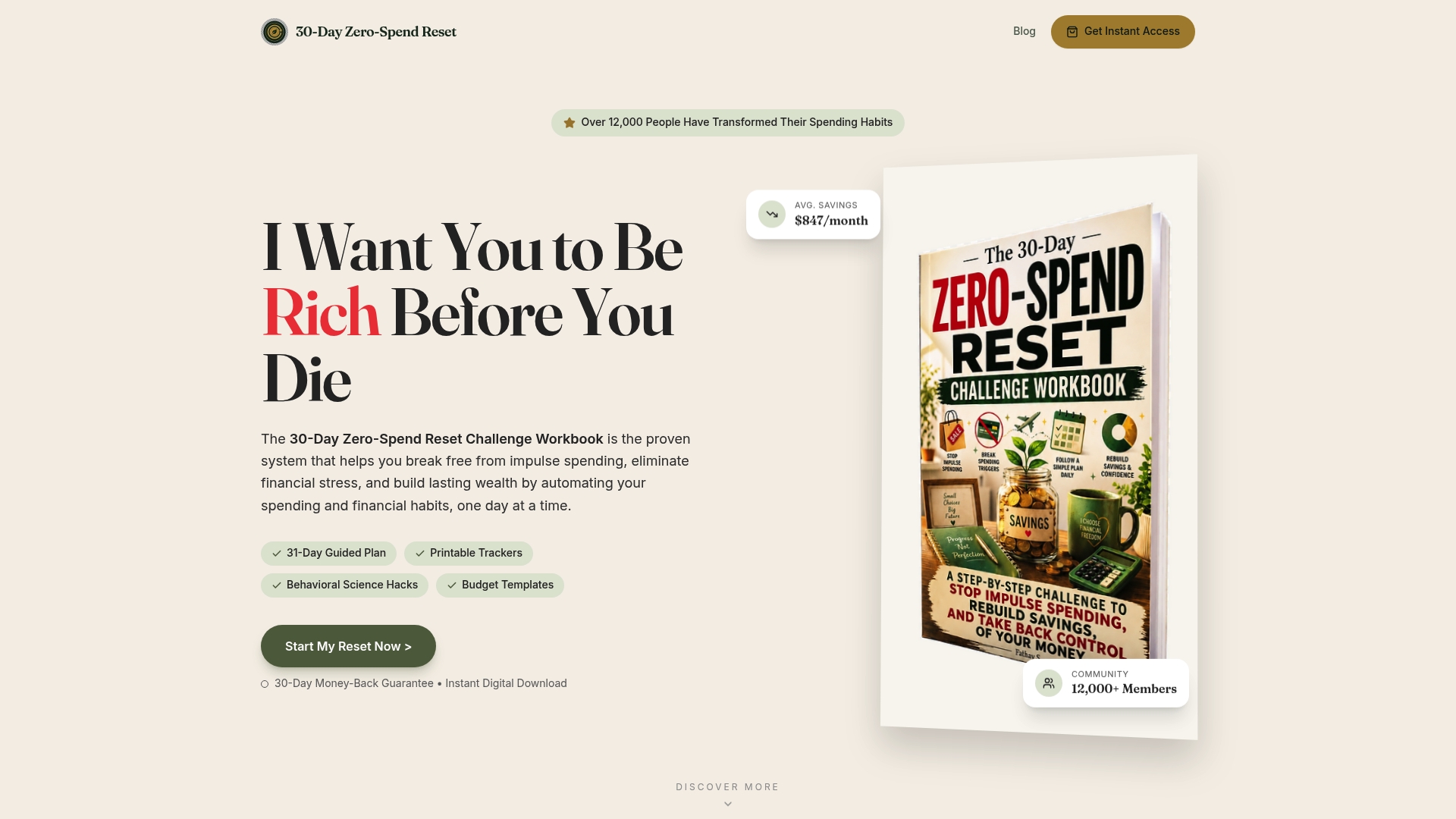
You can start with the 30-Day Zero-Spend Reset Challenge Workbook, and add the Zero-Spend Accelerator Vault for more tools to keep the habits going.
FAQ
How much should I budget for back-to-school?
Start with what you can pay from this month's income without borrowing, then compare it with the averages. NRF's 2026 survey put the K-12 family average at $863.86, while KPMG reported $324 per child. Your own number should reflect how many children you buy for and what they already own.
What is the biggest back-to-school expense?
For K-12 families, electronics were the largest category in NRF's 2026 data at $293.11, followed by clothing and accessories at $250.29. For college students, electronics again led at $341.95. School supplies were a smaller share than most families expect.
Is it better to shop early or wait?
Shopping early spreads the cost over several paychecks, which helps your cash flow. It also lengthens your exposure to promotions, and Deloitte found 54% said discounts often lead to unplanned purchases. Shop early only with a written list and a firm total.
How do I avoid impulse buying at the store or online?
Go with a written list, set the limit before you leave, and move anything off the list to a note for 24 hours. Remove saved cards from shopping apps, and do not let children add items to digital carts without your approval. A daily challenge routine makes the pause automatic.
How can I recover if I overspent?
List your balances, stop new charges and use a 30-day reset to find money in subscriptions, groceries and small purchases. Direct that money to one balance at a time while paying the minimums on the rest. Build a small emergency cushion so the next expense does not return to a card.
Sources
- NRF: Majority of Back-to-School Shoppers Get a Head Start on the Season
- PwC: US Consumer Poll on Back to School Spending
- KPMG Consumer Pulse: Back to School 2026
- Deloitte 2026 Back to School Survey
- NerdWallet: 2026 Back-to-School Shopping Report
- ICSC: Back-to-School 2026
Recommended
Ready to reset your spending?
Get the 30-Day Zero-Spend Reset Workbook and turn these ideas into a daily action plan.
Start the 30-Day ResetThis article is part of the 30-Day Zero-Spend Reset method. Explore the complete day-by-day system behind these ideas.
Read the full guideKeep reading


Join the conversation
Be the first to share your thoughts on this article.