
Price Anchoring Examples in Grocery Shopping and How to Avoid Them
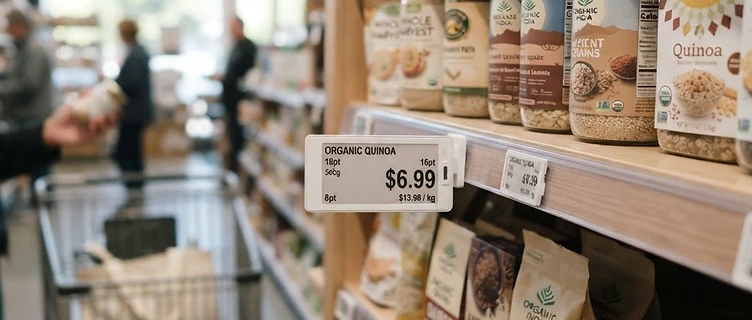
Learn how retailers use psychological pricing to influence your spending and discover actionable strategies to protect your budget from these common traps.
Understanding the Psychology of Your Grocery Bill
Have you ever walked into a grocery store, seen a product marked down from $10 to $5, and felt an immediate rush of excitement? You likely felt like you were getting a steal. In reality, you just encountered one of the most common price anchoring examples in grocery shopping and how to avoid them is the key to reclaiming your financial autonomy. Price anchoring is a psychological phenomenon where our brains rely too heavily on the first piece of information offered, known as the anchor, when making decisions. Once that initial price is set, every subsequent price is evaluated relative to that anchor, rather than its objective value [5, 7].
Retailers are masters of this. By placing a high-priced item next to a mid-range one, or highlighting a slashed original price, they manipulate your perception of what is cheap or expensive [2, 8]. Understanding these tactics is the first step toward mindful spending.
Common Price Anchoring Examples in Grocery Shopping
To beat the system, you must first recognize the traps. Here are the most frequent ways stores use anchoring to influence your cart:
1. The Slashed Price Tag
This is the classic "original price vs. sale price" tactic. By showing you a high original price, the store creates an anchor that makes the current price seem like a bargain [8]. Often, the original price is arbitrary or rarely used, serving only to make the current price look attractive [2].
2. Multiple Unit Pricing
Have you seen signs that say "10 for $10"? This creates an anchor that suggests you must buy ten items to get the deal [4]. Even if you only need one, the psychological pressure to reach that "deal" threshold often leads to overbuying. This is a form of spaving meaning: what it is and how to stop doing it that keeps your pantry full of items you might not actually use.
3. The Decoy Effect
Stores often place a premium, high-priced item next to a slightly cheaper, mid-range item. The expensive item acts as an anchor, making the mid-range option seem like a reasonable, budget-friendly choice, even if it is still overpriced compared to store brands [6, 8].
How to Avoid Anchoring Bias at the Store
Breaking free from these psychological triggers requires a shift in how you approach your shopping trip. Use these strategies to keep your wallet safe.
Shop With a Strict Plan
Impulse purchases thrive when you browse without a list. Before you leave home, audit your pantry and write down exactly what you need. When you have a plan, you are less likely to be swayed by "deals" that weren't on your radar [1]. If you find yourself struggling with the urge to buy, consider identifying hidden spending triggers in daily routines: a guide to mindful finance to understand why you feel the need to grab extra items.
Focus on Unit Pricing
Never look at the total price tag alone. The most effective way to compare value is to look at the unit price, which is usually printed in smaller text on the shelf label [1]. This tells you the cost per ounce, pound, or count. By comparing the unit price of a name brand to a generic brand, you strip away the marketing fluff and see the true cost of the product [1]. For a deeper dive, check out our guide on grocery unit pricing: how to read the label and save.
Use Cognitive Friction
If you feel the urge to grab a "sale" item, force yourself to pause. Ask yourself: "Would I buy this if it were not on sale?" If the answer is no, put it back. Creating a moment of hesitation allows your rational brain to override the emotional impulse triggered by the anchor [1].
Practical Tips for Mindful Grocery Shopping
- Avoid shopping while hungry: Hunger lowers your impulse control, making you more susceptible to marketing tactics.
- Compare across aisles: Don't just look at the items in front of you. Walk to other sections to see if a similar product is available for a lower base price.
- Ignore the "original" price: Treat the current price as the only price. If it fits your budget, buy it. If it doesn't, walk away, regardless of how much the store claims you are "saving" [2].
Key Takeaways
- Price anchoring uses initial reference points to make subsequent prices seem like better deals than they are.
- Always check the unit price on the shelf tag to compare the true value of products.
- Create a shopping list before you leave the house to prevent impulse buys triggered by store displays.
- Pause and ask if you would purchase the item at full price before adding it to your cart.
- Be wary of multiple-unit deals that encourage you to buy more than you need.
If you are ready to take control of your finances and break the cycle of impulse spending, we invite you to join our community. Our 30-Day Zero-Spend Reset workbook provides the structure and behavioral tools you need to build lasting savings habits and master your money mindset.
Ready to reset your spending?
Get the 30-Day Zero-Spend Reset Workbook and turn these ideas into a daily action plan.
Start the 30-Day ResetFrequently asked questions
This article is part of the 30-Day Zero-Spend Reset method. Explore the complete day-by-day system behind these ideas.
Read the full guideKeep reading




Join the conversation
Be the first to share your thoughts on this article.