
How to Overcome the Sunk Cost Fallacy in Recurring Monthly Memberships
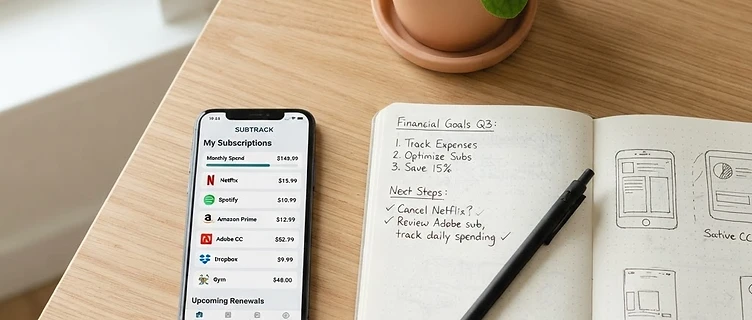
Learn how to identify and break free from the sunk cost fallacy in your recurring subscriptions to stop wasting money on services you no longer use.
Understanding the Sunk Cost Trap
If you have ever kept a subscription active simply because you have already paid for it for months, you are experiencing the sunk cost fallacy. This cognitive bias occurs when we continue a behavior or endeavor as a result of previously invested resources, such as time, money, or effort, rather than current value [1]. In the world of recurring monthly memberships, this fallacy acts as a silent drain on your finances. You tell yourself that canceling would mean wasting the money you already spent, but the reality is that the money is already gone. Continuing to pay for a service you do not use does not recover that past investment; it only compounds the loss [2].
Why We Struggle to Let Go
Human beings are not rational economic actors. We are wired to feel the pain of a loss more intensely than the joy of a gain. When you consider canceling a gym membership or a streaming service, your brain triggers a loss aversion response [3]. You feel like you are losing access to a benefit, even if that benefit has been gathering digital dust for months. Companies exploit this by making the cancellation process difficult, using dark patterns to keep you trapped in a cycle of automatic renewals [5].
This inertia is often mistaken for loyalty. However, as noted by experts, a customer who stays because they derive genuine value is an asset, while a customer who stays due to inertia is a liability [1]. If you find yourself paying for services out of habit rather than utility, you are falling victim to the very psychology these companies rely on to maintain their margins [8].
How to Conduct a Reality-Based Audit
To break the cycle, you need a system that removes emotion from the equation. You can start by performing a thorough subscription audit to see exactly where your money is going. Do not just look at the last 30 days; review your bank statements for the last quarter to catch quarterly or annual charges that often hide in plain sight [2].
Once you have your list, apply the "Replacement Test." Ask yourself: If I were not currently subscribed to this service, would I sign up for it today at its current price [2]? If the answer is no, the service has stopped providing value. If you are struggling with impulse spending in other areas, you might also find it helpful to learn how to stop the add-on effect during checkout to prevent new subscriptions from cluttering your budget in the future.
Practical Strategies to Stop the Drain
1. Use the Three-Bucket Method
Instead of making a binary keep-or-cancel decision, sort your subscriptions into three categories [8]:
- Keep: Services you use at least twice a week and would genuinely miss [7].
- Pause: Services you use seasonally or in bursts, such as fitness apps or game passes [8].
- Cancel: Anything you have not opened in the last 30 days or that overlaps with other services [8].
2. Focus on Cost Per Use
If you are unsure about a service, calculate the cost per use. If you pay $15 a month for a streaming service but only watch it once every two weeks, you are paying $7.50 per viewing session [10]. When you frame expenses in these terms, the decision to cancel becomes much easier than looking at a vague monthly fee [6].
3. Beware of Aspirational Spending
Many of us pay for "aspirational" subscriptions, such as language learning apps or advanced fitness programs, hoping that the act of paying will motivate us to use them [6]. Be honest with yourself: you are paying for what you actually do, not what you hope to become. If you have not opened the app in three months, the subscription is not making you fluent or fit; it is just making you poorer.
Moving Beyond Inertia
If you find that your spending habits are driven by boredom or stress, it is worth exploring the psychology of spending money when bored at work to address the root cause of your consumption. Breaking the sunk cost fallacy is not just about saving a few dollars; it is about reclaiming your agency over your financial life. By treating your subscriptions as tools rather than obligations, you can ensure your money is funding your actual goals rather than corporate inertia.
If you are ready to take control of your finances and build better habits, consider joining the 30-Day Zero-Spend Reset. This digital workbook provides a structured, step-by-step approach to breaking impulse spending patterns and building lasting savings, helping you move past the psychological traps that keep your budget stuck in the past.
Ready to reset your spending?
Get the 30-Day Zero-Spend Reset Workbook and turn these ideas into a daily action plan.
Start the 30-Day ResetFrequently asked questions
This article is part of the 30-Day Zero-Spend Reset method. Explore the complete day-by-day system behind these ideas.
Read the full guideKeep reading






Join the conversation
Be the first to share your thoughts on this article.