
30 Day No Spend Reset That Ends Impulse Spending
Use a habit based 30 day no spend challenge: clear rules, prep steps, simple trackers, and when a guided workbook outperforms DIY.
30 Day No Spend Reset That Ends Impulse Spending
A no-spend challenge is a set period, most often 30 days, during which you pay for essentials only and cut every discretionary purchase. The fastest way to start is simple: pick a start date this week, commit to essentials-only spending, and identify your biggest temptation categories before day one. Everything else is detail.
TL;DR:
- Successful no-spend months focus on strict adherence to essentials-only spending, with clear rules for exceptions and pre-planned emergencies.
- Preparation, including pantry audits, subscription cancellations, and calendar checks, significantly increases the chances of completing the challenge.
- Tracking progress with visual or gamified methods boosts motivation and helps prevent abandonment before the 30-day mark.
- The biggest risk is "revenge spending" after the challenge, which can be mitigated by setting a spending plan for savings beforehand.
- Guided programs like the No Spend Reset Challenge Workbook offer structured support, especially for those managing impulse spending or lack of accountability.
Table of Contents
- What Are the Basic No Spend Month Rules?
- How Long Should Your No Spend Challenge Last?
- How Do You Prepare Before Day One?
- What's the Best Way to Track Progress?
- Why Do People Fail No Spend Challenges, and How Do You Recover?
- Where Should Your Savings Go After the Challenge?
- Does a Guided Program Work Better Than DIY?
- What Do Successful No-Spend Stories Have in Common?
- How Do You Handle Social Situations Without Breaking Your Budget?
- What I've Learned Watching People Try This
- Ready for a Structured 30-Day Reset?
- Sources
What Are the Basic No Spend Month Rules?
Every successful no spend month rests on a short list of rules you can actually remember without checking a phone app every hour. The goal isn't punishment. It's a 30-day audit of where your money actually goes, not where you assume it goes.
What's allowed (the essentials list):
- Rent or mortgage, utilities, and insurance
- Groceries and household basics you'd normally buy anyway
- Medication, medical care, and anything tied to health
- Recurring bills you can't cancel mid-cycle (phone, internet)
- Transportation costs required to get to work
What's off the table for the no spend challenge:
- Restaurant meals, takeout, and delivery apps
- Impulse buys of any kind, online or in-store
- New clothing, unless something essential genuinely fails
- Entertainment splurges: concerts, new games, streaming add-ons
- Subscriptions or memberships that aren't already essential
Build in exceptions before you start, not after you break a rule. Pre-approve a gift you already know is coming, a genuine emergency, and anything preplanned and paid for before the challenge began. That's not cheating. That's realistic planning.
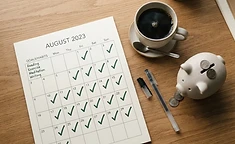
Pro Tip: Print a simple daily checkbox tracker and tape it somewhere you'll see it every morning, like the fridge or bathroom mirror. A visual streak is more motivating than a spreadsheet buried in a folder you forget to open.
The Zero Spend Guide walks through a full rules template if you want something ready-made instead of building your own from scratch.
How Long Should Your No Spend Challenge Last?
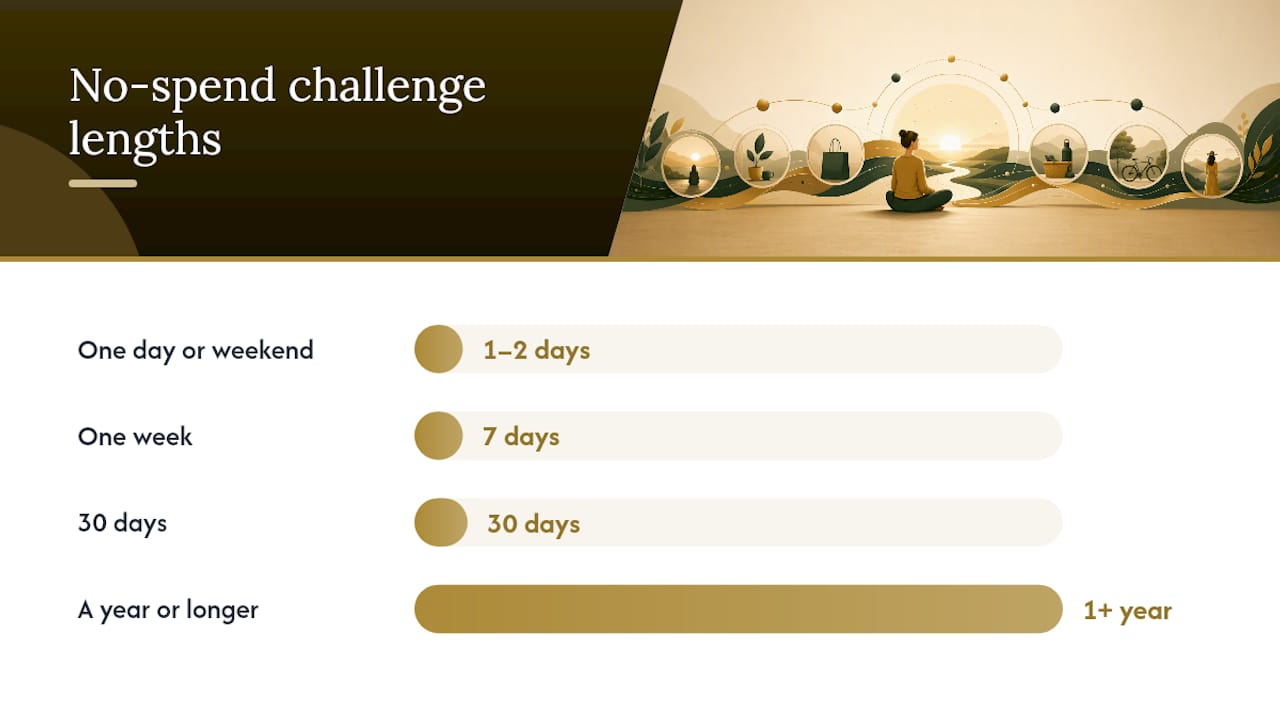
Thirty days remains the most common length for a no spend challenge because it's long enough to break habitual patterns but short enough that most people can actually finish it, according to Johns Hopkins Sustainability. Durations run from short periods to much longer ones, and each length solves a different problem.
- One day or a weekend: good for testing the concept or resetting after a rough spending week.
- One week: enough to notice patterns without much risk of burnout.
- 30 days: the sweet spot for real habit change, per Johns Hopkins.
- A year or longer: reported by NPR to produce major debt payoff and lifestyle change, but it demands serious upfront planning and usually a support community to sustain it.
If your real problem is just one category, like clothes or takeout, a category-specific no-buy challenge often works better than a blanket no-spend month. It's easier to sustain and targets the actual leak.
Habits researcher Gretchen Rubin argues that your rules should match your personality type from her Four Tendencies framework: Upholders do fine with self-imposed rules, Obligers need outside accountability, Questioners want to understand the "why" first, and Rebels do better with loosely framed intentions than rigid rules. Skip starting during holidays, vacations, or big life events. Setting yourself up to fail on day three defeats the purpose.
How Do You Prepare Before Day One?
Preparation is where most no-spend attempts quietly fall apart. Skip this step and you'll be improvising rules under pressure by day four, which is exactly when motivation is weakest.
- Audit your pantry and fridge first. Plan five to seven meals around what you already own before you touch a grocery list. This alone kills most of the "I have to order out" excuses.
- Run a subscription audit. Pull up your bank statement and circle every recurring charge. Pause or cancel anything you can live without for 30 days, and note renewal dates so nothing sneaks through.
- Set aside a small essentials float. Decide in writing what counts as a "true emergency" before you're standing in a store convincing yourself something qualifies.
- Strip away digital friction. Delete saved cards from shopping apps, unsubscribe from retail marketing emails, and use a site blocker on the apps that tempt you most.
- Check your calendar for conflicts. A friend's birthday dinner or a wedding during your window needs a plan now, not a rule you'll break later out of social pressure.
Community swap networks like the Buy Nothing Project are worth bookmarking before you start. Needing a specific item mid-challenge doesn't have to mean breaking your rules.
Pro Tip: Treat the prep phase as part of the challenge itself. GEICO's guidance frames a no-spend month as information gathering rather than deprivation, so the audit you do now is already teaching you where your money leaks.
For a full step-by-step version of this prep phase, the zero-spend reset blueprint breaks it into a day-by-day countdown.
What's the Best Way to Track Progress?
Tracking is what separates a challenge you finish from one you quietly abandon around day twelve. The method matters less than the consistency.
- A printable tracker taped somewhere visible works better for most people than a budgeting app buried three taps deep on a phone.
- A simple spreadsheet with one column per day and a running savings total gives you a number to watch grow, which itself becomes motivating.
- Low-tech gamification, like a visual jar you drop a coin or note into each no-spend day, turns willpower into something closer to a game.
- Streak counters, whether digital or a string of checkmarks, exploit the same psychology that makes fitness apps sticky.
- Public accountability, whether a group challenge with friends or a private post to a small circle, adds social pressure that outperforms private willpower alone.
Behavioral nudges matter as much as the tracker itself. A 48-hour waiting period before any nonessential purchase, recommended by financial experts covering the trend, kills most impulse buys before they happen. Reward yourself for hitting milestones, but keep rewards free: a hike, a long bath, a movie night with something you already own.
Why Do People Fail No Spend Challenges, and How Do You Recover?
The single biggest threat to any no spend challenge isn't a slip. It's what happens after the slip. Financial commentators have flagged a real pattern called "revenge spending," where people who go too strict for too long swing hard into a spending spree the moment the challenge ends, according to CNBC's coverage of the trend.
Common failure points and fixes:
- A slip triggers total abandonment. Fix: treat one bad day as one bad day, not proof the whole month failed. Restart tomorrow.
- Emotional spending sneaks in disguised as "necessary." Fix: build a free coping list now, before you're upset, like calling a friend, taking a walk, or journaling instead of opening a shopping app.
- Deprivation builds resentment that explodes later. Fix: pre-plan a modest, low-cost reward and set a spending plan for saved money that kicks in the moment the challenge ends.
- Strict rules increase binge risk for some people. Fix: a gentler, gradual reduction plan beats an all-or-nothing month if you already know rigid rules backfire for you.
Pro Tip: CNBC's reporting points to a specific fix for revenge spending: decide where saved money goes before the challenge even ends, so there's no decision left to make in a vulnerable moment.
Journaling prompts built specifically around spending triggers can help you catch the emotional pattern before it turns into a purchase.
Where Should Your Savings Go After the Challenge?
The money you didn't spend needs a destination decided before the challenge ends, not after. Without a plan, a chunk of it quietly evaporates into exactly the spending you just paused.
- Emergency fund first, if you don't already have three to six months of essentials covered.
- High-interest debt second. Credit card balances usually cost you more in interest than any investment will earn you in the short term.
- A specific short-term goal third, whether that's a trip, a deposit, or a piece of equipment you've been saving toward.
- Investing last, once the safety net and debt are handled.
Set up an automatic transfer to a separate account, ideally a high-yield savings account, the day your challenge ends. Automating it removes the temptation to "decide later," which is usually when the money disappears. Small, permanent tweaks compound: financial planning research shows that something as small as bumping retirement contributions by one percent can add up meaningfully over years. Update your regular budget with whatever habits actually stuck, whether that's the meal-prep routine or the canceled subscriptions, and let the rest of the old spending patterns return.
Does a Guided Program Work Better Than DIY?
A do-it-yourself no spend month works fine for people who are naturally organized and don't need outside structure. Most people aren't that person, which is exactly why a structured program tends to outperform a loose personal commitment.
A behaviorally designed workbook combines daily micro-tasks, a subscription audit, printable trackers, meal-planning templates, and even social scripts for the awkward "why aren't you coming out tonight" conversations, all working on impulse spending and subscription creep at the same time. Programs like the No Spend Reset Challenge Workbook build these pieces into a day-by-day sequence instead of leaving you to invent the structure yourself, and users of that program have reported saving an average of $847 per month during the challenge.
Who benefits most from a guided structure:
- Anyone who has tried and abandoned a DIY no-spend month before
- People managing emotional or impulse spending, not just budgeting weakness
- Obligers, in Rubin's framework, who need outside accountability to follow through
- Households juggling multiple subscriptions and recurring charges to untangle
You can also use a workbook alongside your own self-guided rules, borrowing just the tracker or the subscription audit while keeping your own timeline and exceptions.
What Do Successful No-Spend Stories Have in Common?
The people who finish a no spend month rarely describe it as painful in retrospect. They describe it as informative. One recurring theme in reporting on long-term no-buy commitments is that participants who stuck with year-long versions weren't white-knuckling deprivation the entire time. They were paying down real debt and reporting meaningful savings by treating the challenge as a structural change, not a temporary sacrifice, according to NPR's coverage of the trend.
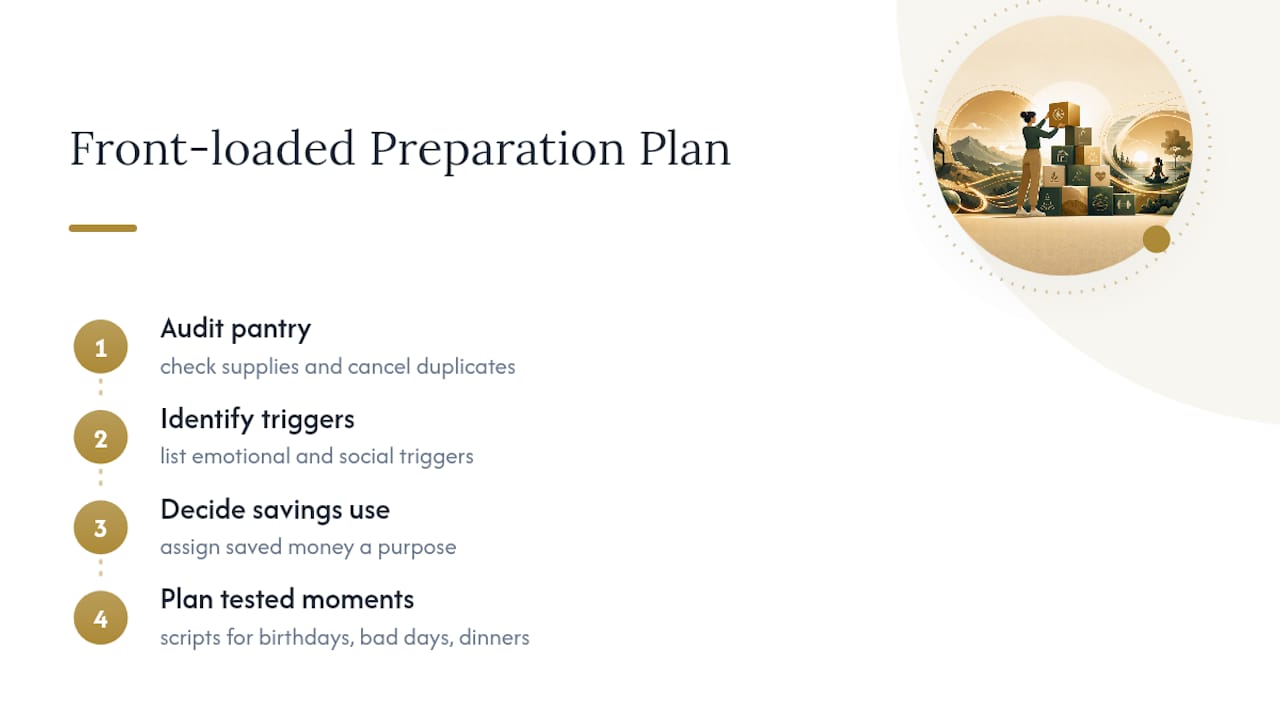
The pattern that shows up across shorter 30-day attempts too: the people who succeed almost always front-load their planning. They audit the pantry, they know their triggers, and they've decided where the saved money goes before day one arrives. The people who quit around week two are usually the ones who started with rules but no plan for the moments those rules got tested, a birthday, a bad day at work, a friend's spontaneous dinner invite.
What separates a challenge that sticks from one that fizzles isn't willpower. It's whether the person treated the month as a system to build rather than a test of discipline to survive. That's a small mental shift, but it shows up consistently in the difference between someone who finishes 30 days and someone who quits by day nine.
How Do You Handle Social Situations Without Breaking Your Budget?
Social pressure is where most no-spend challenges quietly die. Nobody plans to break their rules over a dinner invite, but it happens constantly because saying "I can't afford that right now" feels more exposing than just paying the bill.
Prepare a simple script before you need it. Something like "I'm doing a no-spend month, want to grab a walk instead of dinner?" takes the awkwardness out of the moment because you're offering an alternative, not just declining. Most friends respect a clear boundary far more than a vague excuse, and framing it as a personal challenge rather than a financial crisis keeps the conversation light.
Suggest free or low-cost alternatives before someone else suggests an expensive one: a potluck instead of a restaurant, a game night instead of a bar, a hike instead of shopping together. If you already know a specific event is nonnegotiable, like a wedding or a close friend's birthday, build that exception into your rules before the challenge starts rather than deciding in the moment whether to break your streak.
Not everyone will understand immediately, and that's fine. The people worth keeping close will adjust. The ones who make you feel guilty for prioritizing your finances are giving you useful information about the relationship, not just the challenge.
What I've Learned Watching People Try This
The biggest misconception about a no-spend challenge is that it's a test of willpower. It's actually a test of preparation. The people who treat day one like the starting line, without doing any audit or planning beforehand, are the ones who quit by day nine. The ones who spend a weekend prepping first are the ones still going on day twenty-five.
Slipping up doesn't erase the month. A bad Tuesday doesn't cancel your progress from Monday through Sunday, and treating it that way is what actually causes people to quit for good.
Three micro-habits tend to outlast the challenge itself: meal planning around what's already in the fridge, a 48-hour pause before any nonessential purchase, and a standing automatic transfer to savings the day money would have otherwise been spent. None of these require ongoing motivation. They just require setting them up once.
, Omar
Ready for a Structured 30-Day Reset?
If you want the rules, tracking, and daily structure built for you instead of assembled from scratch, the No Spend Reset Challenge Workbook was built exactly for that gap. It's a 30-day behavioral program with daily challenges, a subscription audit, printable trackers, meal-planning templates, and social scripts for the exact awkward money conversations covered above, all designed around behavioral psychology rather than restrictive budgeting.
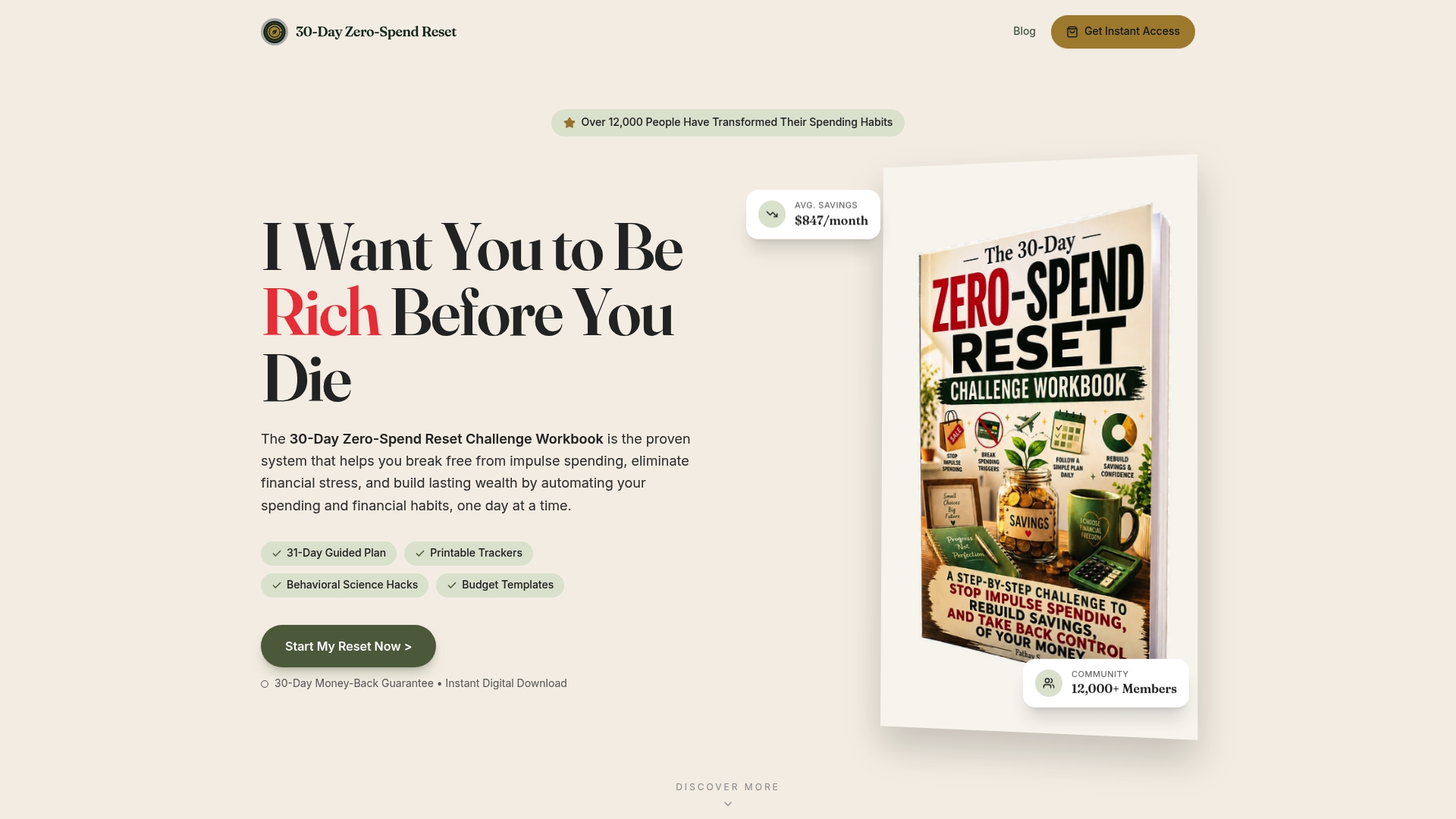
It's built for people who've tried a DIY no-spend month before and lost momentum around week two, and for anyone who wants the subscription creep and impulse-spending problems tackled at the same time instead of one at a time. If you'd rather ease in first, the free Zero Spend Guide covers the basic rules and a printable tracker. When you're ready for the full daily system, the 30-Day Zero-Spend Reset Challenge Workbook is the next step, with a companion webapp for anyone who prefers tracking progress on a phone instead of paper. For readers wrestling with why savings never seem to stick even after a good month, the coaching guide on the upper limit problem is worth a look. Grab the workbook and start your reset with day one already mapped out for you.
Sources
Ready to reset your spending?
Get the 30-Day Zero-Spend Reset Workbook and turn these ideas into a daily action plan.
Start the 30-Day ResetThis article is part of the 30-Day Zero-Spend Reset method. Explore the complete day-by-day system behind these ideas.
Read the full guideKeep reading





Join the conversation
Be the first to share your thoughts on this article.