
Financial Stress Symptoms: Triage Steps for Anyone Stressed About Money

Spot physical, emotional, and behavioral signs of financial stress. Use research backed triage steps and practical behavior fixes, with an optional 30 day...
Financial Stress Symptoms: Triage Steps for Anyone Stressed About Money
Financial stress produces three clusters of symptoms: physical, emotional, and behavioral. You might notice sleep trouble and headaches, a constant undercurrent of worry or shame, and habits like avoiding bills or spending to feel better. The next section breaks down what each cluster looks like; if you're seeing red-flag signs like severe panic or thoughts of self-harm, skip ahead to the "When to get help" section now.
TL;DR:
- Nearly half of adults experience some level of money-related stress, with 22% feeling it extremely, risking physical symptoms like headaches, fatigue, and sleep disturbances.
- Emotional signs include persistent worry, guilt, hopelessness, and panic attacks, often overlapping with anxiety and depression but not always indicating a mental disorder.
- Avoidance behaviors such as ignoring bills, overspending for comfort, and skipping healthcare are common, reinforcing the money-stress loop and worsening financial anxiety.
- Immediate steps like fact-only account checks, calming techniques, and prioritizing essentials can reduce symptoms within days, with gradual habit-building over weeks.
- Severe symptoms like suicidal thoughts, panic attacks, or inability to function require urgent medical or mental health intervention, while supporting social or financial resources can help manage ongoing stress.
Table of Contents
- Symptoms explained: physical, emotional, and behavioral signs
- Why financial stress creates these symptoms
- The money-stress loop and behavior patterns that amplify symptoms
- When to get help: red flags and who to contact
- A practical plan to reduce symptoms over time
- What the evidence says and where it falls short
- A note on shame, stigma, and starting small
- A structured option if you want daily support
- Sources
- FAQ
Symptoms explained: physical, emotional, and behavioral signs
Money stress rarely stays in your head. It shows up in your body, your mood, and your daily choices, often before you consciously connect the dots.
Physical symptoms are usually the first clue something is off. Common ones include:
- Trouble falling or staying asleep, or waking up rehearsing your bank balance
- Tension headaches or migraines that flare during bill season
- Stomach upset, nausea, or appetite changes tied to money-related tasks
- A racing heart or chest tightness when an unexpected expense appears
- Ongoing fatigue that doesn't improve with rest
A composite picture: someone lies awake doing mental math about rent, wakes up exhausted, skips breakfast because their stomach is in knots, then gets a headache by mid-morning. None of these symptoms alone point to money. Together, tied to a pattern around pay dates or due dates, they usually do. In the APA's Stress in America snapshot, 42% of respondents said stress caused them to lie awake at night, and 33% reported overeating or eating unhealthy food as a stress response. New or severe versions of these symptoms, especially chest pain or heart palpitations, still deserve a medical evaluation rather than an assumption that it's "just stress."
Emotional symptoms tend to be quieter but just as disruptive:
- Persistent worry that loops even when you're doing something unrelated
- Guilt or shame about past spending or current debt
- A sense of hopelessness about ever catching up
- Irritability with a partner or family over small money comments
- Panic attacks triggered by opening a bill or checking an app
A composite picture: someone feels a flash of dread every time their phone buzzes with a bank notification, snaps at a partner over a $12 subscription, then spends the evening replaying every financial mistake they've made. These symptoms overlap heavily with anxiety and depression, and that overlap matters: financial stress can produce clinical-looking symptoms without meeting the criteria for a diagnosed disorder, and it can also worsen an existing one. Feeling this way doesn't automatically mean you have a mental health condition, but it's worth naming honestly rather than pushing down.
Behavioral symptoms are often the easiest for other people to notice, even when you can't see them in yourself:
- Letting mail or emails about bills pile up unopened
- Checking your balance compulsively, then avoiding it entirely for weeks
- Freezing on simple decisions, like which bill to pay first
- Working extra hours to outrun the anxiety instead of addressing it directly
- Spending on small comforts, takeout, subscriptions, shopping, to self-soothe
- Skipping medical, dental, or prescription care to save money
A composite picture: someone avoids their banking app for two weeks, then orders delivery three nights in a row because cooking feels like one more decision they can't face, then avoids the app again out of guilt. The APA Monitor's summary of Stress in America findings notes that a significant portion of adults have considered or actually skipped needed healthcare because of financial concerns.
A statistic worth sitting with: 72% of adults reported feeling stressed about money at least some of the time, and 22% rated that stress as extreme. If this is you, you're describing a common experience, not a personal failure.
Why financial stress creates these symptoms
Money worry activates the same stress response your body uses for physical threats. Your system releases stress hormones, your heart rate climbs, and digestion slows, which is part of why headaches, stomach upset, and a racing pulse show up together during a bad financial stretch. When that activation doesn't switch off because the "threat" (a due date, a shrinking balance) keeps reappearing, sleep gets disrupted, and fatigue builds on top of it.

There's also a cognitive cost. Constantly running money math in the background eats into your working memory, which is why financial stress often shows up as trouble concentrating, forgetting small tasks, or freezing on decisions that would normally be easy. Researchers call this cognitive load, and it helps explain why financial stress and indecision travel together so often.
The evidence for the mental health connection is substantial. A large observational study using 2021 NHIS data covering 29,370 adults found that financial hardship was associated with higher psychological burden, with financial hardship linked to close to four times higher odds of serious psychological distress. The same study found that social and mental-health support moderated that outcome, meaning the people who had support around them fared better even under similar financial pressure.
Financial hardship was associated with higher psychological burden, and social and mental-health support moderated the relationship between hardship and distress.
None of this proves you have a diagnosable condition. Symptoms like persistent worry, disrupted sleep, or irritability are signals worth taking seriously, but a proper diagnosis of anxiety or depression comes from a qualified clinician, not a symptom checklist.
The money-stress loop and behavior patterns that amplify symptoms
Here's a pattern that shows up constantly: you feel anxious about money, so you avoid checking your accounts, which lets small problems grow into bigger ones, which makes the eventual reckoning even more stressful, so you avoid it again. That's the money-stress loop, and it's a completely understandable response. Avoidance feels protective in the moment even though it compounds the problem over time.
You can check whether the loop is active with a short self-assessment:
- Have you avoided opening a bill, app, or email because you already know it's bad news?
- Have you made a purchase specifically to feel better rather than because you needed the item?
- Have you skipped a medical, dental, or other necessary appointment mainly to save money?
- Have you found yourself unable to decide between two financial options for more than a few days?
Answering yes to two or more suggests the loop is running the show.
The fix isn't a burst of willpower. It's gradual exposure: small, low-stakes contact with your finances that rebuilds tolerance instead of demanding a heroic overhaul. Try a scheduled, facts-only check twice a week where you look at your balance without judging it. Break tasks into 10-minute chunks, like calling one creditor or canceling one subscription. Tell a friend or partner your one task for the week so you have social accountability, and remove friction from good habits, like setting savings to move automatically so you don't have to decide every time.
Pro Tip: Set a recurring 10-minute "money check" on your calendar at the same time each week. The goal isn't to fix anything, just to look.
When to get help: red flags and who to contact
Most financial stress symptoms respond to the coping steps in this article. Some don't, and those deserve faster attention.
- Thoughts of suicide or self-harm, even passing ones, warrant an immediate call to a crisis line or emergency services.
- Panic attacks that leave you unable to function, or chest pain and heart palpitations that are new or worsening, need urgent medical evaluation.
- An inability to get out of bed, go to work, or manage basic daily tasks for several days points to a level of distress beyond self-help.
- Skipping essential medication, medical care, or food to save money is a sign your situation needs outside support now, not eventually.
Match the problem to the right person. A primary care provider can evaluate physical symptoms like chest pain, headaches, or sleep disruption. A therapist or counselor is the right call for persistent anxiety, depression, or panic attacks. A financial counselor or nonprofit credit counseling service, like the resources described at Studioarcara, can help with debt negotiation and budgeting when the stress is tied to a specific financial mess. If cost is the barrier, look for a crisis hotline, sliding-scale therapy through a community mental health center, or free financial counseling through a local nonprofit.
A practical plan to reduce symptoms over time
You don't need to solve everything at once. Spreading the work across a few time horizons makes it manageable.
In the next 24 to 72 hours, focus on calming your body and getting the facts straight:
- Use slow breathing, in for four counts, hold for four, out for six, when you notice your heart racing or your chest tightening.
- Protect your sleep with a consistent bedtime and by keeping your phone, and its banking apps, out of the bedroom.
- Do one facts-only check: look at your actual balance and upcoming due dates without deciding anything yet.
- Make a short list of essentials (housing, utilities, food, minimum debt payments) versus everything else.
Over the next two to four weeks, move into triage:
- Call creditors before you miss a payment. Many offer hardship plans, and asking early gets better terms than asking after you've fallen behind.
- Pause or cancel nonessential subscriptions and recurring charges you'd forgotten about.
- Rank bills by consequence, not by who calls the most, and pay in that order when money is tight.
- Set one small, automatic savings transfer, even $10 a week, so progress happens without a daily decision.
Over one to three months, build habits that keep symptoms from creeping back:
- Schedule a recurring money check, weekly or biweekly, on the calendar so it stops feeling like an emergency every time.
- Run a subscription and spending audit once a month to catch creep before it adds up.
- Set one measurable goal, like a specific dollar amount saved or a specific debt paid down, and track it somewhere visible.
- Loop in a partner, family member, or friend for accountability, especially around shared expenses.
Pro Tip: Track one number a week, like your checking balance or total debt, instead of trying to overhaul your entire budget at once. Small consistent wins rebuild trust with yourself faster than a perfect plan you abandon in ten days.
If the money problems are structural, more debt than income can currently cover, a financial counselor can help build a realistic plan; if the emotional weight isn't lifting even as the numbers improve, that's the moment to bring in a therapist alongside the financial work, not instead of it.

What the evidence says and where it falls short
This article draws on a specific evidence base: the APA's Stress in America survey work, a large NHIS-based observational study published in Medicine linking financial hardship to psychological distress, and Vanderbilt University's guidance on combining financial planning with social and mental-health support.
A few honest limits are worth naming:
- Survey data captures self-reported stress, not clinical diagnoses, so the numbers describe experience, not disorder.
- The NHIS-based study shows association, not proof that financial hardship directly causes psychological distress in every individual case.
- Guidance on combining financial and emotional support reflects general recommendations, not a one-size-fits-all treatment protocol.
My own focus in writing this was practical recognition: helping you name what you're feeling and take one concrete step, not replace a clinician's judgment. For readers who want a structured way to act on the money-triage steps above, a workbook can guide you through daily behavioral challenges, spending tracking, and subscription auditing that align with the gradual-engagement approach described in this article.
A note on shame, stigma, and starting small
Feeling ashamed about money stress is common, and it's also the thing that keeps people stuck in avoidance longest. You don't have to fix your entire financial life this week. Pick one task from the plan above, a single facts-only check or one call to a creditor, and treat that as the win. If the weight isn't lifting, pairing practical money steps with a therapist or counselor tends to work better than either one alone.
, Omar
A structured option if you want daily support
If the idea of committing to a full financial overhaul feels like too much on your own, a structured workbook can break the process into daily, low-pressure challenges instead of one big decision. Such programs are often built around behavioral principles like reducing impulse spending, auditing subscriptions, and replacing shame with structure.
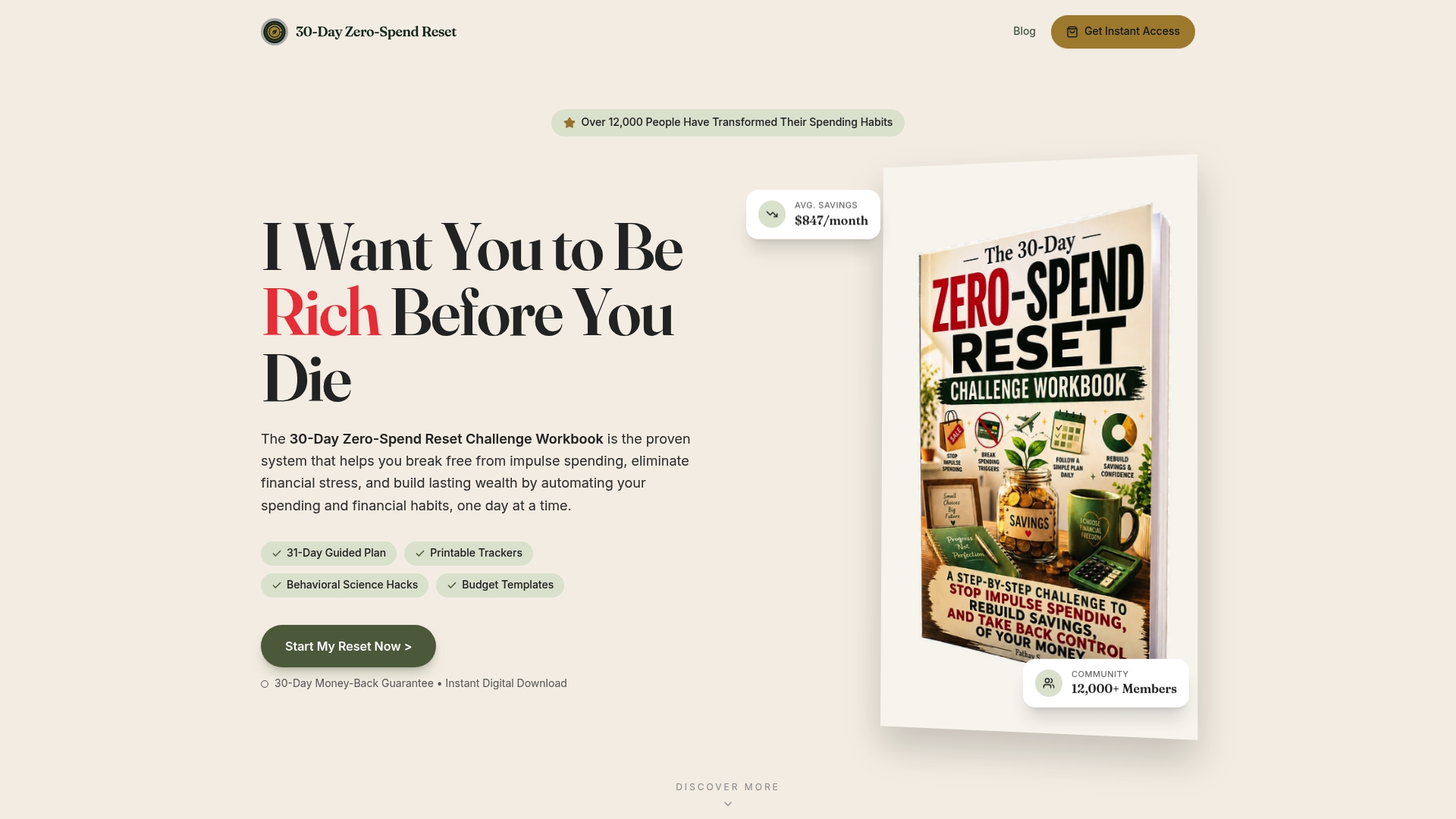
It's not a replacement for medical care or therapy when those are what you need, but as a companion tool for the money side of the equation, it gives you a day-by-day framework instead of a blank page. You can see what's included on the 30-Day Zero-Spend Reset Challenge Workbook page, or look at the Zero-Spend Accelerator Vault if you want a deeper, ongoing set of tools once the initial 30 days are done.
Sources
- APA Stress in America snapshot (2014)
- Association between financial hardship and psychological burden (Medicine, 2024, PMC article)
- Improving financial stress: causes, signs and solutions, Vanderbilt University (2025)
- Coping with financial stress, HelpGuide
This article is general information, not a substitute for advice from a qualified doctor. Consult a qualified healthcare professional about your own circumstances before acting on anything here.
FAQ
What to do when you feel financially stressed?
Start with one facts-only look at your balance and due dates, then triage: cover essentials first, call creditors before you miss a payment, and pause nonessential spending. Pair that with a calming technique like slow breathing, and consider a structured coping approach if the worry doesn't ease within a few weeks.
Why am I poor financially?
Financial strain usually comes from a mix of income, expenses, debt obligations, and circumstances like job loss or medical costs, not a single personal failing. If avoidance or emotional spending is part of the picture, addressing the money-stress loop alongside your budget often matters as much as the numbers themselves.
Why am I so worried about money?
Money worry is extremely common: 72% of adults report feeling stressed about money at least some of the time, and worry tends to intensify when bills feel unpredictable or debt feels unmanageable. It's a normal stress response, though persistent worry that disrupts sleep or daily function is worth addressing directly.
How to deal with financial problems?
Break the problem into immediate, short-term, and longer-term steps: calm your body first, then handle the most urgent bills, then build habits like scheduled money checks and automatic savings. When debt feels too large to manage alone, a financial counselor can help build a realistic repayment plan.
Is financial stress the same as clinical anxiety or depression?
Not necessarily. Financial stress can produce symptoms that look like anxiety or depression, including persistent worry, low mood, and sleep disruption, but a clinical diagnosis requires evaluation by a licensed professional. If symptoms are severe or ongoing even after your financial situation stabilizes, that's a signal to talk to a therapist.
Recommended
Ready to reset your spending?
Get the 30-Day Zero-Spend Reset Workbook and turn these ideas into a daily action plan.
Start the 30-Day ResetThis article is part of the 30-Day Zero-Spend Reset method. Explore the complete day-by-day system behind these ideas.
Read the full guideKeep reading




Join the conversation
Be the first to share your thoughts on this article.