
Pay in Four Is $78.3B of U.S. Buy Now Pay Later Debt, How to Triage It

See how pay in four BNPL makes up $78.3B of U.S. volume, what fees and overdrafts cost you, and follow seven steps to triage debt plus a 30 day reset.
Pay in Four Is $78.3B of U.S. Buy Now Pay Later Debt, How to Triage It
Buy now pay later debt is manageable when you treat it like the loan it actually is: track every plan, pay on the exact due date, and never run more than one at a time. It turns dangerous the moment payments overlap, autopay drains a thin checking balance, or a missed installment lands in collections. If you're juggling more than one BNPL plan right now, stop opening new ones and write down every balance and due date today, before reading further. Federal Reserve and CFPB data both show the risk clusters around exactly that kind of stacking and thin savings buffer.
TL;DR:
- Stacking multiple BNPL plans and running thin checking accounts significantly increase the risk of overdrafts, late fees, and collection accounts.
- Younger, low-savings consumers are more likely to rely on BNPL for essentials and experience repayment struggles, especially when autopay depletes their balance.
- Managing BNPL debt requires inventorying all accounts, avoiding new plans, and paying manually to prevent overdrafts and default risks.
- Using BNPL for discretionary or essential items without a buffer increases the likelihood of falling into a cycle of repeated debt and collections.
Table of Contents
- How Big Is the Buy Now Pay Later Market Right Now?
- How Does Buy Now Pay Later Actually Work?
- What Are the Hidden Costs and Risks of BNPL Debt?
- Who Is Most Likely to Struggle With BNPL Debt?
- How Do You Manage or Pay Off BNPL Debt?
- Is Buy Now, Pay Later Actually a Trap?
- A Behavioral Alternative to Repeating the BNPL Cycle
- Where to Get Official Help With BNPL Debt
- Sources
- FAQ
How Big Is the Buy Now Pay Later Market Right Now?
BNPL isn't a niche checkout button anymore. U.S. providers originated roughly $156.7 billion in BNPL credit in 2025, and pay-in-four plans made up about half of that, at $78.3 billion.
By the numbers: Pay-in-four products account for 50% of all U.S. BNPL volume, a category that barely existed a decade ago.
The share of e-commerce running through BNPL has climbed from roughly 2% in 2020 to a noticeably higher single-digit slice by 2024, according to Richmond Fed research. That growth curve is exactly why regulators started paying closer attention. When a lending product scales that fast outside the usual credit-reporting infrastructure, the people extending the credit learn about repayment risk slower than they would with a credit card portfolio. That lag matters for you as a borrower, too, because it means the safety net most people assume exists (credit monitoring, standardized dispute rights) is still catching up.
How Does Buy Now Pay Later Actually Work?
Pay-in-four is the product you've probably used: a purchase splits into four equal payments, one due at checkout and the rest every two weeks, debited automatically from a card or bank account. Longer installment plans, often for bigger purchases like furniture or electronics, spread payments over several months and sometimes carry interest, unlike the classic no-interest pay-in-four structure.
A few mechanics matter more than shoppers realize:
- Approval usually runs on a soft credit pull, which doesn't affect your score but also means underwriting is thinner than a traditional loan.
- Many providers use a "low-and-slow" approach, starting new customers with small purchase limits and raising them as repayment history builds.
- Pay-in-four loans historically haven't been reported to credit bureaus the way installment loans are, according to CFPB research.
- Automatic debits repeat every two weeks per plan, and each new purchase starts its own independent payment clock.
That last point is where trouble starts. Four purchases made across four different weeks means four different debit schedules hitting your account, often with no single dashboard showing you all of them at once.
What Are the Hidden Costs and Risks of BNPL Debt?
The "no interest" pitch is real for a single plan paid on time. It falls apart once fees, overdrafts, or a second and third plan enter the picture.
Recent Federal Reserve survey data found that about 11% of BNPL users had a payment trigger an overdraft or NSF fee in the prior year, and roughly 26% reported at least one late payment, according to the Fed's Consumer & Community Context report.
Statistic to remember: Nearly 1 in 4 BNPL users misses a payment within a year, and about 1 in 9 gets hit with an overdraft fee because of it.
Here's how a supposedly free loan turns expensive:
- Late fees compound. Miss one pay-in-four installment and the fee can eat a meaningful chunk of a small purchase's value, especially on lower-dollar items.
- Overdraft fees stack on top. Automatic debits don't check your balance first; a $35 NSF fee on a $40 installment can double your effective cost overnight.
- Stacking multiplies due dates. Four BNPL plans opened in the same month can mean eight or more automatic debits hitting your account before it's over.
- Defaults land in collections. Unpaid balances get sent to third-party collectors, and that history can surface in background checks even without traditional credit reporting.
- Essentials make it worse. NCLC's borrower research documents that BNPL used for groceries or medical bills correlates with higher repayment trouble, since there's no cushion left when income dips.
Pro Tip: Check your bank balance the morning of every scheduled BNPL debit, not the night before. Banks often post other charges first, and a $12 coffee subscription renewal can be the difference between a clean debit and a $35 overdraft.
Who Is Most Likely to Struggle With BNPL Debt?
BNPL use skews toward people who need it most and can least afford a misstep. CFPB analysis of unsecured consumer debt found BNPL borrowing is higher among adults with limited emergency savings and higher existing unsecured debt, not among wealthier shoppers looking for convenience.
A few patterns show up repeatedly in that research:
- Younger borrowers with shorter credit histories use BNPL at higher rates than older consumers.
- People with less than a month of expenses in savings are more likely to rely on it, and more likely to report repayment strain.
- Relying on BNPL specifically for essentials, rather than discretionary purchases, is itself a warning sign of a thin financial buffer.
- Enabling autopay while carrying a low checking balance turns a manageable plan into an overdraft risk within days.
If two or more of those describe your situation, the math isn't about willpower. It's about liquidity, and that's fixable with a plan rather than a lecture.
How Do You Manage or Pay Off BNPL Debt?
Treat this like triage, not a to-do list you get to eventually.
- Inventory every BNPL account. Write down each provider, balance, and next due date. Most people are surprised how many they actually have open.
- Flag anything that will overdraft. Compare due dates against your actual checking balance for the next two weeks, not your typical balance.
- Stop opening new BNPL plans immediately. Every additional plan adds another payment clock you have to track.
- Call the provider before you miss a payment. Consumer advocacy groups note that many BNPL companies will offer a short hardship extension or one-time fee waiver if you ask before the due date, not after.
- Turn off autopay on any account with a thin buffer, and pay manually on the date instead, even if it's less convenient.
- Consolidate only if it lowers your total cost. A single negotiated payoff can help, but only run it through the math first.
- Audit recurring subscriptions and discretionary spending to free up the cash that keeps triggering new purchases.
Pro Tip: If you're rotating BNPL plans just to cover groceries or gas, that's a liquidity problem, not a budgeting problem. Nonprofit credit counseling agencies through the NFCC can help you build a plan for free, before debt collectors get involved.
Is Buy Now, Pay Later Actually a Trap?
BNPL isn't inherently a trap. It's a mixed product: genuinely useful for a single, planned purchase you can pay off in six weeks, and genuinely dangerous when it becomes your default way to afford things you'd otherwise skip. The data backs both halves of that claim, which is why blanket "BNPL is fine" or "BNPL is predatory" takes both miss the point.

A few rules of thumb hold up against the evidence. Run one plan at a time, never several in parallel. Avoid using it for groceries, utilities, or anything else you can't skip if money gets tight. Keep a buffer in your checking account before you let anything autopay. And if you're already juggling multiple plans, a single consolidated payoff usually beats limping along on four separate schedules.
The deeper fix isn't a better repayment app. It's breaking the impulse cycle that leads to opening a BNPL plan in the first place, which is a behavioral problem before it's a financial one.
, Omar
A Behavioral Alternative to Repeating the BNPL Cycle
Paying off what you owe is step one. Not ending up back here in six months is the harder part, and that's a habit problem, not a math problem. The 30-Day Zero-Spend Reset Challenge Workbook tackles exactly that gap with daily behavioral challenges built around the impulse-buying and emotional-spending patterns that fuel repeat BNPL use.
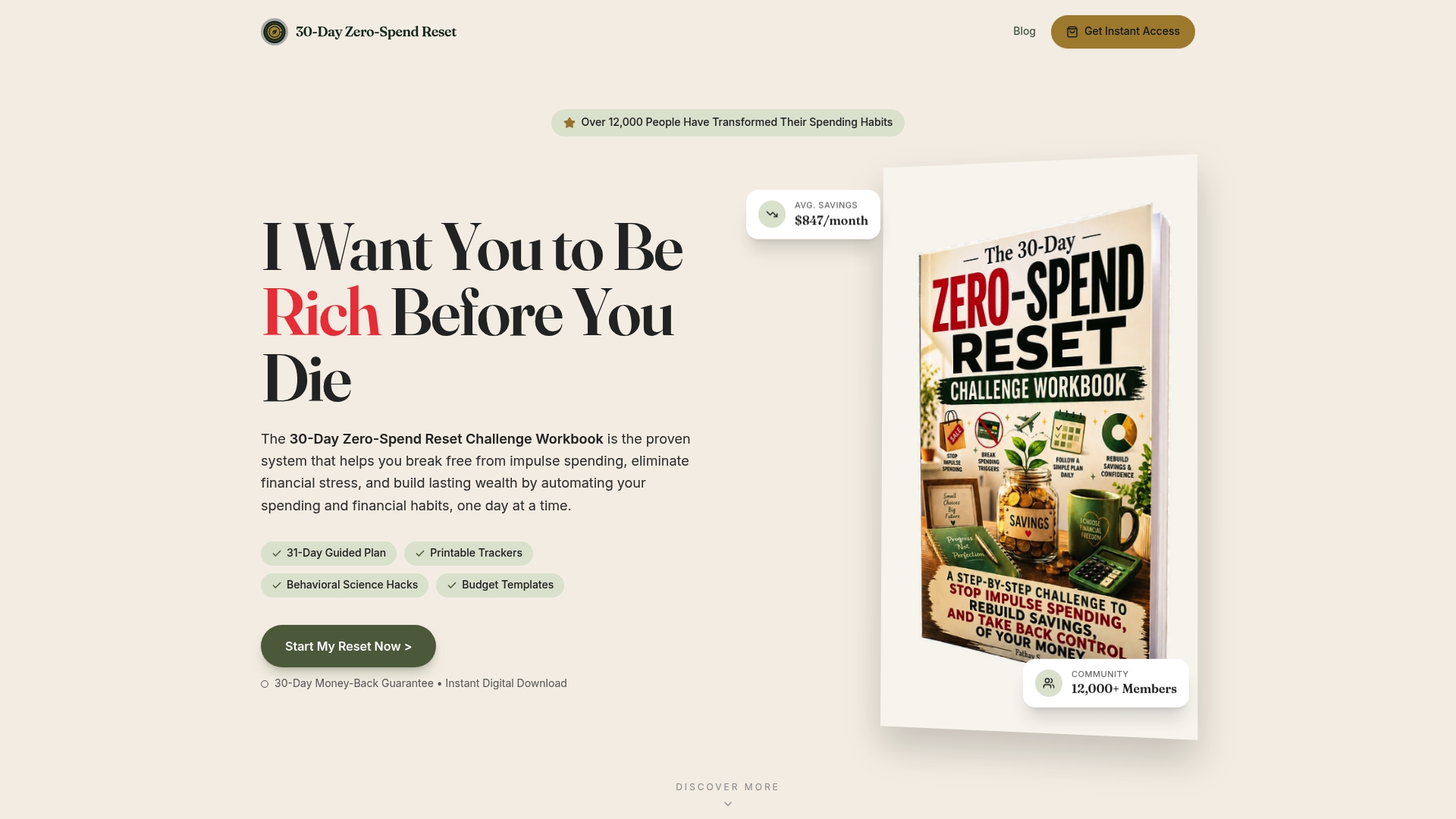
The program includes tools such as a subscription audit to help identify recurring charges, printable trackers to increase spending awareness, and social scripts to assist with money conversations. The companion webapp gives you ongoing tracking after the 30 days end, and readers who want a deeper toolkit can step up to the Zero-Spend Accelerator Vault once the core reset is done. This is a prevention tool, not a substitute for negotiating with a BNPL provider or working with a nonprofit credit counselor on existing balances. Start with the 30-day guide once your accounts are triaged and stabilized.
Where to Get Official Help With BNPL Debt
- Federal Reserve BNPL research for market data
- CFPB consumer reports on BNPL and unsecured debt
- FTC consumer guidance on BNPL terms and fees
- NCLC borrower resources for disputes and hardship options
Sources
- Buy Now, Pay Later, Beyond 'Pay in 4': A comprehensive product overview (Federal Reserve, 2026)
- Consumer Use of Buy Now, Pay Later and Other Unsecured Debt (CFPB, 2025)
- Buy Now, Pay Later, Rent-to-Own, Lease-to-Own, and Layaway (FTC)
- Risks and Advice for Buy Now, Pay Later Borrowers (NCLC, 2025)
FAQ
What's the easiest BNPL service to get approved for?
Approval standards vary by provider and purchase amount, but most BNPL companies use a soft credit pull rather than a hard inquiry, which makes approval far easier than a traditional credit card. Smaller, low-dollar purchases through pay-in-four plans typically have the lowest approval bar since providers start new customers with small limits before raising them.
What's considered the worst kind of debt to carry?
Debt with the fastest-compounding penalties and least oversight tends to do the most damage, and BNPL stacked across multiple providers fits that description because it combines late fees, overdraft risk, and collections exposure with almost no centralized tracking. High-interest credit card debt and payday loans remain worse on raw interest cost, but BNPL's lack of visibility makes it easy to lose track of until it's already overdue.
Can you go to jail for unpaid BNPL or credit card debt?
No. Unpaid consumer debt, including BNPL and credit card balances, is a civil matter in the U.S., not a criminal one, so you cannot be jailed simply for owing money. What can happen is collections calls, a lawsuit for the balance, and, if a court rules against you, wage garnishment in some states.
Is a 250 credit score considered bad?
Yes, though a score that low is unusual since most standard scoring models start at a low baseline. Such a low score signals serious repayment problems like defaults or collections accounts, and it warrants immediate attention through a nonprofit credit counselor rather than another loan.
How long does it typically take to pay off BNPL debt?
A standard pay-in-four plan is designed to be paid off in six weeks from the first purchase. Debt tied to longer installment plans or stacked pay-in-four balances that have gone to collections can take many months longer, especially once late fees and interest on longer plans are added to the original balance.
Ready to reset your spending?
Get the 30-Day Zero-Spend Reset Workbook and turn these ideas into a daily action plan.
Start the 30-Day ResetThis article is part of the 30-Day Zero-Spend Reset method. Explore the complete day-by-day system behind these ideas.
Read the full guideKeep reading

Join the conversation
Be the first to share your thoughts on this article.