
Stop Running Out Before Payday: Paycheck Budgeting That Actually Sticks
One hour setup and five minute payday routines that use daily micro challenges to fund bills and prevent pre payday shortfalls.
Stop Running Out Before Payday: Paycheck Budgeting That Actually Sticks
Paycheck budgeting means assigning every dollar of each paycheck to the specific bills and costs due before your next payday, instead of planning around a calendar month. It works best for anyone paid weekly or biweekly, or anyone who has ever felt broke on the 27th despite a decent income. Match paychecks to due dates and the gap between "money in" and "bills due" closes for good.
TL;DR:
- Paycheck budgeting pairs each paycheck with bills due before the next deposit, aligning expenses directly with actual pay dates rather than calendar months.
- Setting up this method requires mapping pay schedules, bill due dates, adjusting variable costs, and tracking responsibilities on a single page.
- Using tools like spreadsheets or printable workbooks helps maintain discipline, but automatic calendar-month tools can break during irregular pay periods.
- Managing irregular income involves prioritizing essential expenses, planning for larger-paycheck months, and treating extra income as a bonus rather than a fixed part of the budget.
- Common mistakes include delaying bill confirmations until deposits clear and overspending paychecks as windfalls instead of sticking to predetermined allocations.
Table of Contents
- What Is the Paycheck Budgeting Method, and Why Does It Work?
- How Do You Set Up a Paycheck Budget Step by Step?
- What Does a Biweekly or Weekly Paycheck Budget Look Like?
- Which Tools Actually Help You Track a Paycheck Budget?
- How Do You Budget by Paycheck With Irregular Income?
- What Are the Most Common Paycheck Budgeting Mistakes?
- What Behavioral Habits Make Paycheck Budgeting Stick?
- Why Paycheck Planning Beats Wishful Monthly Budgets
- Get a Structured Paycheck Routine, Not Just Another Template
- Where to Verify These Numbers
- Sources
What Is the Paycheck Budgeting Method, and Why Does It Work?
The core principle is simple: each paycheck covers the expenses due before the next one arrives. Nothing gets grouped by month. Instead, you build a rolling plan tied to your actual pay calendar, so rent, groceries, and the car payment each get funded by a specific deposit, not a vague monthly total that assumes cash you don't have yet.
Monthly budgets fail a lot of people for one structural reason: paychecks don't land on the 1st and 15th just because a spreadsheet says they should. If you're paid every two weeks, you get 26 paychecks a year, not 24. A monthly budget quietly ignores that mismatch, which is exactly how people end up short the week before payday even though their monthly numbers looked fine on paper.
Paycheck budgeting pairs naturally with zero-based budgeting, where every dollar gets a job, and with sinking funds, where irregular costs get spread across paychecks instead of ambushing you once a year.
How Do You Set Up a Paycheck Budget Step by Step?
Setting this up takes one focused hour. After that, it's five minutes a payday.
- Map your pay schedule. Write down your next 2 to 3 paydates. Weekly, biweekly, semi-monthly, and monthly schedules all behave differently, so know which one you're actually on.
- Build a bill calendar. List every bill with its due date and amount, from rent to your phone plan to the streaming subscriptions you forgot about.
- Assign each bill to a paycheck. Every bill gets attached to the paycheck that arrives before its due date, not the one that feels closest to the month it falls in.
- Prorate variable categories. Groceries and gas don't have due dates, so split your monthly estimate evenly across however many paychecks land in that period.
- Fund your sinking funds. For anything irregular or annual, like car registration or holiday spending, divide the total by the number of paychecks before it's due and set that slice aside every period.
- Calculate your Living Money and $/day. Living Money equals your starting balance plus income, minus bills, minus budgeted categories, minus reserves. Divide that by the days left in the period for a daily spending ceiling.
- Build a simple tracker. A spreadsheet, a notes app, or one page per paycheck all work. The format matters far less than actually opening it on payday.
A few habits make this stick:
- Check your bank balance against your plan every payday, not just when something feels off.
- Round bill estimates up slightly so small increases don't wreck your allocation.
- Note which paycheck funds which bill directly on your calendar so you're never guessing.
Pro Tip: Keep your bill calendar and your paycheck tracker on the same page. The second you have to flip between two documents to check if you're covered, you'll stop checking.
What Does a Biweekly or Weekly Paycheck Budget Look Like?
Here's a biweekly example. Imagine you bring home your regular paycheck every two weeks. In a normal two-paycheck month, one paycheck covers rent and utilities, leaving the rest for groceries, gas, and sinking funds. The second paycheck covers your car payment, insurance, and the remainder goes to discretionary spending and savings.
Now factor in a three-paycheck month, which happens twice a year on a biweekly schedule. That third check isn't extra income. It's the same annual total, just distributed differently. Decide in advance where it goes, whether that's a debt payment, a buffer fund, or next year's holiday sinking fund.
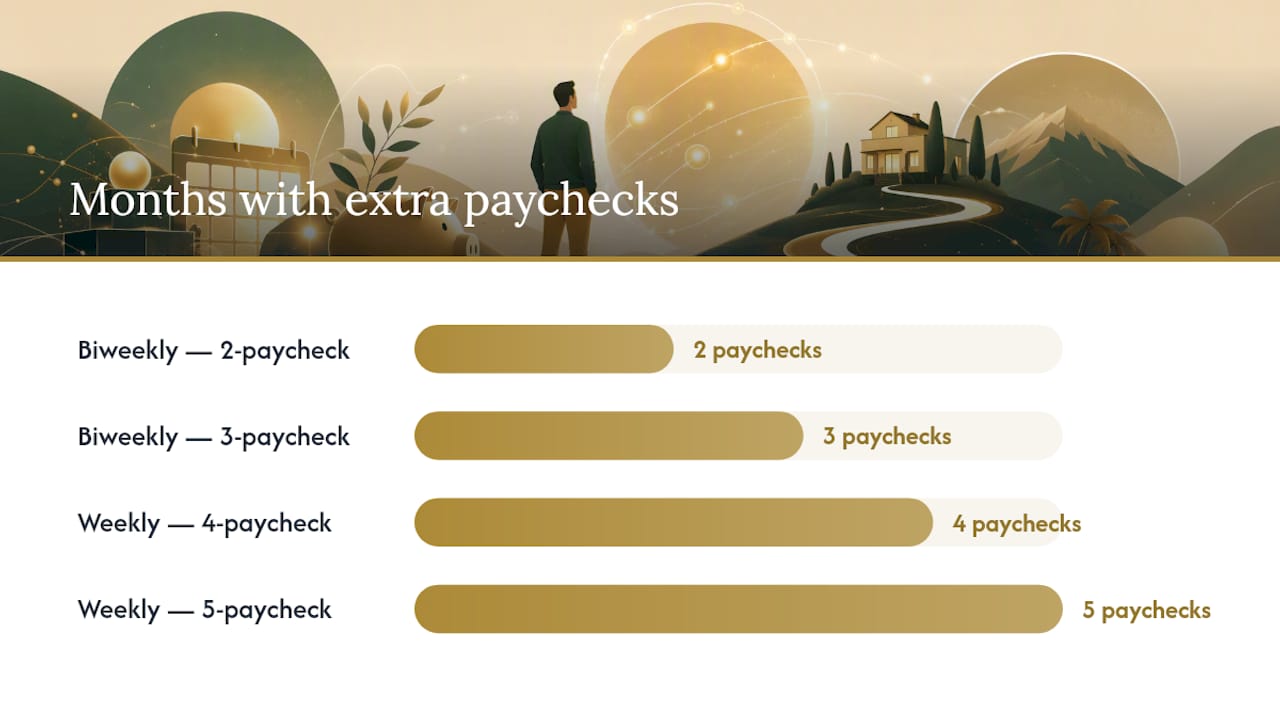
Weekly earners see the same pattern with four or five paychecks in a month. In a five-paycheck month, treat that fifth check the same way, as a planned allocation rather than a spending spree.
A short reconciliation checklist keeps this honest:
- Confirm the actual deposit amount matches what you planned for, especially after tax withholding changes.
- Check for pending transactions before assigning the next paycheck.
- Adjust your prorated categories if a bill amount shifted since last period.
Which Tools Actually Help You Track a Paycheck Budget?
A basic spreadsheet is free and completely flexible, which makes it the default choice for most people starting out. The tradeoff is manual entry every payday, and it only works if you actually open it.
Dedicated paycheck-budgeting apps solve the effort problem but only if they support your exact pay frequency and let you assign bills to specific deposits rather than lumping everything into a monthly view. Look for a "safe to spend" number that updates automatically as bills clear.
Printable workbooks work well for people who think better on paper, since a physical page-per-paycheck layout forces you to slow down and actually look at the numbers instead of skimming a screen.
One thing to avoid: any tool that runs on autopilot rules built around calendar months. If it can't flex to a three-paycheck month, it'll quietly break your plan twice a year.
How Do You Budget by Paycheck With Irregular Income?
Start with a conservative base: whatever income you can count on every single period, even in a slow month. Treat anything above that baseline as a bonus, not as money you've already spent in your head.
From there, fund in priority order: essentials first, sinking funds second, financial goals third, discretionary spending last. That order matters more than the exact dollar amounts, especially when income swings.
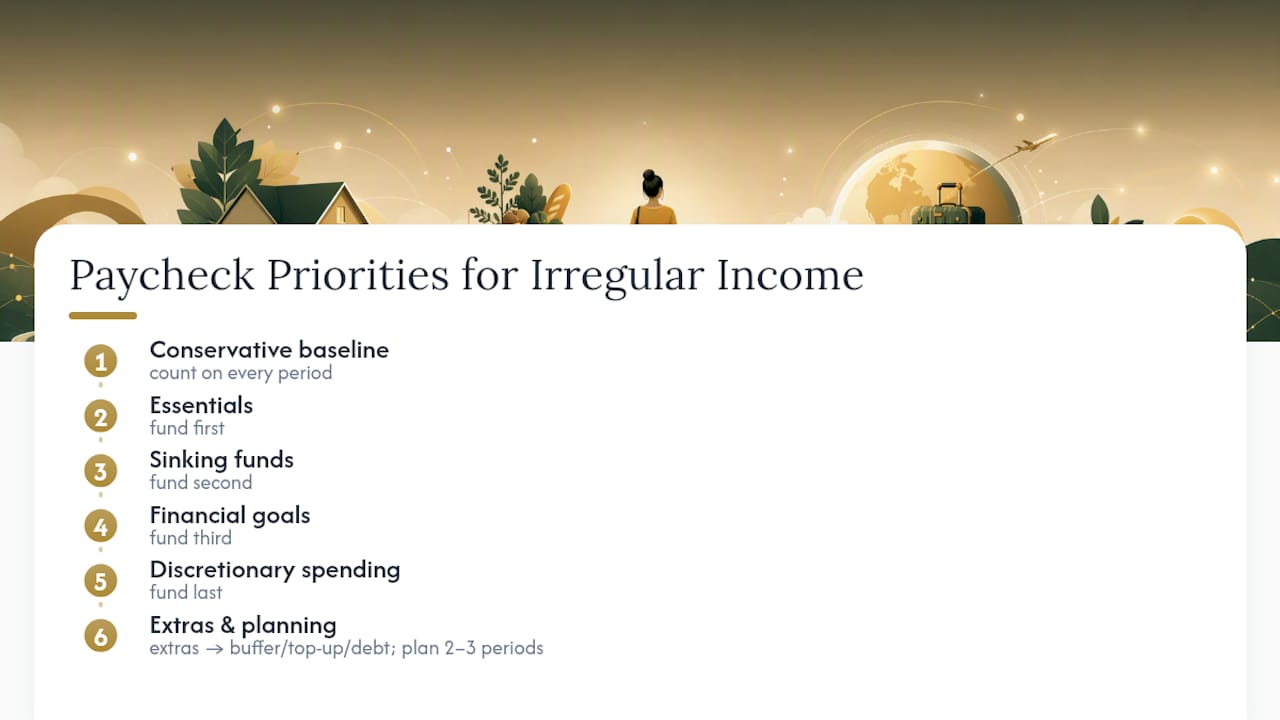
Decide in advance what an extra or larger-than-usual paycheck is for, whether that's a buffer account, a sinking fund top-up, or extra debt payoff. Deciding after it lands almost always means it disappears into nothing memorable. Planning two to three pay periods ahead also gives you enough lead time to spot a gap before it becomes an overdraft.
What Are the Most Common Paycheck Budgeting Mistakes?
The biggest mistake is assigning bills to a paycheck before confirming the deposit actually cleared, especially with pending transactions still sitting in your account. Close behind that: spending an extra paycheck as a windfall instead of the planned allocation you set up in advance.
Watch for these red flags:
- Repeated shortfalls in the same week every period
- Overdraft fees showing up more than once
- A tracker you haven't updated in over two pay periods
If a paycheck falls short, reassign nonessential spending first, then increase your sinking-fund slice next period rather than skipping it entirely. If your bank offers a small buffer fund sitting in checking or a linked savings account, one paycheck's worth of cushion solves most of these problems permanently.
Pro Tip: If gaps keep showing up on payments made outside your usual cycle, a tool built for tracking recurring charges and due dates can catch timing mismatches before they turn into an overdraft.
What Behavioral Habits Make Paycheck Budgeting Stick?
The plan only works if the spending behavior holds up between paydays, and that's where most budgets quietly fall apart. A short weekly check-in, five minutes, same day every week, catches drift before it becomes a shortfall. Daily micro-challenges and simple social scripts for saying no to spending invitations do more to curb impulse and emotional spending than any spreadsheet formula. Folding a short no-spend stretch into a slow pay period is also one of the fastest ways to build your first one-paycheck buffer, since compact daily routines build follow-through better than vague willpower ever does.
Why Paycheck Planning Beats Wishful Monthly Budgets
Most budgeting failures I see aren't math failures. They're calendar failures. People build a perfectly reasonable monthly plan, then get blindsided by a bill landing three days before a paycheck that was supposed to cover it. Paycheck budgeting fixes the actual problem instead of the assumed one. Start with just your next two paydates and one bill calendar. Adjust every payday. That's the whole system, and it gets easier every cycle.
, Omar
Get a Structured Paycheck Routine, Not Just Another Template
A spreadsheet only works if you actually open it every payday, and that's where most paycheck budgets quietly fail. The No Spend Reset Challenge Workbook builds the follow-through in from day one: daily behavioral challenges, printable page-per-paycheck trackers, and payday templates designed to match your actual pay schedule instead of a generic monthly grid.
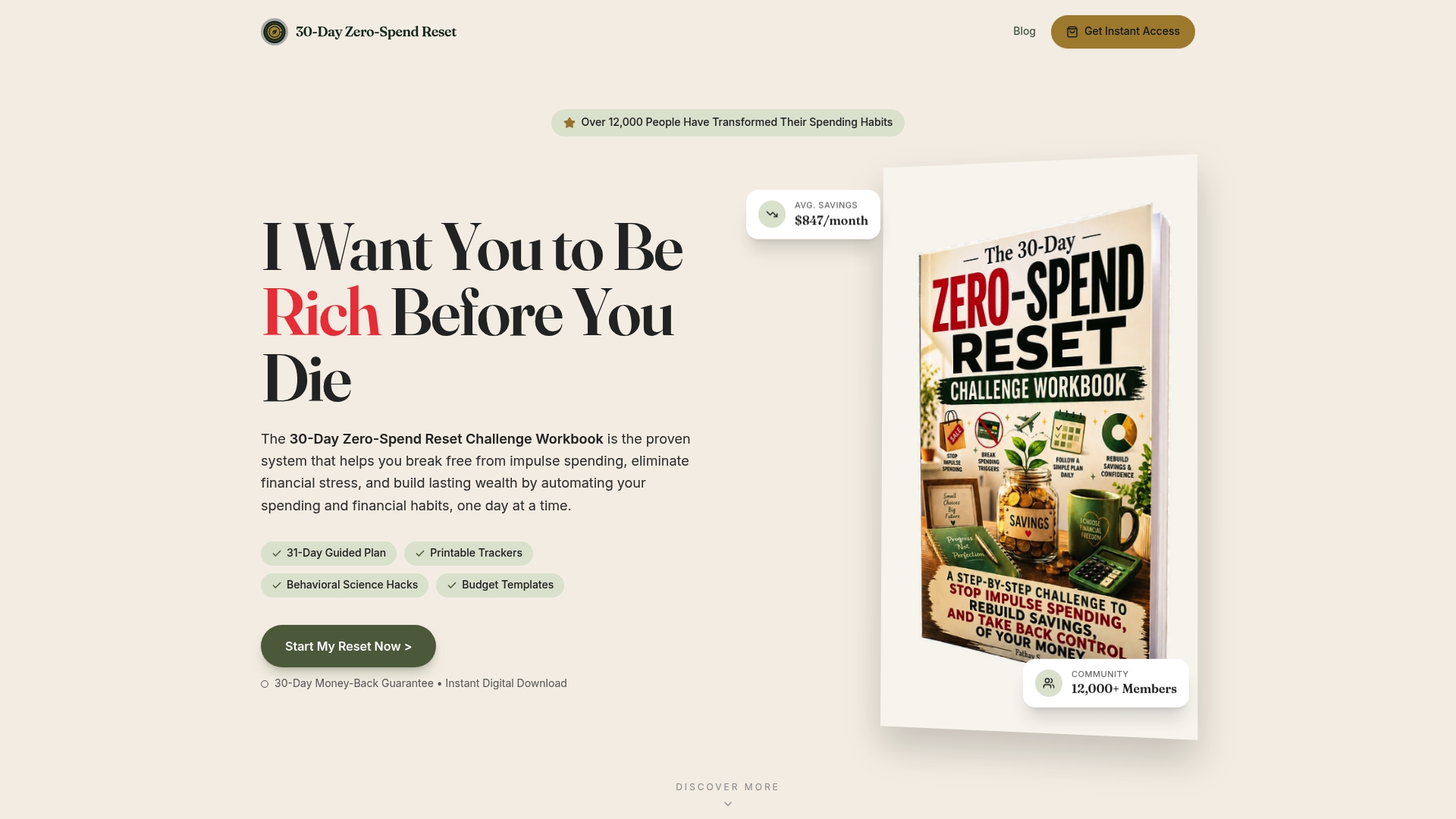
If impulse spending or subscription creep keeps eating the buffer you're trying to build, the structured daily routine matters more than the math. The workbook pairs paycheck allocation templates with habit-retraining tools from the zero-spend reset, so you're not just tracking numbers, you're changing the behavior that broke the plan last time. Start with the webapp and set up your first paycheck plan today.
Where to Verify These Numbers
For safe banking practices and building emergency savings, check the FDIC's consumer guidance and the Federal Reserve's research on household savings.
Sources
Ready to reset your spending?
Get the 30-Day Zero-Spend Reset Workbook and turn these ideas into a daily action plan.
Start the 30-Day ResetThis article is part of the 30-Day Zero-Spend Reset method. Explore the complete day-by-day system behind these ideas.
Read the full guide