
Regain Control of Budget Overwhelm in 30 Days Without Guilt

Compassion first plan to end budget overwhelm: tiny immediate actions you can try tonight and a 30 day psychology backed zero spend reset.
Regain Control of Budget Overwhelm in 30 Days Without Guilt
The fastest way out of budget overwhelm is to stop trying to fix everything and pick one tiny action right now: cover a single upcoming bill, pause one subscription, or move $5 into savings. Pair that action with a short pause to slow your breathing before you touch your accounts. Feeling overwhelmed by money isn't a personal failure; it's a common, well-documented response, and the rest of this guide covers small, gentle systems to work through it, including a psychology-backed reset you can try without guilt.
TL;DR:
- Focus on covering one upcoming bill or pausing a non-essential subscription to reduce financial stress immediately.
- Avoid rigid budgets that demand excessive decision-making, and instead prioritize immediate obligations with simple check-ins.
- Use quick actions like setting up small automations or micro-goals to build confidence and momentum gradually.
- Practice gentle resets with behavioral challenges, trackers, and social scripts to develop sustainable money habits over time.
- Remember that managing stress and taking small, consistent steps is more effective than attempting a full overhaul under emotional overload.
Table of Contents
- Signs you're experiencing budget overwhelm and why it matters
- Why many budgets fail when you're emotionally overloaded
- Quick, safe first actions you can take today
- Gentle budgeting methods that actually stick
- A gentle reset you can follow: the 30-Day Zero-Spend Reset approach
- Compassion first is the only sustainable approach to money work
- How to try the 30-Day Zero-Spend Reset
- Sources
- FAQ
Signs you're experiencing budget overwhelm and why it matters
Budget overwhelm shows up in patterns, not just feelings. You might notice yourself:
- Avoiding your banking app or account balance entirely
- Making only minimum payments without checking the full picture
- Letting subscriptions pile up because canceling feels like too much effort
- Feeling a spike of panic when a bill notification arrives
- Experiencing physical tension, a racing heart, or trouble sleeping tied to money thoughts
Many adults named money a significant source of stress in 2024, with a noteworthy portion describing it as extreme, according to the APA's Stress in America report. That scale matters because it means the anxiety you feel isn't unusual. It also matters because avoidance, the most common coping response, tends to make finances worse: unopened statements hide late fees, and unreviewed subscriptions keep charging quietly.
Why many budgets fail when you're emotionally overloaded
Most budgeting advice assumes you have spare mental bandwidth. When you're stressed, you don't, and rigid, punishment-style budgets tend to backfire because they demand exactly the kind of sustained willpower that stress depletes. A spreadsheet with twelve categories and strict limits can feel like one more thing you're failing at, which pushes many people straight back into avoidance.
Decision fatigue plays a direct role here. Overhauling an entire month's finances in one sitting requires dozens of small decisions in a row, and under stress that load gets exhausting fast. This is why so many budgeting attempts start strong on a Sunday and quietly stop by Wednesday.
A better frame is clarity first, perfection later. Instead of asking "what should my whole budget look like," ask "what do I need to cover in the next few days." Some financial guidance recommends exactly this: take a simple inventory, prioritize immediate obligations, and build outward from there rather than trying to design a perfect system on day one.

Quick, safe first actions you can take today
You don't need a full financial overhaul to feel better by tonight. A short, ordered checklist creates momentum without demanding much energy.
- Identify your next one to three bills and confirm you can cover them, or call the provider to ask about a payment plan or extension.
- Find one subscription or automatic payment that isn't essential and pause or cancel it. Clearing saved card details from your browser afterward, as described in this tactic for reducing impulse charges, makes it harder to resubscribe on impulse.
- Set up one small automation, like a $5 transfer to savings or a scheduled payment, so at least one thing runs without you having to think about it.
- Start a short micro-plan, seven or fourteen days, with a 10 to 15 minute daily check-in instead of a monthly overhaul.
Pro Tip: If a due date is only a few days away and you're not sure you can cover it, call the biller before it's late. Many will adjust a due date or set up a plan, and that call alone often removes most of the panic.
The FTC's guidance on getting out of debt covers exactly this kind of negotiation, along with how to avoid debt relief scams that target people in exactly this stressed state.
Gentle budgeting methods that actually stick
Once the immediate fire is out, the goal shifts to a system you can actually keep running. A few low-friction approaches work better than a full monthly budget when you're rebuilding trust with your own money.
- Values-based spending: pick three categories that matter most to you, maybe groceries, one form of connection with friends, and debt payoff, and protect those before cutting anything else.
- Bubble budgets with weekly check-ins: group spending into a few flexible "bubbles" instead of dozens of line items, and review them for ten minutes each week rather than obsessively daily.
- Selective automation: automate savings transfers and minimum debt payments so they happen without a decision, but keep discretionary spending visible enough to monitor.
- Micro-goals with small celebrations: a goal like "no takeout for five days" is achievable and, when you notice the win, it reinforces the behavior instead of just adding pressure.
Pro Tip: Journaling a quick note each time you feel the urge to spend can reveal patterns fast; prompts built for this help connect specific moods or situations to specific spending habits.
Readers managing shared finances often find that aligning habits with a partner removes a layer of friction, and freelancers or anyone with irregular income benefit from building bubbles around variable paychecks rather than a fixed monthly number.
A gentle reset you can follow: the 30-Day Zero-Spend Reset approach
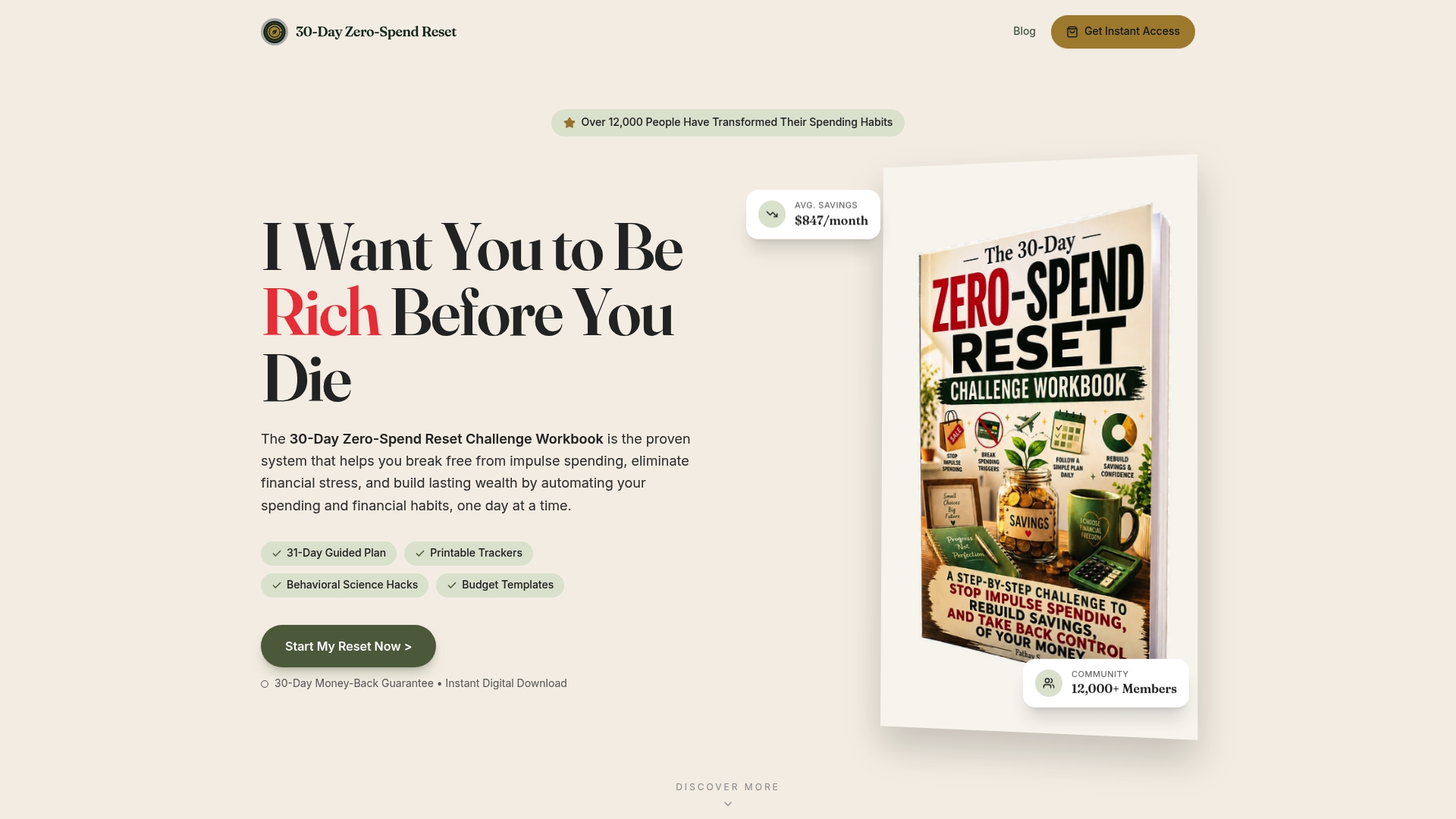
For readers who want a structured plan rather than building one from scratch, the 30-Day Zero-Spend Reset Challenge Workbook offers daily behavioral challenges instead of one overwhelming overhaul. Each day targets a specific habit: a subscription audit, a meal-planning session, a script for navigating social spending pressure, or a printable tracker that makes progress visible.
The structure exists because behavior-focused resets tend to reduce shame and rely less on raw willpower than traditional budgeting. Rather than demanding perfect discipline from day one, the program's blueprint breaks change into small, repeatable actions, which fits how habits actually form under stress: gradually, not all at once.

Compassion first is the only sustainable approach to money work
Money management is a skill you learn, not a personality trait you're born with, and most people were never taught it directly. That means slow, incremental change is not a consolation prize. It's the realistic path.
If you take one thing from this article, try a single micro-step for a week: one paused subscription, one $5 transfer, one honest look at your next three bills. Watch for small signals of relief, like sleeping better or opening your banking app without dread, rather than waiting for a dramatic transformation. For more on keeping motivation steady once the first week is done, the guide on avoiding budget fatigue is worth a look.
, Omar
How to try the 30-Day Zero-Spend Reset
The workbook is built for anyone tired of restrictive budgets that demand perfection and offer nothing but guilt when they slip. It walks you through daily prompts, a subscription audit, meal planning support, and social scripts, so you're not relying on willpower alone to change spending habits.
What you get:
- Daily behavioral challenges designed to interrupt impulse and emotional spending
- Printable trackers and budget templates for a clear, physical record of progress
- A companion webapp for readers who prefer a guided digital format
- Social scripts for the moments when saying no to spending feels socially hard
Most people won't hit a perfect month right away, and that's fine. The realistic outcome is steadier momentum and a clearer sense of where your money goes. You can start with the Zero Spend Guide as a lower-friction entry point, or explore the Zero-Spend Accelerator Vault for deeper, ongoing support once the first 30 days are done.
Sources
- Stress in America 2024: A Nation in Political Turmoil (APA)
- Coping with financial stress (HelpGuide)
- How to get out of debt (FTC Consumer Advice)
FAQ
What is the $27.40 rule?
There's no established or widely recognized financial guideline by this name. If you've seen it referenced elsewhere, it's not a standard budgeting principle supported by consumer finance authorities like the CFPB or FTC.
What should you do when you feel financially overwhelmed?
Start with one small, concrete action, like confirming you can cover your next bill or pausing a single subscription, rather than trying to fix everything at once. The FTC and HelpGuide both recommend taking a simple inventory first and building a plan from there, and seeking mental health support if the stress feels persistent.
What is the biggest money waster?
There's no single universal answer, since spending habits vary widely by person and household. Common culprits people report include unused subscriptions, impulse purchases, and dining out, all of which respond well to a short audit and a values-based spending plan.
Is $200 a week enough to live on?
This depends entirely on your location, housing costs, and household size, and there's no fixed figure that applies to everyone. Rather than comparing to a number, list your own next few bills and fixed costs first to see what your specific situation actually requires.
Ready to reset your spending?
Get the 30-Day Zero-Spend Reset Workbook and turn these ideas into a daily action plan.
Start the 30-Day ResetThis article is part of the 30-Day Zero-Spend Reset method. Explore the complete day-by-day system behind these ideas.
Read the full guideKeep reading





Join the conversation
Be the first to share your thoughts on this article.