
Save $100 to $250 in a Week: Pantry Challenge for Busy People
Cut a grocery trip and save $100 to $250 in one week. Follow a 7 Day pantry plan with a $10 to $20 fresh-food buffer, quick inventory steps, and easy meals.
Save $100 to $250 in a Week: Pantry Challenge for Busy People
A pantry challenge means eating almost entirely from the food you already own, skipping most grocery trips for a set stretch of time. Start with 7 days and a small fresh-food allowance of $10 to $20 for milk, eggs, or produce that won't keep. That one week typically lets you skip a full grocery run, cut food waste, and reset habits that lead to overbuying.
TL;DR:
- A week of eating from your pantry can save up to 250 dollars by eliminating one grocery trip, and monthly repetitions strengthen long-term savings.
- Proper prep includes inventorying one shelf or freezer, filtering items by expiry date, and labeling them to prevent spoilage and facilitate meal planning.
- Common mistakes involve skipping inventory, neglecting frozen items, and attempting long challenges initially, which lead to frustration and plan failure.
- Using straightforward base-protein-flavor recipes and sequencing cooking from frozen and perishable foods first helps maximize pantry resources efficiently.
- Habit-tracking tools and structured follow-up systems can prevent relapse into overspending, turning short-term savings into lasting dietary and financial habits.
Table of Contents
- What Is a Pantry Challenge, Exactly?
- How Much Money Can a Pantry Challenge Actually Save?
- How Do You Prepare for a Pantry Challenge?
- What Rules Should You Set for a 7-Day Pantry Challenge?
- What Can You Actually Cook From Pantry Staples?
- What Mistakes Make People Quit Their Pantry Challenge?
- How Do Habit-Tracking Tools Extend a Pantry Win?
- A Pantry Week Taught Me More Than a Month of Budgeting Apps
- Keep the Momentum Going After Your Pantry Week
- Sources
- FAQ
What Is a Pantry Challenge, Exactly?
A pantry challenge is a self-imposed stretch where you cook from your pantry, fridge, and freezer instead of shopping, with the goal of using up what you already bought before buying more. The point isn't punishment. It's inventory control, the same discipline restaurants use to stop food from dying quietly in the back of a walk-in cooler.
There are a few common formats, and picking the right one matters more than picking the longest one:
- No-buy week: seven days, small fresh-food budget, good for a first attempt.
- Two-week eat-down: for households with a genuinely full freezer or a pantry that's gotten out of hand.
- 30-day eat-down: a full month, best attempted after you've already run a successful week.
- Freezer-only challenge: focused purely on clearing out a chest freezer or overstuffed ice box, often paired with a move or a seasonal cleanout.
Beginners should start with 7 days. People already comfortable meal planning can jump to two weeks. Anyone in a genuine cash crunch should treat the freezer-only version as a fast, low-effort win before attempting anything longer.
How Much Money Can a Pantry Challenge Actually Save?
A single week of eating from your pantry commonly saves a household the cost of one full grocery trip, often $150 or more, depending on family size and how often you'd normally shop. One writer at The Kitchn tracked her own week and saved about $152, while also rediscovering ingredients she'd forgotten she owned.
By the numbers: skipping one grocery trip during a pantry week typically saves $100 to $250, and running the challenge monthly compounds that savings across the year instead of it being a one-off event.
The financial upside is only part of the story. Clearing a pantry shelf by shelf tends to expose duplicate spices, three half-used bags of rice, and cans you forgot you had. That decluttering makes future meal planning faster because you're shopping against a pantry you actually understand. And the behavioral payoff sticks around after the week ends. People who complete a pantry challenge report fewer impulse buys on their next few shopping trips, simply because they've relearned what "enough" looks like in their own kitchen.
How Do You Prepare for a Pantry Challenge?
Skipping the inventory step is the single biggest reason pantry challenges fail halfway through. You can't plan meals around food you don't remember owning, so the prep work has to come first, even if it only takes twenty minutes.
- Start with the freezer or one shelf. Don't try to catalog the entire kitchen in one sitting. Pick the freezer, since frozen food is the most commonly forgotten, or start with a single pantry shelf and expand from there.
- Record three things per item: the name in plain language, a rough quantity, and where it lives. A perfect spreadsheet nobody updates is worse than a sloppy list you'll actually check.
- Apply a 3-month filter. Anything close to its use-by date, or anything you know you'll forget about again, goes into a dedicated "Use Me First" box on a visible shelf or the front of the fridge.
- Check for spoilage as you go. Toss anything with a bulging or dented can, off smells, or visible mold. Standard shelf-stable staples hold up far longer than most people assume: dry pasta and rice generally last a year or more, canned vegetables keep 1 to 2 years with intact cans, and salt and sugar last indefinitely.
- Label what you prep. Date anything you cook ahead so older food gets used before newer batches.
Pro Tip: Take a phone photo of each shelf before you start. It's faster than writing a full list, and you can zoom in later to check labels without digging through the fridge again.
What Rules Should You Set for a 7-Day Pantry Challenge?
Rules keep the challenge from collapsing on day three. Set them before you start, not while standing in a grocery aisle talking yourself into an exception.
- Fresh-food allowance: $10 to $20 for the week, covering milk, eggs, or produce that won't survive seven days untouched.
- Automatic exceptions: medically necessary items and infant formula are never on the table for restriction.
- Rule strictness options: a strict no-buy version, a version that allows restocking cheap staples like bread or milk, or a family-friendly compromise where kids get input on one meal per day.
For your first week, cook your most perishable proteins and produce in the first two or three days, since those are the items most likely to spoil if ignored. Move toward canned goods, grains, and freezer items as the week goes on. By day six or seven, you're usually combining odds and ends into a soup or stir-fry, which is exactly the point.
What Can You Actually Cook From Pantry Staples?
Most pantry meals follow a simple formula: base + protein + flavor. A base of rice, pasta, or tortillas, a protein from a can or the freezer, and a flavor built from what's already in your spice rack or condiment shelf.
- Pasta night: canned tomatoes, garlic, dried herbs, and any frozen ground meat or canned beans for protein.
- Rice or grain bowls: cooked rice or quinoa topped with canned beans, frozen vegetables, and a splash of soy sauce or hot sauce.
- Canned-bean bowls: black beans or chickpeas over rice with salsa or taco seasoning, finished with whatever cheese is left in the fridge.
- Soups and stews: canned or frozen vegetables plus broth (homemade or bouillon) plus any protein, simmered until it comes together.
- Breakfast for dinner: eggs, pancakes from pantry flour, or oatmeal dressed up with frozen fruit and nuts.
Cook in that order: freezer items and anything highly perishable first, canned and shelf-stable goods later in the week. That sequencing follows the same logic nutrition experts recommend for meal prep: tackle long-cooking or perishable foods early, then label and rotate what you make so nothing sits forgotten in the back of the fridge.
What Mistakes Make People Quit Their Pantry Challenge?
The most common failure point is skipping the inventory and improvising instead, which almost always leads to a mid-week grocery run out of frustration. A close second is forgetting the freezer entirely, since most people mentally file "pantry" as dry goods only and ignore an entire appliance full of usable protein.
- Zero contingency budget, so one unexpected need (a birthday cake, a sick kid) blows up the whole plan.
- No household communication, meaning one family member restocks snacks without telling anyone.
- Trying a full month on the first attempt instead of building up from a week.
Fix these before day one: run a real prep session, keep two or three fallback meals in your back pocket for low-energy nights, leave that small fresh-food buffer intact, and let family members pick one meal during the week so nobody feels like they're being punished. Track your grocery savings on paper or in an app, and treat a completed week as a habit to repeat monthly rather than a one-time event, since repeat participants report better long-term grocery discipline than people who attempt one long stretch and burn out.
Pro Tip: Keep your "Use Me First" box visible on the counter, not tucked in the back of the fridge. Food you can see gets cooked; food you forget gets thrown out.
How Do Habit-Tracking Tools Extend a Pantry Win?
A pantry challenge proves you can go a week without a grocery run. The harder part is not sliding back into old buying patterns once the week ends, and that's a behavioral problem, not a meal-planning one.
Structured habit tools built around daily prompts, printable trackers, and meal-planning templates give you a way to log what you're spending and notice the moments you're tempted to restock impulsively. Social scripts for saying no to spending pressure work the same way a "Use Me First" box does: they reduce friction at the exact moment you're deciding whether to spend. Nospendreset's approach applies that same logic to money broadly, the same reason journaling spending triggers helps people catch impulse purchases before they happen.

A Pantry Week Taught Me More Than a Month of Budgeting Apps
A single pantry week forces a kind of honesty that budgeting spreadsheets never manage: you see exactly what you bought and never used. That's a more useful wake-up call than any app notification. Start small, with one week, and don't aim for perfection on the first try. The households that keep saving money long term are the ones that repeat a mini pantry challenge every month, not the ones who attempt one heroic 30-day stretch and never do it again.
, Omar
Keep the Momentum Going After Your Pantry Week
A successful pantry week proves you can cut spending fast. The harder problem is staying there once the week ends and the urge to "reward yourself" with a big shopping trip kicks in. That's where a structured follow-up matters more than willpower alone.
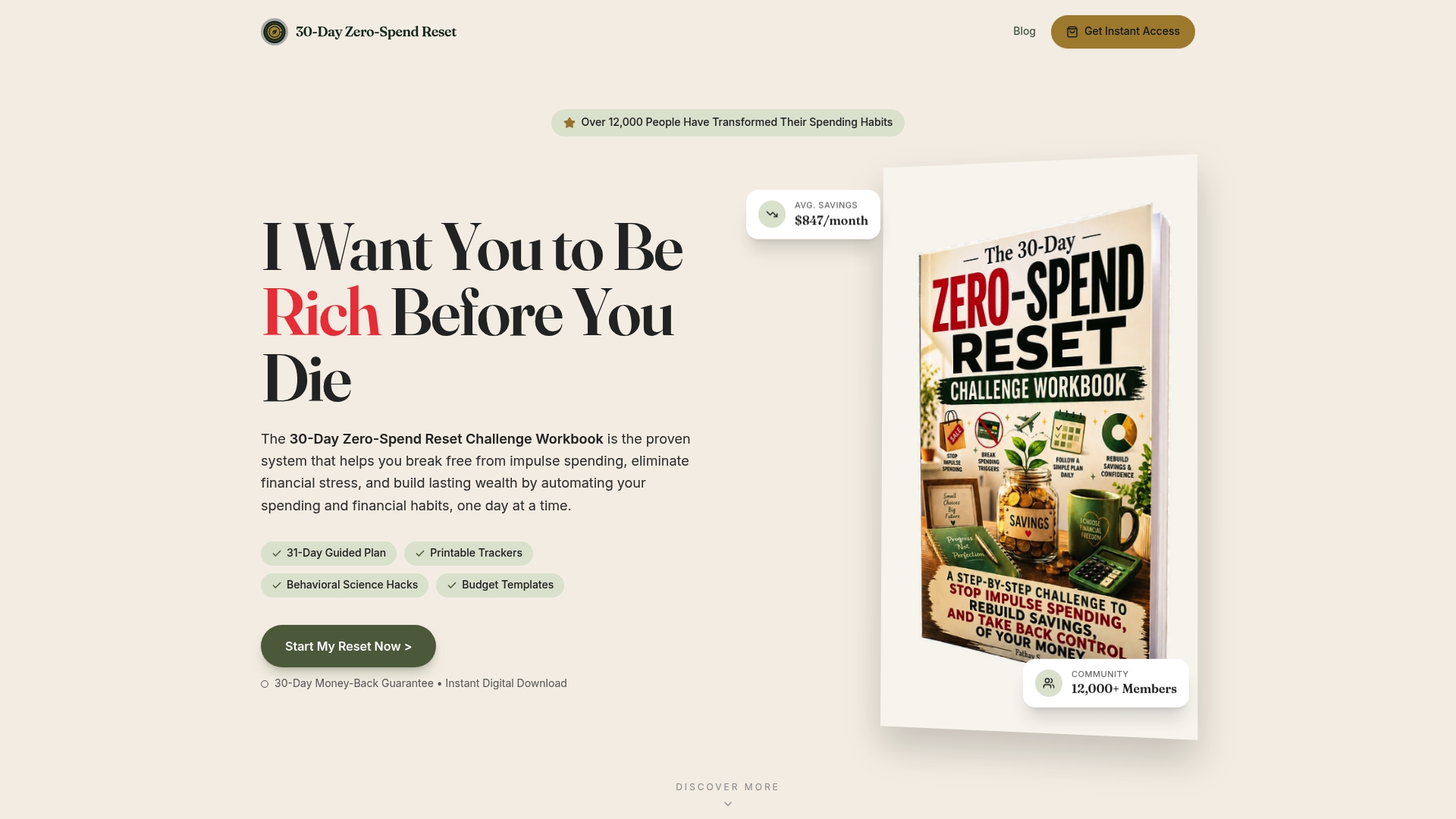
The No Spend Reset Challenge Workbook and webapp build on exactly what made your pantry week work: daily behavioral challenges, printable trackers, meal-planning templates, and social scripts for the moments when you're tempted to restock impulsively. Instead of white-knuckling your way through one good week, you get a full 30-day system designed to turn that short-term win into a lasting habit. If you want the complete framework behind these tools, the Zero Spend Reset Blueprint walks through the full 30-day process. Ready to build on your pantry week? Check out the workbook and companion webapp to get started.
Sources
- USDA FSIS, Shelf-stable food guidance
- Harvard T.H. Chan School, Meal prep guidance
- SpendWiseCents, Eat-From-the-Pantry Challenge
- The Kitchn, I did this pantry challenge and saved $152 in a week
FAQ
What Is the Pantry Challenge?
It's a set period, often a week or a month, where you cook mainly from the food already in your pantry, fridge, and freezer instead of grocery shopping, usually with a small allowance for essentials like milk or eggs.
What Is the 5-4-3-2-1 Rule for Groceries?
Definitions of this rule vary across sources, and there isn't one consistent, widely sourced version tied specifically to grocery shopping, so it's best treated as a loose guideline rather than a fixed standard.
What Are the 7 Pantry Zones?
Pantry zoning generally means grouping items by how often you use them, such as daily staples at eye level, baking supplies together, and canned goods on their own shelf, so a "use first" area stays visible and nothing gets buried in the back.
Can You Live on $200 a Month for Food?
It's possible for some households running a very lean pantry-focused budget, but it depends heavily on family size, existing pantry stock, and dietary needs, and it's far easier to sustain for a week or two than as a permanent plan.
Ready to reset your spending?
Get the 30-Day Zero-Spend Reset Workbook and turn these ideas into a daily action plan.
Start the 30-Day ResetThis article is part of the 30-Day Zero-Spend Reset method. Explore the complete day-by-day system behind these ideas.
Read the full guide