
No Spend Holiday Plan: 7–30 Days of Free Activities and Scripts
Turn December into a meaningful low cost season with a 7–30 day no spend plan. Find free activities, social scripts, meal ideas, and printable trackers to...
No Spend Holiday Plan: 7–30 Days of Free Activities and Scripts
Yes, you can celebrate the holidays with zero or near-zero spending by leaning on experiences, agreed-upon rules, and a short tracker instead of a credit card. Pick one free activity this week, write down three rules for what counts as "essential," and start logging your no-spend days on paper or your phone. No spend holidays work when they're planned, not just wished for.
TL;DR:
- Planning a no-spend holiday around community events, pantry-based activities, and intentional travel prevents overspending and enhances overall enjoyment.
- Gifting can focus on experiences, handmade items, or service exchanges, with presentation making small acts feel more thoughtful and valuable.
- Early communication and group adjustments, such as Secret Santa or experience-only exchanges, ease the social pressure and resistance for refusing gifts.
- Setting clear rules, tracking daily progress, and defining exceptions help maintain discipline over a longer no-spend challenge and prevent common pitfalls.
- A structured program or workbook can provide accountability, daily prompts, and tools to support lasting behavior change during the holiday season.
Table of Contents
- What Counts as a No-Cost Holiday Activity?
- What Can I Give Instead of Buying Gifts?
- How Do I Tell Family I'm Not Buying Gifts This Year?
- How Do I Actually Structure a No-Spend Holiday Challenge?
- Get Your Finances in Order Before the Season Hits
- Free Ways to De-Stress During the Holidays
- Stretching What You Already Have Instead of Buying More
- Handling the Emotional Weight Without Spending Your Way Through It
- Why Small Wins Beat Big Resolutions
- Let the No Spend Reset Challenge Workbook Do the Planning For You
- Sources
- FAQ
What Counts as a No-Cost Holiday Activity?
A no-spend holiday season doesn't mean a quiet one. It means trading purchased entertainment for the kind that's already sitting in your community, your kitchen, or your relationships.
Outdoor and community events are the easiest win. Most cities run free holiday programming that never makes it onto anyone's radar because they're not advertised the way stores advertise sales. Tree lightings, public concerts, and seasonal walking tours are common, and San Diego's tourism site lists dozens of them every year, from beach walks to free concerts. Smaller towns do this too. The City of Los Alamitos' Winter Wonderland is a good example of the kind of local event you'll find by simply checking your municipal calendar instead of your inbox. Parks departments often run structured, drop-in family programs year round. NYC Parks' "Kids in Motion" series is one example of the kind of free, organized activity that works especially well if you're wrangling kids who need more than a walk to stay entertained.
At-home options cost nothing beyond what's already in your pantry or closet:
- A themed movie night with blankets, popcorn, and a rotating "pick the movie" duty
- Cooking a holiday meal entirely from pantry staples, turning limitations into a game
- Game nights using whatever's already in the closet
- Crafting ornaments or decorations from old cards, fabric scraps, or magazines
Micro-rituals often land harder than gifts do: a handwritten letter, a recorded voice message for someone far away, or a "coupon booklet" redeemable for a favor (babysitting, a home-cooked dinner, an afternoon of help moving furniture).
If you want a change of scenery, a short trip doesn't have to break a no-spend commitment if you plan it as a deliberate exception. Off-peak booking and bundled packages can keep a getaway under $500 total, which is worth considering if travel is the one thing you're not willing to cut. Whatever you choose, send invitations early, ask about dietary needs or mobility limits, and make it clear the event costs nothing to attend. That last part removes the awkwardness before it starts.
What Can I Give Instead of Buying Gifts?
The gift itself was never really the point. Attention was. That's the mental shift that makes a no-gifts Christmas feel generous instead of stingy.
Service gifts hit harder than most people expect. Offering a few hours of childcare, a home repair, tech support for an aging relative, or a skill lesson (cooking, a language, a craft) gives someone something they'd otherwise pay for.
Consumable and handmade gifts solve the "but I want to give something physical" problem without opening your wallet:
- Baked goods or homemade preserves in a reused jar
- A printed photo collage from your phone's camera roll
- A recipe card box with family favorites written by hand
Shared experiences work well for people who have everything: a planned hike, a potluck you organize, or a volunteer shift done together. Donations made in someone's name, or a thoughtfully thrifted item, are both socially accepted low-cost or no-cost options at this point. A small token spend is fine when it matters to you. If you want a physical, low-cost gift, something like curated coffee gift ideas shows how a modest, thoughtful purchase can still feel intentional without becoming a real expense.
Pro Tip: Presentation does most of the emotional work. A mason jar with twine, a handwritten tag, and five minutes of thought make a $0 gift look and feel like it took planning, because it did.
How Do I Tell Family I'm Not Buying Gifts This Year?
The hardest part of a no-spend holiday season usually isn't the budget. It's the conversation. Here's a short script framework and the group options that make it easier:
- Announce it early and briefly. Try: "I'm doing a no-spend holiday this year, so instead of gifts I'd love to just spend time together" or "I'm resetting my finances this season, so I'm skipping gift shopping and focusing on time instead." Keep it short. Long justifications invite debate.
- Handle pushback with a repeatable line. If someone insists on buying you something anyway, say thank you and accept graciously. Refusing a gift someone already bought creates more friction than it solves.
- Propose a group structure instead of an all-or-nothing stance. A Secret Santa with a $10 limit, an experience-only exchange (tickets, homemade coupons), or a straight "no gifts, just food" rule all spread the decision across the group instead of putting it only on you.
- Recruit an accountability buddy. Tell one person your actual reason, whether that's debt, savings goals, or just fatigue with the consumer version of the holidays. You don't need everyone on board, just one person who won't undermine you at dinner.
If you want fuller wording for harder conversations, pre-written social scripts can save you from freezing up mid-conversation.
How Do I Actually Structure a No-Spend Holiday Challenge?
A no-spend holiday works better as a defined challenge than a vague intention. Financial-education sources like Fidelity's no-spend challenge guide recommend three things before day one: define your essentials, pick a length, and build in a small list of pre-approved exceptions.
- Set your rules first. List what's essential (groceries, gas, bills, medication) and what's paused (dining out, new clothes, gift shopping, impulse online orders). Write down two or three allowed exceptions in advance, like a prepaid birthday gift or a ticket you already committed to. Deciding this ahead of time prevents the all-or-nothing collapse that kills most challenges by day three.
- Pick your length. Seven days works as a warm-up around a single event like Thanksgiving weekend. Thirty days covers the full stretch from late November through New Year's and gives habits more time to stick.
- Track it daily. A simple checkbox grid for each day, plus a weekly check-in where you note what tempted you and what worked, turns willpower into a visible pattern instead of a guessing game.
Fidelity's guidance also suggests redirecting whatever you'd normally spend into a designated fund, whether that's a gift pot for next year, an emergency buffer, or a debt payment. Even a modest daily total adds up fast once you're not funneling it into last minute purchases.
This is exactly the kind of accountability a structured tool solves better than a mental note does. A guided 30-day workbook or webapp that includes daily prompts, printable trackers, and habit check-ins gives the challenge a scaffold instead of leaving you to remember it alone. The Zero Spend Guide walks through how that structure works if you want to see the framework before committing to it.
Pro Tip: Unsubscribe from retail emails and delete shopping apps from your home screen before the season starts, not after you're already tempted. "Out of sight, out of cart" isn't a metaphor, it's a documented tactic for cutting impulse buys before they happen.
Get Your Finances in Order Before the Season Hits
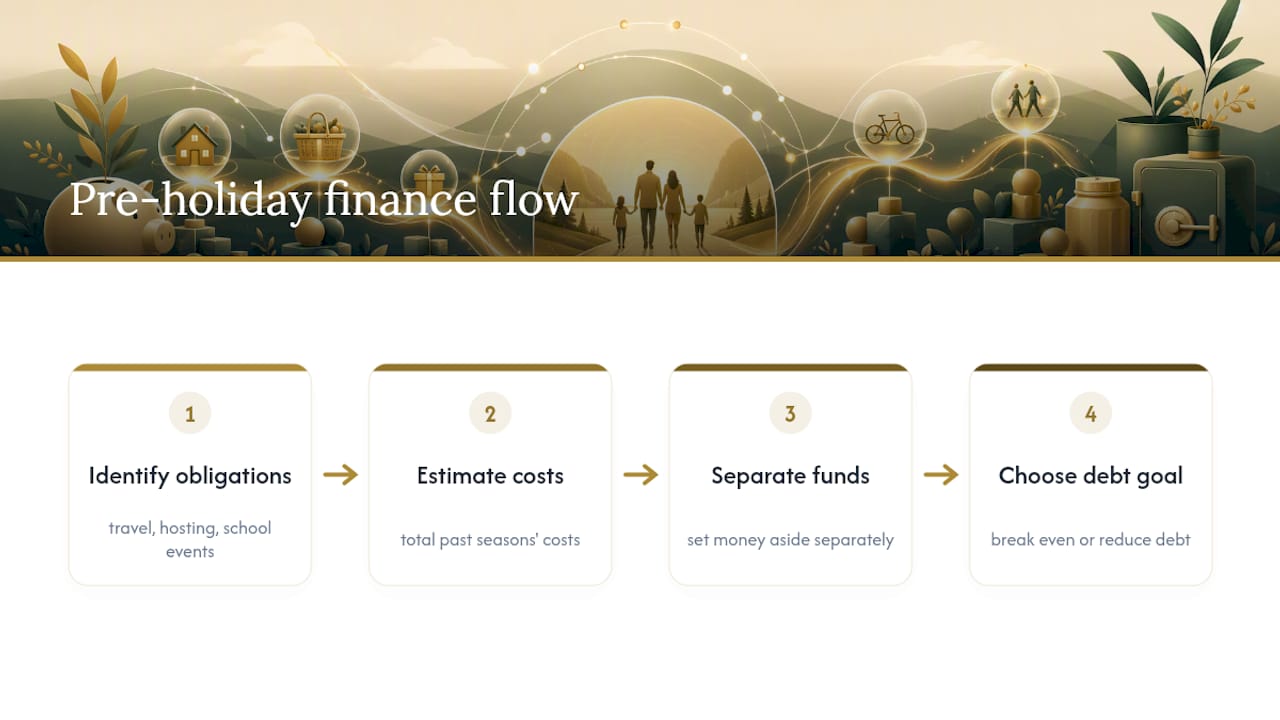
Most holiday overspending doesn't happen because people forget their budget. It happens because they never built one that accounted for the season's specific pressure points: travel, hosting, kids' school events, and the sheer number of social obligations packed into six weeks.
Before the pressure starts, sit down and total up what the season has cost you in past years, even roughly. Most people underestimate it badly because it's spread across a dozen small purchases instead of one big one. Once you have a real number, decide what you're protecting: a savings goal, a debt payment, or simply a calmer January.
Build a short list of fixed obligations you can't avoid (a work gift exchange, a family gathering you're hosting) and estimate their real cost now, while you have a clear head. Set that money aside separately so it doesn't blend into your regular spending and vanish. If you're carrying any holiday-related debt from previous years, decide now whether this season is about breaking even or making a dent in that balance.
The biggest stress reducer isn't a bigger budget. It's removing decisions from the moment of temptation. If you know before December 1 exactly what you will and won't buy, you're not negotiating with yourself at checkout in a crowded store with your kid pulling on your sleeve.
Free Ways to De-Stress During the Holidays
Holiday stress rarely comes from having too little money. It comes from having too little time, too much social obligation, and no outlet that doesn't also cost something.
A few things that reliably help and cost nothing:
- A daily walk outside, even fifteen minutes, especially useful if you're stuck indoors hosting or cooking for hours
- Journaling for five minutes about what's actually stressing you, which is often different from what you assume it is
- A hot bath, a long shower, or simply ten minutes of quiet before the house fills up
- Calling one person you trust instead of texting a group chat that adds more noise
- Saying no to one obligation this week without offering a lengthy explanation
If emotional spending is part of your pattern (and for a lot of people, it quietly is), a short journaling exercise built around your specific triggers can help more than willpower alone. Prompts designed for identifying spending triggers work well here because they connect the stress to the spending instead of treating them as separate problems.
Stretching What You Already Have Instead of Buying More
Most households already own more of what the holidays require than they realize. The trick is treating "what's in the house" as a resource to plan around, not a last resort.
Start with meal planning around your pantry. Before adding anything to a grocery list, take stock of what's already there: canned goods, freezer items, half-used spices. Build the holiday meal around those first, and shop only to fill genuine gaps. A potluck distributes cost and effort across the whole group instead of putting the entire meal on one household's budget. It also solves the "I don't know what to bring" awkwardness if you assign categories in advance (mains, sides, dessert, drinks).

Household supplies double as decorations more often than people think. Mason jars become candle holders. Old string lights get repurposed instead of replaced. Fabric scraps become gift wrap. None of this requires creativity you don't have. It requires ten minutes of looking through closets before defaulting to a store run.
Handling the Emotional Weight Without Spending Your Way Through It
Skipping the shopping part of the holidays doesn't remove the emotional part, and honestly, that's the harder half.
Loneliness, comparison, and family friction don't disappear just because you've cut spending. If anything, they surface faster once the distraction of shopping and wrapping is gone. Naming that upfront, even just to yourself, makes it less likely to blindside you in the middle of a family dinner.
Social pressure tends to peak around three moments: gift exchanges, group meals, and comparing plans with coworkers or friends. Having a short, rehearsed response for each ("we're doing something low key this year") removes the need to improvise while you're already stressed. If a specific person consistently pressures you about spending, a private, brief conversation beforehand usually works better than a public deflection in the moment.
Give yourself permission to feel a little sad about a scaled-back season, even while believing it's the right call. Both things can be true. That doesn't mean the plan failed.
Why Small Wins Beat Big Resolutions
A vague resolution to "spend less this year" rarely survives past the first tempting sale. A short, defined reset with visible daily progress does better, because personal accounts of long no-spend stretches consistently point to the same thing: opting out of the sales cycle entirely removes the decision fatigue that wears people down.
Small wins compound. Checking a box on day three builds more confidence than any amount of motivation talk, because it's proof, not intention. Tell one friend what you're doing and check in with them weekly. Low-stakes accountability, not public accountability, tends to be what actually gets people through the last two weeks of December.
, Omar
Let the No Spend Reset Challenge Workbook Do the Planning For You
Everything in this article works on its own with a notebook and some willpower. But if you'd rather follow a built structure than build one yourself at 11 p.m. in December, that's exactly what the No Spend Reset Challenge Workbook was built to handle.
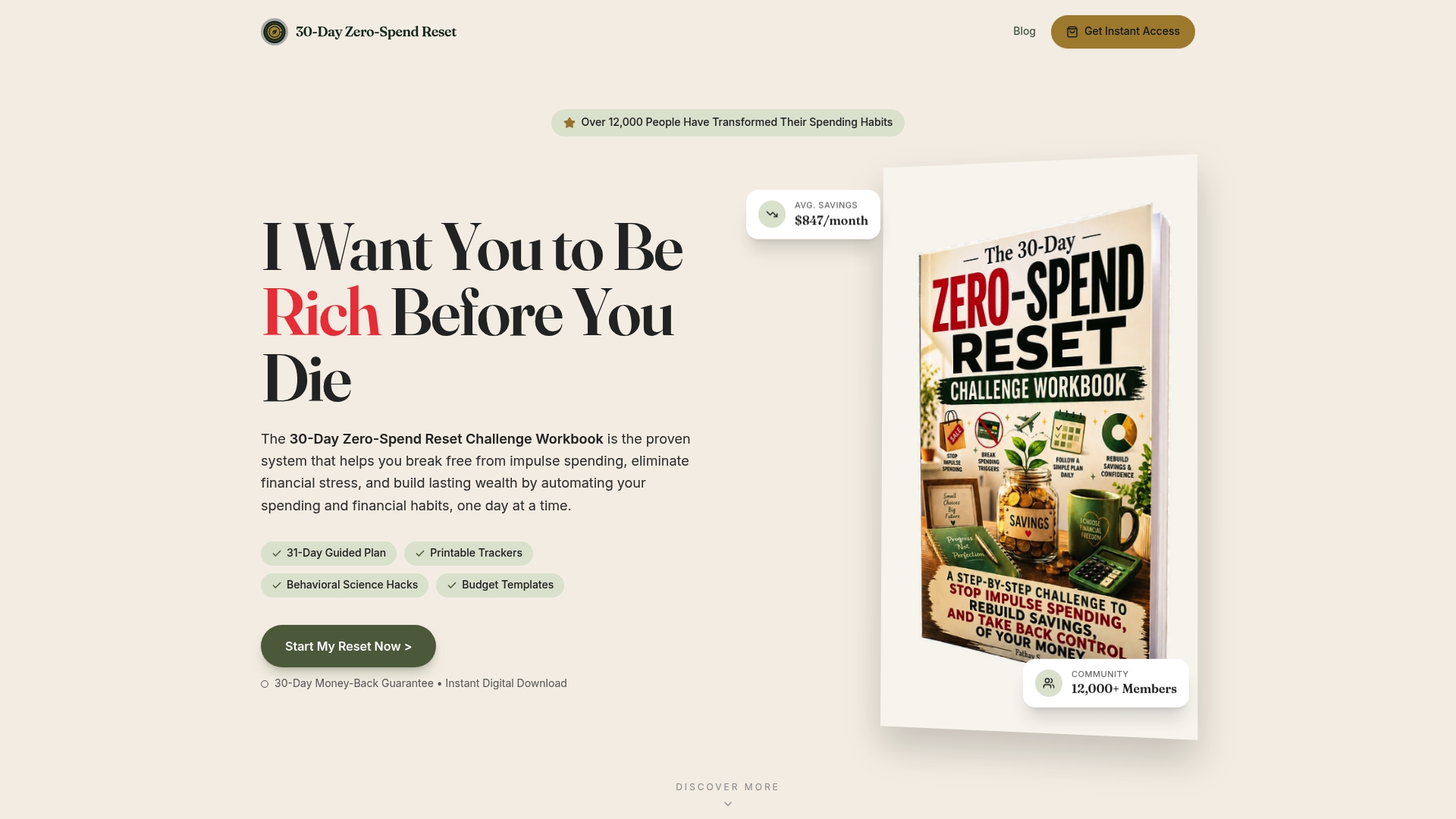
The program provides daily behavioral challenges, printable trackers to make progress visible, social scripts for family and gift conversations, and meal-planning guides focused on using what's already in your kitchen. It's designed around behavioral psychology principles rather than guilt or restriction, which is why it tackles impulse buying and subscription creep as habits to retrain, not failures to punish. If you're ready to turn this article into an actual 30-day plan instead of a good idea you'll revisit next December, start with the 30-Day Zero-Spend Reset Challenge Workbook or try the guided webapp version for daily prompts built right in.
This article is general information, not a substitute for advice from a qualified financial advisor. Consult a qualified financial professional about your own circumstances before acting on anything here.
Sources
- No-spend challenge, Fidelity Learning Center
- Free holiday activities, San Diego (city tourism site)
- Vacations under $500, Expedia
FAQ
Is It Okay to Skip Holidays With Family?
Yes. Setting a boundary around holiday gatherings, whether for financial, emotional, or logistical reasons, is a legitimate choice, not a failure of obligation.
I Feel Guilty About Not Going Home for Christmas. Is That Normal?
It's a common reaction, especially the first year you break a family pattern, and it usually fades once the new routine proves it can still feel meaningful.
What Should I Do if I Don't Want to Spend the Holidays With My Family?
Plan an alternative you actually look forward to, whether that's a quiet no-spend day, time with friends, or volunteering, and communicate your plan early using a short, non-defensive script rather than an extended explanation.
How Do I Handle Relatives Who Insist on Buying Gifts After I Said No?
Accept the gift graciously and thank them. Trying to refuse an already-purchased gift usually creates more tension than simply saying thank you and moving on.
Can a Structured Program Actually Help With a No-Spend Holiday?
A structured option like the No Spend Reset Challenge Workbook can help by turning vague intentions into daily prompts and visible tracking, which tends to hold up better than willpower alone over a multi-week stretch.
Recommended
Ready to reset your spending?
Get the 30-Day Zero-Spend Reset Workbook and turn these ideas into a daily action plan.
Start the 30-Day ResetThis article is part of the 30-Day Zero-Spend Reset method. Explore the complete day-by-day system behind these ideas.
Read the full guideKeep reading




Join the conversation
Be the first to share your thoughts on this article.