
Behavior First 30 Day Pantry Reset: Eat What You Have, No Extra Spend

Behavior first 30 day pantry reset: turn what you have into meals. Stop impulse grocery buys with urge logs, streak tracking, and batch cooking.
Behavior First 30 Day Pantry Reset: Eat What You Have, No Extra Spend
Pick a start date, then do this today: spend 10 minutes writing down what's in your pantry, fridge, and freezer, plan three to five dinners from that list alone, and log any grocery urge instead of acting on it. That's the entire opening move of an "eat what you have" reset. Do it right and most people find they can run 21 to 30 days on food they already own, tracking every dollar they didn't spend along the way.
TL;DR:
- Most households can sustain 21 to 30 days of meals using only their existing pantry, fridge, and freezer items if they follow a quick inventory and plan carefully.
- Setting clear rules for allowable and paused items before the reset starts helps prevent impulse buys and keeps the effort manageable.
- Logging urges and delaying non-essential purchases by 24 hours significantly reduces spontaneous spending, especially when coupled with removing shopping app cards and unsubscribing from promotions.
- Repeating a simple meal rotation with staple ingredients like rice, beans, eggs, and pasta, paired with batch cooking and proper food labeling, maximizes pantry use and minimizes waste.
- Strict adherence to behavioral tools, such as daily streak logging and weekly progress reviews, is crucial for long-term success beyond the initial 30-day goal.
Table of Contents
- How Do You Start Eating What You Have Today?
- Behavioral Tools to Stop Impulse Grocery Purchases
- Meal-Planning and Preservation Tactics That Stretch What You Already Own
- A 7-Day Sample Meal Plan for Your Reset
- How Do You Track Progress and Handle a Slip?
- Why "Eat What You Have" Only Works If You Plan for Willpower Failing
- Turn This Checklist Into a Full 30-Day System
- Sources
- FAQ
How Do You Start Eating What You Have Today?
The fastest way into a zero-spend food reset is a checklist you can finish in under 30 minutes, not a rewrite of your entire kitchen.
Step 1: Run the 10-minute audit. Open every door: pantry, fridge, freezer, even the trunk stash of protein bars. Write down proteins, grains, canned goods, and anything that's about to turn. A quick inventory like this routinely turns up three to five meals' worth of ingredients that people forgot they owned.
Step 2: Set your spending rules before you get hungry or tempted.
- List what stays "allowed": fresh milk, bread, produce that's genuinely gone, basic hygiene items.
- List what's paused: snacks, sauces, specialty items, anything you already have three of.
- Decide gray areas in advance. Coffee creamer, condiments, seasoning. Write the call down now so you're not negotiating with yourself at 8 PM.
Step 3: Set an emergency exception threshold. Maybe it's $15 for a genuinely missing staple, or a rule that any exception gets written in your log before you buy it, not after.
- No pantry item, no matter how strange, gets thrown out during the reset unless it's spoiled.
- One grocery run per week, only for the allowed list.
- Every skipped purchase gets logged, even the small ones.
Behavioral Tools to Stop Impulse Grocery Purchases
The pantry math is the easy part. The habit is what actually determines whether you make it to day 30, and that's where most zero-spend attempts quietly fall apart.
Start with a daily streak log. Every day you don't buy discretionary groceries, mark it. When you feel the pull toward a takeout app or a "just one thing" Target run, write the urge down instead of acting on it. This single habit, logging urges instead of buying, is one of the most consistently cited tactics in structured no-spend programs, because it turns a fleeting craving into a data point you can actually review later.
A few tactics make the logging easier to stick with:
- Keep a substitute ready: sparkling water instead of a drive-through soda, a short walk instead of scrolling a delivery app.
- Delay every non-essential purchase by 24 hours. Most urges fade before the timer runs out.
- Remove saved cards from shopping apps and unsubscribe from promotional emails; friction works better than willpower.
- Set a fixed shopping window (one day, one hour) so browsing "just to look" isn't an option.
- Have a short social script ready for friends who invite you out to eat, so you're not improvising an excuse mid-conversation.
Pro Tip: Price your urges as you log them. Writing "wanted DoorDash, would've cost $23" turns a vague temptation into a running total you can watch grow.
Check in with yourself or an accountability partner weekly. A short review, even three questions, catches drift before it becomes a blown week.
Meal-Planning and Preservation Tactics That Stretch What You Already Own
Pick three to five dinners your pantry can actually support, then schedule one batch-cook session, usually a Sunday, to prep the bulk of it at once. That single session is what keeps you from standing in the kitchen at 6 PM with nothing thawed.
Freeze anything you won't eat within three days, but label it first: date, contents, and what you plan to use it for. A running freezer index taped inside the door means frozen soup doesn't quietly become freezer-burned mystery food six weeks later.
Staple stretcher combos worth building around:
- Rice + beans + frozen vegetables
- Eggs + potatoes + whatever cheese is closest to expiring
- Pasta + canned tomatoes + a can of tuna
Low-cost staples like these, rice, dried beans, eggs, oats, canned tuna, frozen vegetables, form the backbone of most successful resets because they're cheap per serving and combine in dozens of directions.
One visibility hack matters more than people expect: move produce out of the crisper drawer and onto an eye-level shelf, and pre-cut vegetables into clear containers the moment you get home. Food you can see gets eaten. Food buried in a drawer gets composted three weeks later.

Disciplined pantry-first planning combined with staple-heavy meals can cut grocery costs by roughly 30 to 50 percent for households running tight budgets, simply by eliminating duplicate purchases and food waste.
A 7-Day Sample Meal Plan for Your Reset
Repetition is your friend here, not a failure of creativity. A short, repeatable rotation cuts down on decision fatigue, which is exactly the moment most impulse buying happens.
- Monday: Rice, beans, and whatever frozen vegetables you have. Batch-cook double for Wednesday.
- Tuesday: Eggs and potatoes, any style, plus a side of whatever produce needs to go first.
- Wednesday: Leftover rice and beans, dressed up with hot sauce or a fried egg on top.
- Thursday: Pasta with canned tomatoes and tuna, or swap in any protein you're trying to use up.
- Friday: Freezer soup or a frozen portion from Monday's batch cook.
- Saturday: "Clean-out" bowl: leftover grains, roasted vegetables, whatever sauce is open.
- Sunday: Batch-cook day for the week ahead, plus a full pantry recheck.
Breakfast and lunch stay simple on repeat: oats or eggs in the morning, and grain-plus-protein bowls made from dinner leftovers at midday. Each morning, run a four-item prompt: check the fridge for anything spoiling, freeze extras from last night, log any urge from the day before, and do a quick accountability check-in with yourself or a partner.
How Do You Track Progress and Handle a Slip?
Tally your savings weekly with one simple formula: unspent discretionary grocery money plus whatever you avoided in duplicate purchases equals your saved total for the week.
Every logged urge should carry a price tag. "Skipped $18 takeout order" adds up fast once you see four or five of them a week sitting in a running total instead of vanishing the moment the craving passed.
When you slip, and most people do at least once, run this three-step response instead of quitting:
- Note the trigger. Stress, boredom, a specific store, a specific hour.
- Apply one corrective action right away: cancel the second order, return what you can, or simply log it and move on.
- Restart your streak the next day. One bad day doesn't erase three good weeks.
Expect savings to vary by household, but the discipline scales past day 30 into a permanent lower baseline once the pantry-first habit sticks.
Why "Eat What You Have" Only Works If You Plan for Willpower Failing
Most advice about eating from your pantry treats it as a logistics problem: use the food, save the money, done. That's incomplete. The actual failure point in almost every zero-spend attempt isn't the meal planning, it's the 7 PM moment when someone's tired, the fridge looks unpromising, and a delivery app is one tap away.

Conventional budgeting advice underweights that moment badly. It hands you a grocery list and assumes discipline will fill the gap. It won't, reliably, for most people, most weeks. What actually works is removing the decision entirely: a pre-cooked batch waiting in the freezer, a script ready for the friend who wants to grab dinner out, a log where the urge gets written down instead of fulfilled.
If you're starting a reset, prioritize the habit infrastructure before the recipes. Get your urge log built and your shopping windows fixed first. The budget fatigue that kills most resets around week two is a behavior problem, not a meal-planning one, and it needs a behavior-first fix.
, Omar
Turn This Checklist Into a Full 30-Day System
Everything in this article, the audit, the freezer index, the urge log, the social scripts, is a piece of a larger system, and running it piecemeal is exactly why most zero-spend attempts stall out around week two. The 30-Day Zero-Spend Reset Challenge Workbook builds all of it into one sequence: printable pantry audit sheets, daily behavioral challenges, a freezer index template, meal-plan templates built around staple stretchers, ready-to-use social scripts, and trackers that turn logged urges into a running savings total.
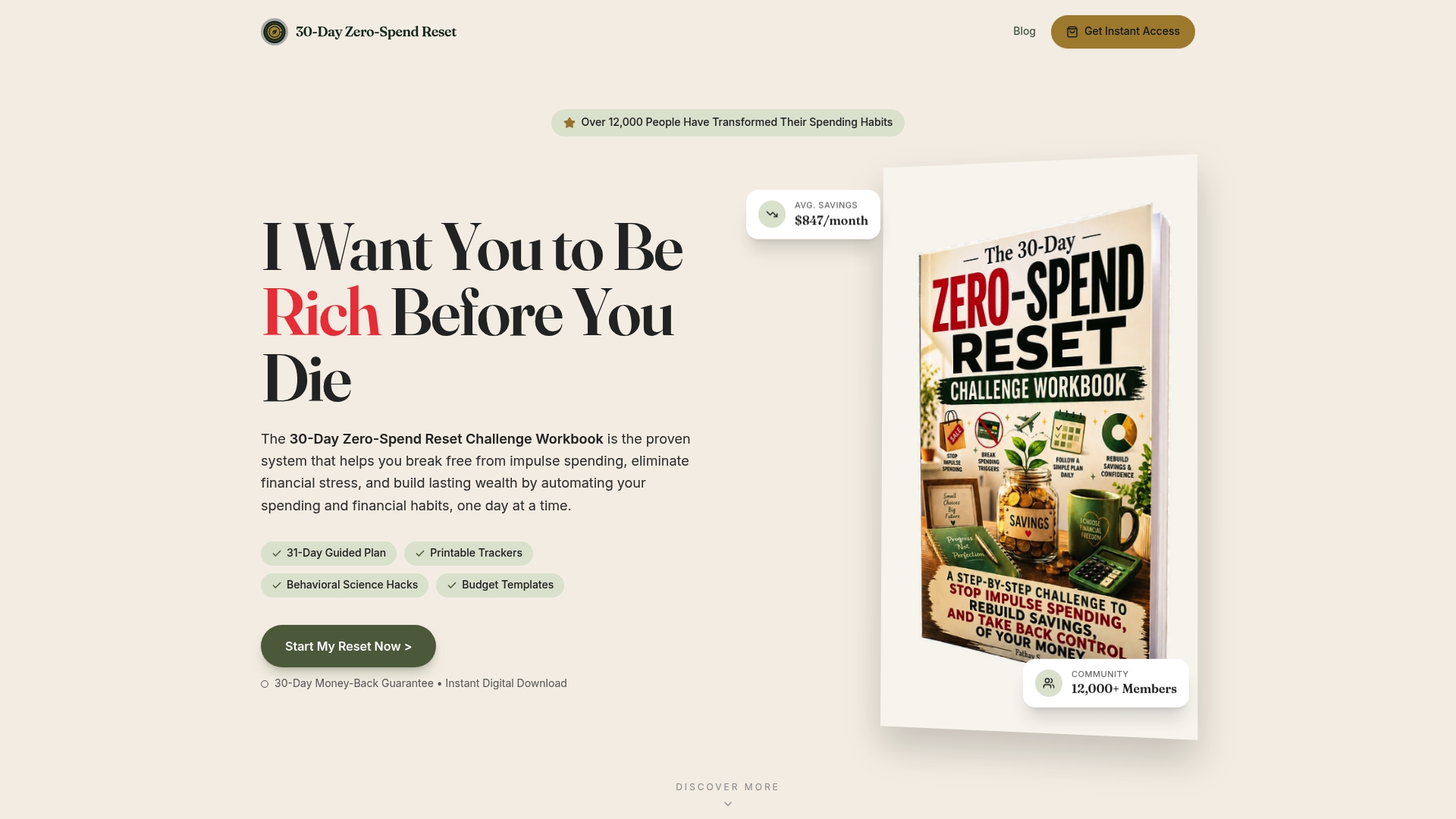
The workbook is grounded in behavioral psychology rather than generic budgeting advice, helping people improve their savings rather than white-knuckling through a spreadsheet. If you've already started with the free checklist above, the workbook gives you the daily structure to carry it through all 30 days instead of losing steam at day 10. Readers who want deeper tools beyond the base program can explore the Zero-Spend Accelerator Vault for extended trackers and challenges. Start with the 30-day guide to see the full program before you buy.
This article is general information, not a substitute for advice from a qualified financial advisor. Consult a qualified financial professional about your own circumstances before acting on anything here.
Sources
- Tips for Saving Food and Money | Mississippi State University Extension Service
- No-Spend Month Challenge: Rules, Tips & 30-Day Plan | Finny Blog
FAQ
Is It Safe to Eat Food That's Been in the Freezer for Months?
Most frozen food stays safe indefinitely as long as it's stayed frozen solid, though quality drops after a few months. Label everything with a date and contents so you can prioritize older items first, and toss anything with freezer burn that's too far gone to enjoy.
What Do I Do If I Run Out of a Staple Mid-Reset?
Check your predefined emergency exception rule first. If the missing item clears your threshold, log it before buying and pick the smallest size that covers the gap rather than restocking fully.
How Do I Handle Dietary Restrictions During a Pantry-First Reset?
Swap based on function, not exact ingredient: beans or lentils can replace meat for protein, and gluten-free grains like rice or oats can stand in for pasta or bread in most staple combos. The core rule, plan meals from what you already own, still applies regardless of diet.
What If My Household Disagrees About the Rules?
Set the allowed and paused lists together before day one, including gray-area items, so nobody is negotiating mid-week. A short conversation upfront prevents most conflict once the reset is underway.
How Much Can I Realistically Save Doing This?
Savings depend heavily on your starting grocery habits, but pantry-first planning combined with staple-heavy meals can cut grocery costs by roughly 30 to 50 percent for many households. Programs like the 30-Day Zero-Spend Reset Challenge Workbook report users achieving notable savings when meal tactics are paired with daily behavioral tracking.
Ready to reset your spending?
Get the 30-Day Zero-Spend Reset Workbook and turn these ideas into a daily action plan.
Start the 30-Day ResetThis article is part of the 30-Day Zero-Spend Reset method. Explore the complete day-by-day system behind these ideas.
Read the full guideKeep reading





Join the conversation
Be the first to share your thoughts on this article.