
Budget Birthday Ideas That Feel Memorable: Under $50, No Budget Creep
Plan a memorable birthday without overspending: pick one anchor activity, use $25–$100 sample budgets, and avoid last minute extras.
Budget Birthday Ideas That Feel Memorable: Under $50, No Budget Creep
You can throw a memorable birthday for under $50 with a small guest list, or for $75 to $150 with a larger casual crowd, if you spend on one anchor activity, keep the food simple, and pick a free venue. That's the whole formula. Everything else, from decorations to invitations to favors, should remain cheap or free so the money you do spend actually gets noticed.
TL;DR:
- Focus on one standout activity and keep food simple to maximize impact within a small budget of $50 to $150.
- Building inexpensive decorations like balloon backdrops or string lights can transform a space with minimal cost and setup time.
- Potlucks, homemade invitations, and leftover supplies are effective ways to cut costs while maintaining a festive atmosphere.
- Limiting guest list size and timing the party as a mid-afternoon event reduces food and supply expenses significantly.
- Extending help through friends and family, and setting a strict spending cap, prevents budget blowouts from small, impulse purchases.
Table of Contents
- Budget Birthday Ideas for Every Age and Setting
- Setting a Realistic Budget: Sample Tiers That Actually Work
- How to Build Cheap Decorations and Food That Still Impress
- Your One-Week Planning Checklist
- Cheap Invitation Ideas That Don't Look Cheap
- Gifts and Favors Without the Big Price Tag
- Getting Friends and Family to Pitch In
- Reusing What You Already Have
- A Behavioral Take on Party Budgets
- Sources
Budget Birthday Ideas for Every Age and Setting
The trick to a good cheap party isn't cutting everything evenly. It's picking one thing to spend real money and effort on, then letting that thing carry the whole event. Riddlelicious calls this the anchor activity approach, and it shows up in nearly every cheap birthday party idea that actually works, whether the guest of honor is turning six or thirty-six.
Here's how that plays out across different party types and budgets.
At-home ideas ($0–$40):
- Scavenger hunt, write clues on index cards or buy a printable kit for under $15; either way it beats an hour of unstructured chaos.
- DIY escape room, lock a small prize behind three or four riddles using stuff already in a junk drawer.
- Baking or decorating station, buy plain sugar cookies or a bare cake and let guests frost their own.
- Craft party, one box of supplies (beads, paint, paper) split across a table works for kids and adults alike.
Outdoor and free-venue ideas ($10–$50):
- Park picnic with a potluck spread, since free community spaces cut the venue cost to zero.
- Backyard movie night with a projector rental or borrowed one, a sheet, and popcorn.
- Beach or park scavenger hunt using natural landmarks instead of printed clues.
Adult-friendly ideas ($20–$75):
- Potluck dinner where everyone brings a dish, cutting food costs to almost nothing for the host.
- BYO dinner party built around one theme (tacos, pasta, brunch) with drinks split among guests.
- Game night with cards, a couple of board games, and snacks instead of a full meal.
- A themed tasting, mocktails or a dessert flight, which feels special but costs the price of ingredients.
- A low-key spa night at home with face masks, candles, and a playlist.
Kid-friendly ideas ($15–$50):
- Backyard obstacle course built from hula hoops, cones, and chalk.
- Balloon stomp using a bag of balloons and some string.
- Cookie or cupcake decorating, which doubles as the activity and the dessert.
- Story or craft circle for younger kids who tire out fast anyway.
Virtual and remote ideas ($0–$25):
- Zoom game night with trivia or charades for far-flung family.
- A Jackbox party, which only needs one person to own the game.
- Virtual trivia hosted through a free app.
- A synced watch party for a favorite movie or show.
Notice what's missing from all of these: hired entertainers, custom decor sets, and elaborate multi-course menus. That's not an accident.
Setting a Realistic Budget: Sample Tiers That Actually Work
Most budget birthday planning falls apart because people try to spend a little on everything instead of a lot on one thing. A cleaner approach is picking a total number first, then splitting it by category before you buy anything.
A common guideline puts 35 to 40 percent of a sub-$100 budget into food and cake, 20 to 25 percent into one standout activity, and the rest split between decor, supplies, and a small buffer for surprises.
Here's how that breaks down in practice:
| Budget | Food and Cake | One Anchor Activity | Decorations and Supplies | Buffer | |---|---|---|---|---| | Around $25 | Approximately $10 | Approximately $10 | A few dollars | A small buffer | | Around $50 | $15 | Around $12 | Around $12 | Some buffer | | Around $75 | $25 | $15 | $15 | A moderate buffer | | Around $100 | $40 | $25 | About $25 | A moderate buffer |
A $25 plan usually means a tiny guest list, a free venue, and one dessert, according to ThriftySingleMom's breakdown of budget tiers for kids' parties. A $100 plan can comfortably host 12 to 20 people if the venue stays free.
Timing matters more than most hosts realize. A mid-afternoon start converts an expected full meal into snacks and cake, which can trim food spending by roughly a third.
Five money traps drain budgets faster than anything else:
- Goody bags, guests remember the cake, not the $2 trinket bag.
- Themed-everything, matching plates, napkins, and banners in one motif add up fast for a few hours of use.
- Hired entertainers, a $150 magician eats an entire budget tier in one line item.
- Oversized guest lists, every extra person multiplies food and supply costs directly.
- Last-minute shopping, grabbing decor at full retail price the night before costs double what planning ahead does.
How to Build Cheap Decorations and Food That Still Impress
A balloon backdrop is the single highest-impact, lowest-cost setup you can build. Here's the version that takes under 30 minutes:
- Buy one pack of balloons in two or three coordinating colors (roughly $8 to $12).
- Inflate them by hand or with a cheap pump. No helium needed since these stay on the wall.
- Tape them in a loose cluster pattern to a blank wall using removable adhesive dots.
- Hang a simple paper banner or the birthday person's name in the center.
- Set a chair in front of it. That's your photo corner.
String lights do similar work for evening parties. Repurposed holiday lights draped over a doorway or table create a photo-ready glow for zero extra cost if you already own them.
For food, three tactics do most of the heavy lifting. Build-your-own stations (taco bar, sundae bar, sandwich bar) let guests customize without you cooking multiple dishes. Grocery store bakery cupcakes look homemade for less than a custom order. And a well-run potluck avoids duplicate dishes if you assign categories (mains, sides, dessert, drinks) instead of leaving it open-ended.
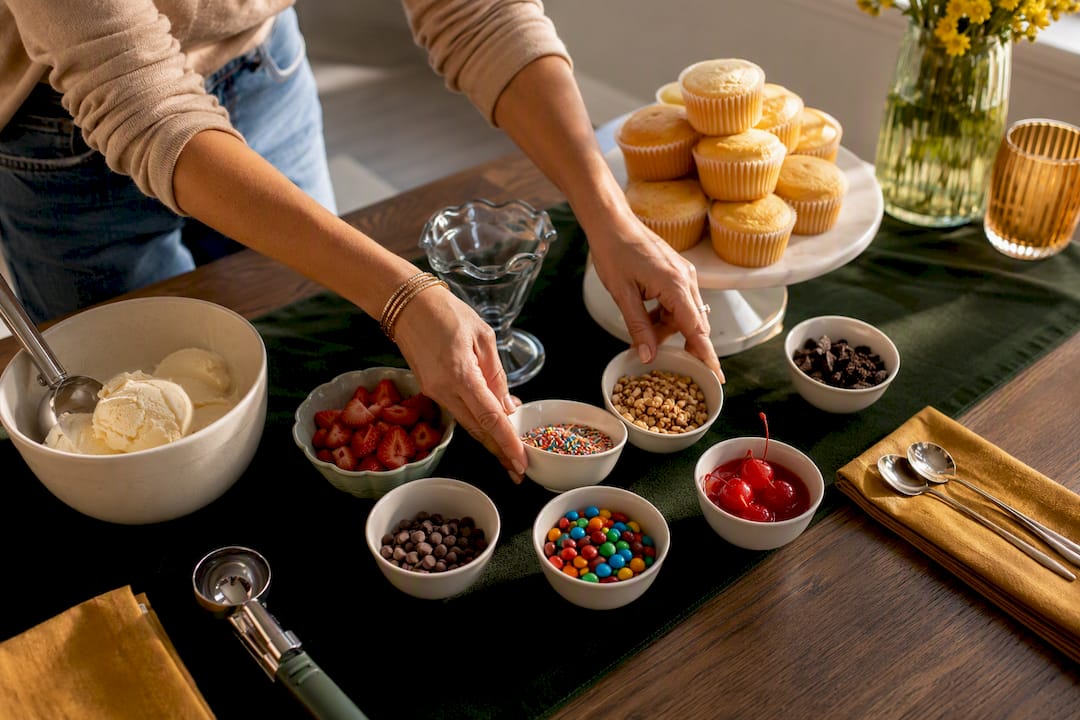
Pro Tip: Text your potluck sign-up as a simple list with category headers. People default to bringing chips or soda unless you assign something more specific.
If you'd rather buy one affordable prepared item than cook everything yourself, a local option like Pat's Prime Cuts & Deli catering can cover a sandwich platter for less than the cost of individually shopping for a crowd.
Your One-Week Planning Checklist
| Timeline | Task | |---|---| | 1 week out | Book venue, send invites, assign potluck categories | | 3 days out | Buy non-perishable decor and supplies | | 1 day out | Buy perishable food, inflate balloons if reusable | | Morning of | Set up backdrop, chill drinks, prep serving stations |
Shopping list: balloons ($10), tape/adhesive dots ($4), bakery cupcakes ($15), drinks and cups ($10), scavenger hunt printable ($12).
Clean up as you go: bag trash during the party instead of after, and store reusable decor in a labeled bin immediately so next year's setup takes minutes.
Cheap Invitation Ideas That Don't Look Cheap
Paper invitations mailed with stamps are one of the least necessary expenses in modern party planning. A digital invite through a free tool takes ten minutes to design and costs nothing to send to an entire guest list, RSVPs included.
Group texts work fine for close friends and family, but a proper digital invite gives out-of-town guests a clear date, time, and address without a chain of follow-up questions. Most free templates let you swap colors and fonts to match whatever theme you've picked for the anchor activity, so the invite still feels intentional even though it cost nothing.
If you want something physical, DIY cards beat store-bought every time on cost per unit. A pack of blank cardstock and a set of markers runs about $8 and makes 20 or more invitations, versus $15 to $20 for a boxed set of printed ones. Kids especially love making their own invitations as a pre-party activity, which doubles as entertainment and cuts your to-do list.
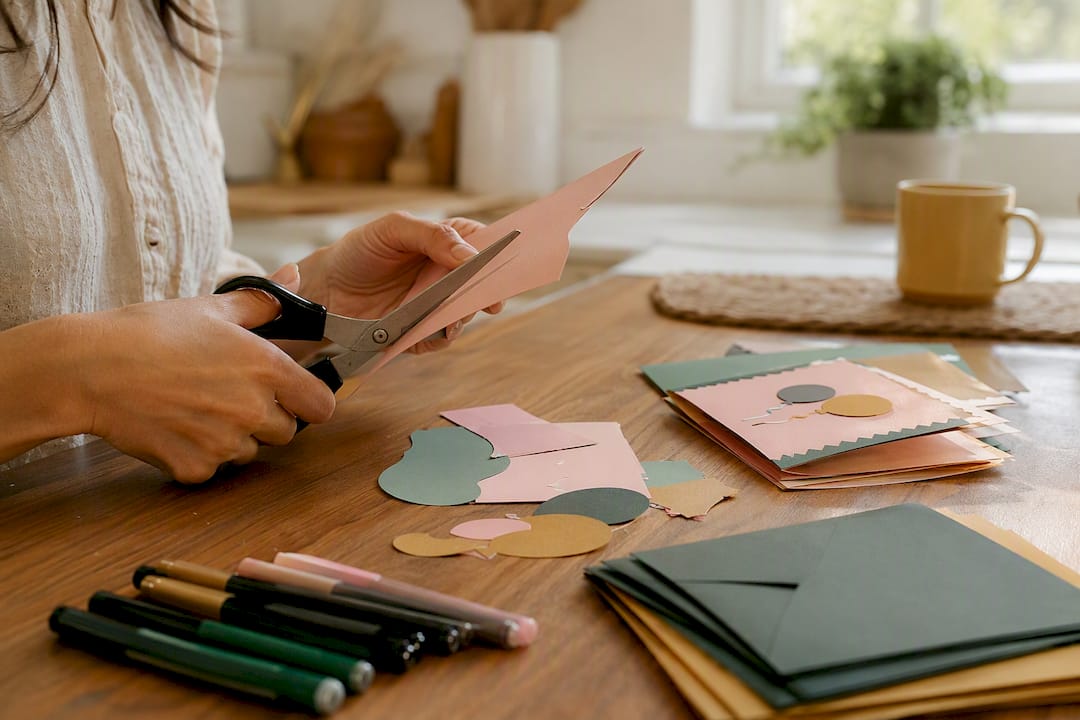
The one place it's worth spending a couple extra dollars is postage, if you're mailing to older relatives who don't check email or texts as often. A stamped card to a grandparent costs less than a dollar and means more than a group text ever will.
Either way, skip the themed stationery sets. Nobody keeps the invitation. They remember whether the party was fun.
Gifts and Favors Without the Big Price Tag
Party favors are the line item everyone assumes they need and almost nobody actually wants. A $2 bag of plastic trinkets per guest adds up to $30 or $40 for a group of fifteen, and most of it ends up in the trash within a week.
Skip favor bags entirely and put that money toward the anchor activity instead. If you want guests to leave with something, make it consumable and useful: a bag of the leftover cupcakes, a small plant cutting, or a printed photo from the party itself. These cost less per guest than trinket bags and actually get used.
For the birthday gift itself, if you're the one buying rather than receiving, consider a group gift instead of everyone bringing something small. Coordinating with two or three other guests to fund one meaningful item beats a pile of five-dollar gifts nobody remembers by the following month.
Handmade gifts also stretch a budget further than store-bought ones. A photo book, a homemade coupon book for favors ("one free coffee run," "one movie pick"), or a small batch of a favorite baked good often means more than a purchased item twice the price. The goal isn't cheapness for its own sake. It's making sure the money spent goes somewhere the birthday person will actually notice.
Getting Friends and Family to Pitch In
The potluck model works because it turns one person's expense into a shared one, but it works even better when you extend that thinking beyond food. Ask one friend to bring a speaker for music, another to handle a folding table, another to grab ice on the way over. Nobody minds a specific, small ask.
For larger parties, splitting costs among a few close family members changes what's possible. Three people contributing $25 each covers a $75 budget without anyone feeling the pinch of paying for it solo. This works especially well for milestone birthdays where several people already want to contribute but don't know how.
If money feels like an awkward topic, keep the ask practical rather than personal: "Would you be up for grabbing drinks?" lands better than "Can you chip in $20?" Framing it as a task instead of a financial request makes people more likely to say yes and less likely to feel put on the spot.
Hosting duties can split the same way. One person handles setup, another handles food, another handles the activity. Splitting labor cuts stress as much as splitting cost does, and it means the party doesn't rest entirely on one person's time or wallet.
Reusing What You Already Have
Before buying a single new item, do a quick inventory of what's left over from last year's party, a holiday, or someone else's celebration. String lights, mason jars, tablecloths, and even leftover balloons in good shape can all get a second life with almost no visible sign they've been used before.
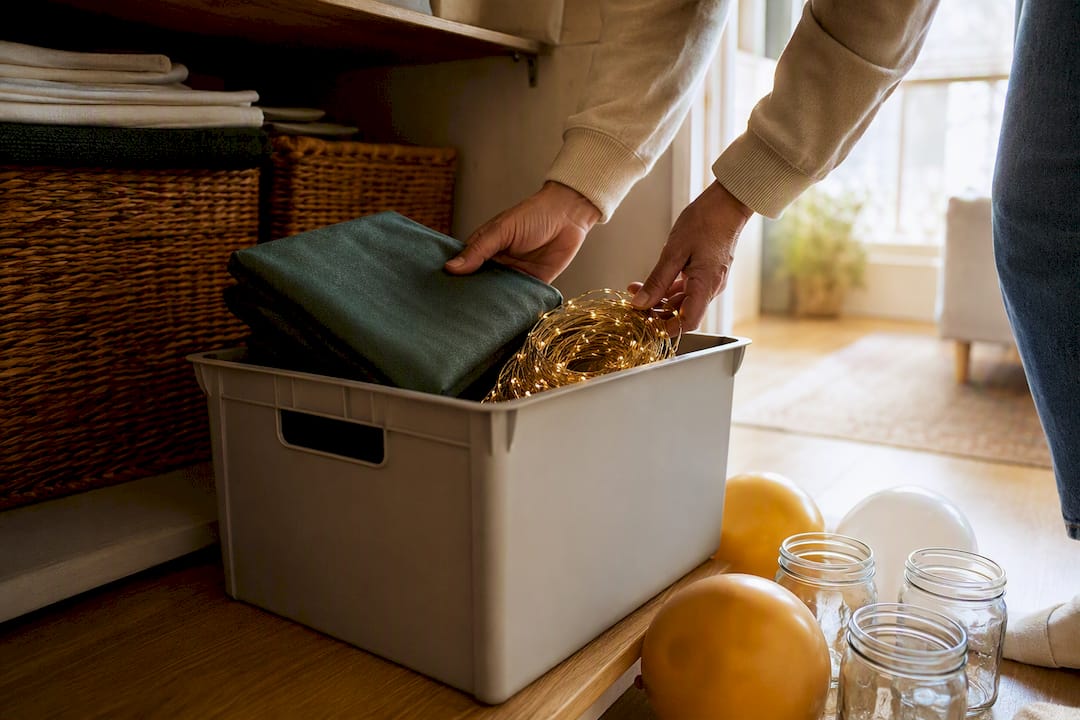
Storage matters more than people think. A single labeled bin (banners, string lights, tablecloths) means next year's setup takes fifteen minutes instead of a fresh shopping trip. If you don't already have a bin like this, starting one after this year's party is the cheapest investment you'll make for future celebrations.
Themed decor is the easiest category to repurpose because a lot of it is more generic than it looks. Plain balloons, string lights, and solid-color tableware work for almost any birthday theme with one new banner or centerpiece to shift the look. Save the highly specific themed items (character plates, a very particular color scheme) for situations where the guest of honor has specifically requested them.
Ask around, too. Friends and family who hosted recently often have leftover supplies sitting in a closet they'd happily hand over rather than store indefinitely.
A Behavioral Take on Party Budgets
Most budget blowouts happen the same way small purchases do: one "it's just $15 more" decision at a time. The tactics that work for everyday impulse spending work here too. Set a hard spending cap before you shop, then track each purchase against it like a daily small win. When a vendor pitches an add-on, a simple "that's outside what we planned for this one" ends the conversation without guilt. The party doesn't need more money. It needs one clear anchor activity and a limit you decided on before the credit card came out.
, Omar
Nospendreset built the 30-Day Zero-Spend Reset around exactly this kind of decision fatigue, the moment where a reasonable budget quietly turns into an unreasonable one because nobody set a hard stop in advance. The companion webapp lets you set a spending cap before you start shopping for a party and tracks every purchase against it in real time, so the $75 budget you planned for actually stays $75. If you find yourself saying "just this once" more than once a season, whether it's for a birthday, a holiday, or a Tuesday, the workbook's daily challenges are built to catch that pattern before it becomes a habit.
Sources
- Cheap Birthday Party Ideas for Kids | Riddlelicious
- How Do You Throw a Birthday Party Under $100? (2026) | Party Genius AI Blog
- Inexpensive birthday party ideas | Peerspace Ideas
Recommended
Ready to reset your spending?
Get the 30-Day Zero-Spend Reset Workbook and turn these ideas into a daily action plan.
Start the 30-Day ResetThis article is part of the 30-Day Zero-Spend Reset method. Explore the complete day-by-day system behind these ideas.
Read the full guideKeep reading



Join the conversation
Be the first to share your thoughts on this article.