
Stop Regret Today: 24 Hour Rule for Work, Money, and Relationships
Practical, evidence backed 24 hour pause you can use at work, in relationships, and for purchases. Follow step by step reassessment, avoid common...
Stop Regret Today: 24 Hour Rule for Work, Money, and Relationships
The 24-hour rule means waiting a full day before you send that email, buy that item, or respond to that provocation. It works because it interrupts the emotional spike that drives most regretted decisions, giving your brain time to weigh facts instead of feelings. A manager who drafts an angry reply and sits on it overnight almost always sends something calmer, shorter, and smarter the next morning.
TL;DR:
- Waiting 24 hours is most effective for impulse purchases, reactive messages, and emotional reactions where immediate action may lead to regret or conflict.
- For serious financial, safety, or legal decisions, the delay may be too short or inappropriate, requiring immediate response instead.
- Applying the rule with a specific check-in time and structured steps increases its effectiveness, preventing avoidance or vague procrastination.
- Decision difficulty increases when choices involve similar expected value, making a 24-hour pause beneficial for reducing impulsivity.
- Rigid, open-ended pauses can turn into avoidance unless paired with clear timing, criteria, and accountability measures.
Table of Contents
- What Does the 24-Hour Rule Actually Mean?
- Where the 24-Hour Rule Works Best
- How to Apply the 24-Hour Rule Step by Step
- Does Research Actually Support Waiting Before You Decide?
- Common Mistakes That Turn Patience Into Avoidance
- What I've Learned Watching People Try to Break Impulse Spending Habits
- A Structured Way to Turn the 24-Hour Rule Into a Spending Habit
- Sources
- FAQ
What Does the 24-Hour Rule Actually Mean?
People use the phrase two different ways, and mixing them up causes confusion. The first is a pure pause: stop, do nothing, revisit later. The second is a check-in rule: pause, but commit to a specific time to reconnect or respond. The second version tends to work better for anything involving another person, because open-ended silence reads as avoidance rather than reflection.
There's also a legal version that has nothing to do with willpower. The 24-hour reservation requirement from the U.S. Department of Transportation forces airlines to hold a fare or allow a free cancellation for 24 hours after booking, as long as you booked at least seven days before departure. That's a regulatory guarantee, not a personal habit, and confusing the two leads people to assume protections that don't exist outside air travel.
Waiting 24 hours is not a perfect solution for every decision:
- It may be insufficient for major financial decisions, grief-driven choices, or tasks needing outside research.
- It can be excessive for time-sensitive apologies, safety issues, or opportunities that expire quickly.
- Generally, it works well for many impulse purchases, heated messages, and reactive decisions where waiting does not cause harm.
Where the 24-Hour Rule Works Best
Some situations reward a strict pause. Others need the check-in variant. Here's how the rule plays out across the contexts people ask about most.
- Management. Draft the tough email, then save it instead of sending it. Reread it the next morning before it goes out. Most managers who do this report the delay preserves working relationships and prevents the kind of message that requires a follow-up apology.
- Relationships. A strict "I need space" pause without a return time often reads as stonewalling to the other person. Say instead, "I need until tomorrow evening, then let's talk," which keeps the pause from becoming a wall.
- Finances. Add anything nonessential to a wishlist instead of the cart. Come back in 24 hours and check it against your actual budget, not your mood in the moment.
- Travel. Booking a flight doesn't require willpower at all, since the DOT rule already gives you a built-in cancellation window on qualifying fares. Save the personal 24-hour rule for the decision of whether to book, not the booking itself.
- Youth sports. If your child comes home upset about playing time or a call from a referee, wait a day before emailing the coach. Most incidents look different once the adrenaline fades on both sides.
- Workplace feedback. Received criticism that stung? Give it a day before responding. Use the time to write down specific examples of what you'd want to say, so your reply lands as constructive rather than defensive.
How to Apply the 24-Hour Rule Step by Step
The rule only works if the pause has structure. An open-ended "I'll think about it" is how good intentions turn into avoidance.
Right now, before the clock starts:
- Stop the action. Close the tab, save the draft, don't hit send.
- Physically remove the temptation. Delete the app, log out of the checkout page, put the phone in another room.
- Write down the decision in one sentence so you don't lose track of what you're actually deciding.
During the 24 hours:
- Journal for five minutes about why you want to act. Naming the trigger, boredom, anger, anxiety, or FOMO often deflates it.
- Gather facts: check your bank balance, reread the email that upset you, look up the actual return policy.
- Sleep on it. A full night's sleep changes how a decision looks more reliably than another hour of scrolling.
- If money or a relationship is involved, run it past one trusted person before you decide.
When the 24 hours are up: Set a specific reassessment time, not just "sometime tomorrow." Decide what criteria will settle it: Is it urgent? What does it cost? What's actually at stake in the relationship? If you're still unsure, extend the pause once, with a new deadline and a defined next action, not an indefinite delay.
Pro Tip: Write your reassessment time down the moment you start the pause, not after. A vague "I'll check in later" almost never gets revisited; a calendar entry for 6 p.m. tomorrow usually does.
Does Research Actually Support Waiting Before You Decide?
The evidence behind delay isn't just intuition. Studies on intertemporal choice find that response time correlates with how close two options are in value, and value-gap measures alone explain a large share of how long people take to decide. In plain terms: the harder a choice is, the more your brain naturally wants more time on it, and cutting that time short is what produces regret.
Related decision-time research shows people slow down specifically when alternatives carry similar expected value, which is exactly the situation a 24-hour pause is built for. NBER analysis of decision time adds that decision speed peaks when a choice is roughly a coin flip, and that added time can actually change which option someone picks, not just how they feel about it afterward.
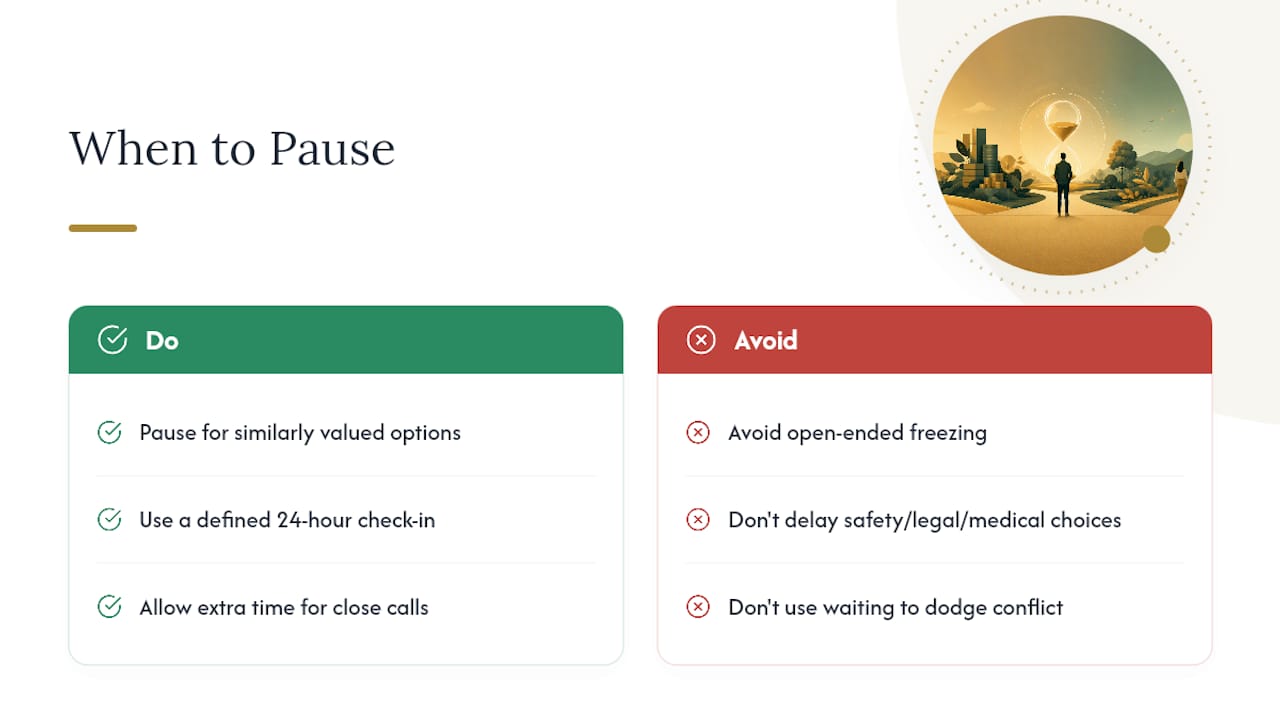
None of that means waiting is always the answer. Therapists warn that a rigid, silent pause can become a way to dodge conflict rather than process it, which is why a defined check-in beats an open-ended freeze. And in genuine safety, legal, or medical situations, waiting isn't patience. It's a delay you can't afford.
Common Mistakes That Turn Patience Into Avoidance
A pause without guardrails stops being useful fast.
- Silent stonewalling. Fix it by naming a return time out loud: "Let's talk tomorrow at 7."
- Applying it to urgent matters. Safety issues, legal deadlines, and medical concerns need action now, not a day of reflection.
- No reassessment plan. Set a specific time and criteria before the pause begins, or the "24 hours" quietly becomes a week.
- One-size-fits-all timing. A $12 impulse buy and a $2,000 decision don't need the same waiting period; calibrate the pause to the stakes.
What I've Learned Watching People Try to Break Impulse Spending Habits
The gap between knowing the 24-hour rule and actually using it comes down to structure, not willpower. Anyone can decide to "wait a day." Almost nobody does it consistently without something forcing the pause into a habit.
That's the piece the 30-Day Zero-Spend Reset is built around. Instead of asking you to just resist an urge, it hands you a journaling prompt the moment a trigger hits, a specific reassessment date instead of a vague "later," and social scripts for the awkward conversations that come with turning down plans that cost money. A pause only sticks when it's written down, timed, and checked. The program helps turn that into a daily rep instead of a one-time act of discipline.
, Omar
A Structured Way to Turn the 24-Hour Rule Into a Spending Habit
The examples above work as a mindset shift, but mindset alone rarely survives a bad day and a tempting sale. That's the gap the 30-Day Zero-Spend Reset Challenge Workbook is built to close.
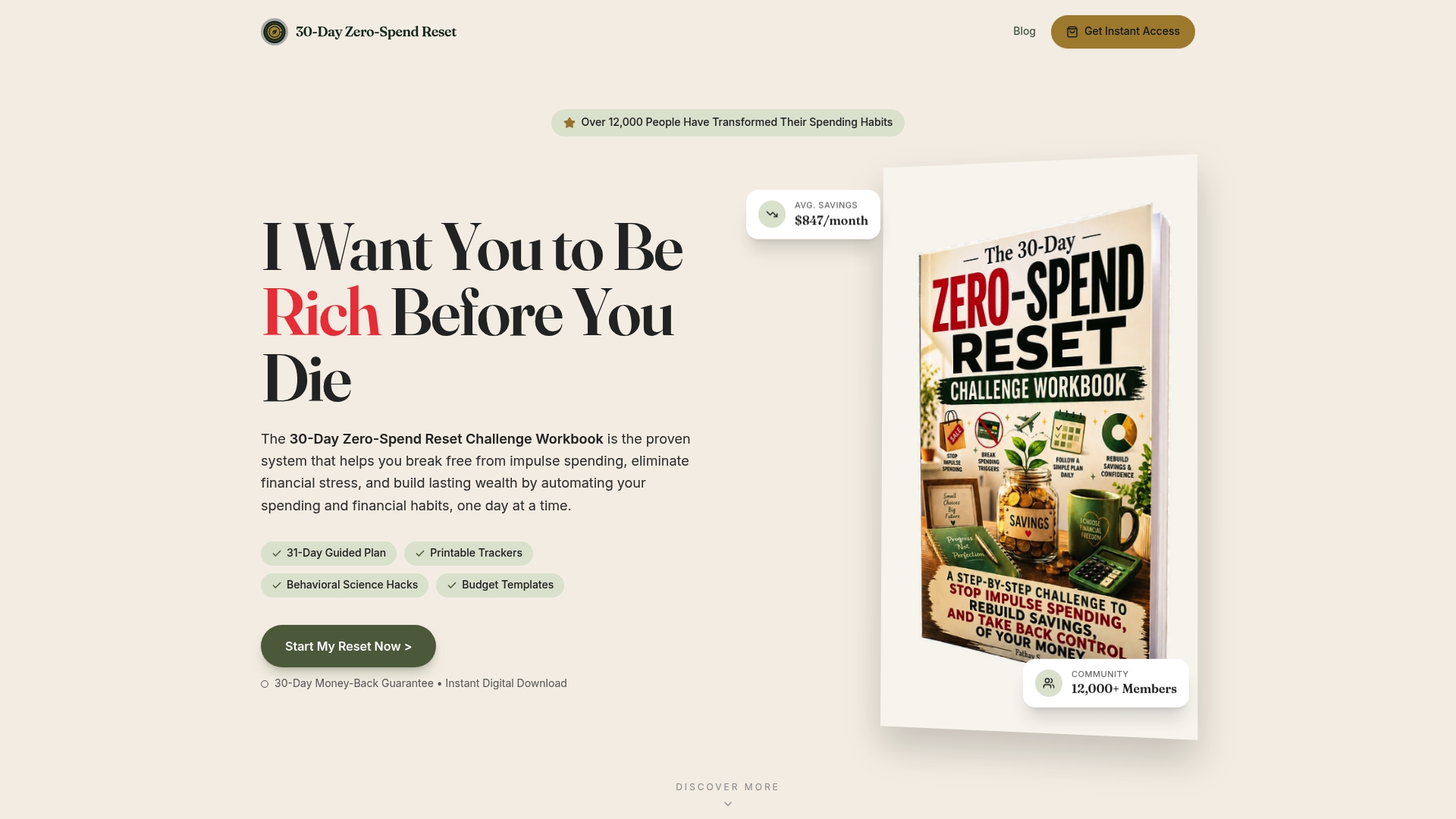
The workbook and companion webapp give you daily challenges built around the same pause-and-reassess structure covered in this article: trackers to log the urge instead of acting on it, budget templates to check purchases against real numbers instead of mood, and social scripts for the conversations that come with saying no to spending you can't justify. It is designed especially for people struggling with impulse or emotional spending patterns, rather than casual budgeters looking for a quick tip. As an adjunct to your judgment, it provides a way to make the 24-hour rule a daily habit rather than a one-off intention. Start the 30-day program and build your first reassessment checkpoint today.
Sources
- Decision-time and value-gap research (DOI:10.1523/jneurosci.2426-24.2025)
- Guidance on the 24-hour reservation requirement, U.S. Department of Transportation
- Response time and decision difficulty (PMC article)
- Understanding expert choices using decision time, NBER
FAQ
What Is the 24-Hour Rule in Dating?
It means waiting a day before reacting to a frustrating text, date, or conflict, ideally paired with a promise to check in at a set time rather than going silent indefinitely.
What Is the 24-Hour Rule?
It's the practice of waiting a full day before acting on an impulsive email, purchase, or emotional reaction, giving your brain time to separate the urge from the actual decision.
What Is the 24-Hour Rule for Flight Refunds?
The Department of Transportation requires airlines to hold your fare or allow a penalty-free cancellation for 24 hours after booking, as long as you booked at least seven days before departure.
What Is the 24-Hour Rule for ADHD?
Some people with ADHD use the rule as a structured pause before impulsive purchases or messages, though the delay usually works better paired with a written trigger log, like the journaling approach used in the 30-Day Zero-Spend Reset, than with willpower alone.
When Should You Not Use the 24-Hour Rule?
Skip it entirely for safety, legal, or medical situations where a delay could cause real harm. Those call for immediate action, not a cooling-off period.
Recommended
Ready to reset your spending?
Get the 30-Day Zero-Spend Reset Workbook and turn these ideas into a daily action plan.
Start the 30-Day ResetThis article is part of the 30-Day Zero-Spend Reset method. Explore the complete day-by-day system behind these ideas.
Read the full guideJoin the conversation
Be the first to share your thoughts on this article.